Watching a Magnet Melt express
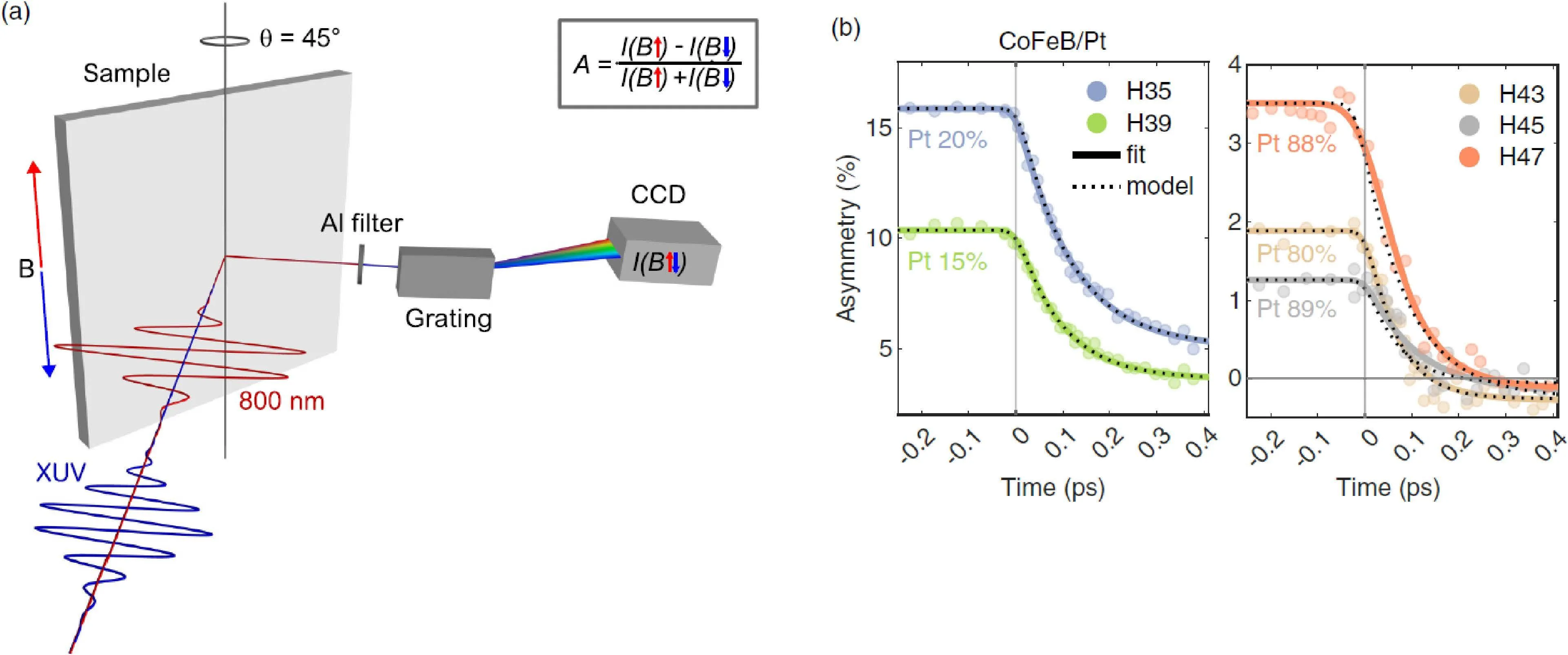
A fridge magnet holds on thanks to tiny internal arrows: each one like a miniature compass. If you hit the metal with an ultrashort flash of light, these arrows start to jitter chaotically, and magnetism melts away in a millionth of a billionth of a second. Previously, such 'melting' was too fast to observe.
Now, X-ray lasers deliver flashes shorter than the time it takes an atom to take a single step. They allow us to snapshot electrons and atoms in the very act of moving. The paper describes a method where one light flash triggers a process (like demagnetization), and a second, X-ray flash arrives slightly later and 'photographs' the state of the material. By varying the delay between flashes, scientists assemble a frame-by-frame story.
Such snapshots have already shown how, in transition metal compounds (e.g., iron or cobalt oxides), electrons hop between orbitals, changing magnetic and electrical properties. This is not just observation: understanding the mechanics could lead to materials that switch with light in femtoseconds, a million times faster than today's transistors.
Original abstract
as written by the authors arXiv:2601.01354
X-ray absorption spectroscopy and X-ray magnetic circular dichroism have long served as indispensable tools for probing the electronic and magnetic properties of transition-metal compounds with elemental selectivity. In recent years, the emergence of femtosecond lasers has opened a new avenue for studying nonequilibrium dynamics in condensed matter. However, conventional optical techniques lack elemental and orbital specificity, making it difficult to disentangle the coupled charge, spin, and lattice responses in complex materials. The development of X-ray free-electron lasers (XFEL) and laboratory high-harmonic generation (HHG) sources has enabled the extension of X-ray absorption and scattering techniques into the femtosecond time domain. Time-resolved X-ray absorption spectroscopy, X-ray magnetic circular dichroism, and resonant soft X-ray scattering now provide direct, complementary access to element- and momentum-resolved ultrafast dynamics. This review summarizes recent progress in these techniques, focusing on pump-probe measurements of laser-induced demagnetization, spin-state transitions, and valence and structural changes in transition-metal compounds. We also discuss advances in tabletop HHG-based X-ray spectroscopy and its integration with large-scale XFEL facilities. These developments provide powerful routes for visualizing the nonequilibrium evolution of charge, spin, orbital, and lattice degrees of freedom, offering new insights into the ultrafast control of quantum materials.
A femtosecond is to a second what a second is to 31.7 million years.