Ultrafast spectroscopy is a set of experimental techniques that probe physical and chemical processes occurring on timescales of femtoseconds (10⁻¹⁵ s) to picoseconds (10⁻¹² s). These are the timescales on which atomic motion, bond breaking, and electron transfer occur. By using ultrashort laser pulses, scientists can 'freeze' fast dynamics and observe intermediate states that are otherwise invisible. It has revolutionized fields from condensed matter physics to biochemistry.
History
The field began in the 1970s with the development of mode-locked lasers capable of producing picosecond pulses. Ahmed Zewail's work in the 1980s on femtochemistry, using femtosecond pulses to observe chemical reactions in real time, earned him the 1999 Nobel Prize in Chemistry.
How it works
Ultrafast spectroscopy typically employs a pump-probe scheme. An intense 'pump' laser pulse excites the sample, initiating a process. A second, weaker 'probe' pulse, delayed by a controlled time interval, measures the sample's state at that moment. By varying the delay, a series of snapshots is built into a movie of the dynamics. The probe can measure absorption, reflection, or emission, revealing changes in electronic or vibrational states. Advanced variants include transient absorption, time-resolved fluorescence, and two-dimensional spectroscopy.
In practice
Ultrafast spectroscopy is used to study photosynthesis, vision, and photocatalysis, and to characterize semiconductors, superconductors, and other materials for electronics and energy technologies.
Fun fact
A femtosecond is to a second what a second is to about 31.7 million years — so short that light travels only about 300 nanometers in that time.
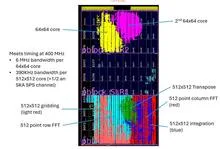
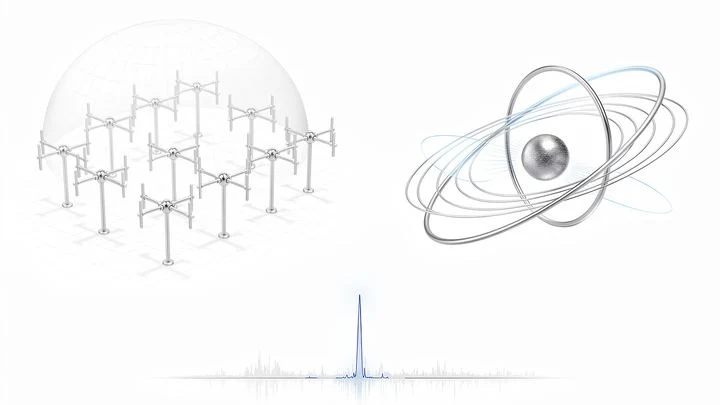
A radio telescope with thousands of antennas is like a giant ear that hears the whole sky at once. But an ear cannot draw a picture: signals from every pair of antennas must be multiplied, and in an array of ten thousand elements there are already fifty million pairs. A classical correlator does exactly that, and its complexity grows as the square of the number of antennas.
A superconducting qubit is like a finicky musical instrument: until you tune it, you won't get a clean note. But even after tuning, the pitch drifts. The culprits are tiny defects in the material that physicists call two-level systems. They're like invisible cracks that appear and disappear, throwing off the processor's rhythm.
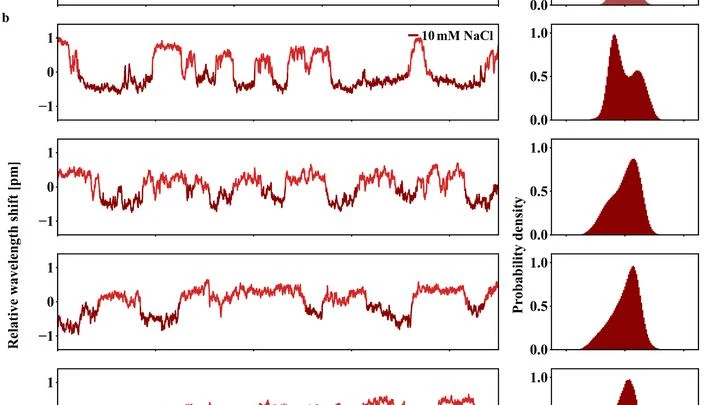
A protein in a cell is not a frozen sculpture but a restless mechanism. Its parts are constantly vibrating, and these movements determine how it grabs molecules, transmits signals, or builds the cellular scaffold. But filming the life of a single protein was hampered by two nuisances at once. First, the movements last millionths of a second — ordinary cameras simply cannot catch them.
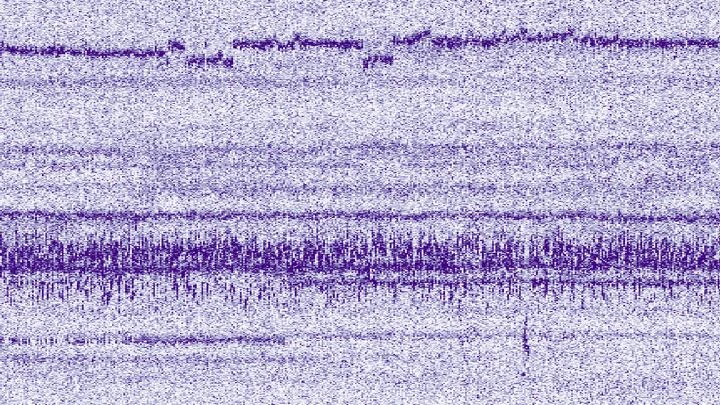
Listening to the cosmos requires patience and a finely tuned ear. Astronomers chose the most sensitive low-frequency instrument for this: the OVRO–LWA antenna array — 352 dipole antennas scattered across two and a half kilometers of California desert.
A pendulum swings with such precision that, had it been counting seconds since the Big Bang, it would have drifted by only half a second by today. That is the stability of the new portable ultraviolet laser — the heart of aluminum atomic clocks.
In a pot of boiling water, bubbles of steam are born and pop, but the water itself remains a liquid. Something similar happens in an ultracold atomic gas: atoms constantly form pairs and then fly apart again, even though superfluidity has not yet set in.
A laser flash lasting 50 femtoseconds is like a shot that lasts one billionth of a second. In that time, light travels only 15 micrometers — less than the thickness of a human hair. But if you send such a flash through an amplifier, it starts to stretch like a rubber band and loses its sharpness.
A regular camera captures the world as a series of frames: twenty-four, sixty, or even a hundred images per second. That's enough for filming a falling drop, but inside a living cell, events unfold a thousand times faster. Protein molecules carry cargo, membranes bubble, ions slip through channels — all in fractions of a millisecond.
A laser beam strikes a gold-and-silver film for just a few nanoseconds — in that time, light travels less than a meter. At the point of impact, the metal boils, splatters, and freezes into a random pattern of tiny particles. Each pattern is as unique as cracks in ice or tree branches.
Ordinary window glass may seem frozen forever, but inside, atoms never stay still. In amorphous germanium telluride (GeTe)—a material used in rewritable discs and non-volatile memory — physicists have for the first time directly tracked how atomic bonds stretch and bend in trillionths of a second.
A superconductor is a material that, when cooled sufficiently, conducts electricity without losses, like water flowing through a perfectly smooth pipe. But if you hit it with a brief flash of light, it quickly loses this property.
A camera that captures not light but a stream of electrons reflected off a crystal is a hybrid pixel detector. It can count every electron that hits it, generating almost no noise of its own. In normal mode, when the electron beam flows continuously, the detector works perfectly.
Vanadium oxide is a material that can act as an insulator, not conducting electricity, or as a conductor, like a metal. The switch takes trillionths of a second, and that's what makes it a candidate for ultrafast electronic devices.
But exactly how it happens has long been a mystery.
A fridge magnet holds on thanks to tiny internal arrows: each one like a miniature compass. If you hit the metal with an ultrashort flash of light, these arrows start to jitter chaotically, and magnetism melts away in a millionth of a billionth of a second. Previously, such 'melting' was too fast to observe.