Ultrafast electronics refers to technology that exploits extremely fast electron dynamics, typically on timescales of femtoseconds (10^-15 s) to picoseconds (10^-12 s), to achieve high-speed switching and signal processing. This field is driven by the need for faster communication, computing, and sensing, where conventional electronics are limited by carrier transit times and parasitic capacitances. Ultrafast electronics often involves the use of femtosecond lasers to excite and probe electron motion, as well as the development of materials and devices that can respond at terahertz frequencies.
History
The field emerged in the 1980s with the development of mode-locked lasers capable of producing femtosecond pulses. Pioneering work by researchers like Daniel Auston at Bell Labs demonstrated optoelectronic switching on picosecond timescales, laying the foundation for modern ultrafast electronics.
How it works
The core mechanism relies on the fact that electrons in materials can respond to electromagnetic fields on timescales much shorter than the switching times of conventional transistors. By using ultrafast laser pulses, researchers can generate and control electrical signals with sub-picosecond rise times. Devices such as photoconductive switches, which use a laser pulse to create a sudden burst of charge carriers, can produce electrical pulses with bandwidths exceeding several terahertz. Advanced materials like graphene and topological insulators are also explored for their high electron mobility and ultrafast response.
In practice
Ultrafast electronics is used in high-speed sampling oscilloscopes, terahertz spectroscopy for material characterization, and in future high-bandwidth communication systems. It also enables time-resolved studies of electron dynamics in materials, which is crucial for developing next-generation electronic devices.
Fun fact
In ultrafast electronics, the speed of light is a limiting factor: in one picosecond, light travels only about 0.3 millimeters, so the physical size of components must be extremely small to achieve such fast operation.
A laser pulse hits a thin film of MoS₂, and inside it a cloud of electrons with excess energy starts to boil. These hot carriers are like runners who took off at high speed but, on the way to the finish line, are bound to lose all their momentum through collisions with the crystal lattice.
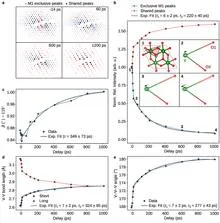
The camera captures not a race but a dance of atoms. In vanadium dioxide, the transition from an insulating to a metallic state occurs within trillionths of a second, yet until now no one had seen exactly how the vanadium and oxygen atoms move. Now, ultrafast electron diffraction has captured this route frame by frame.
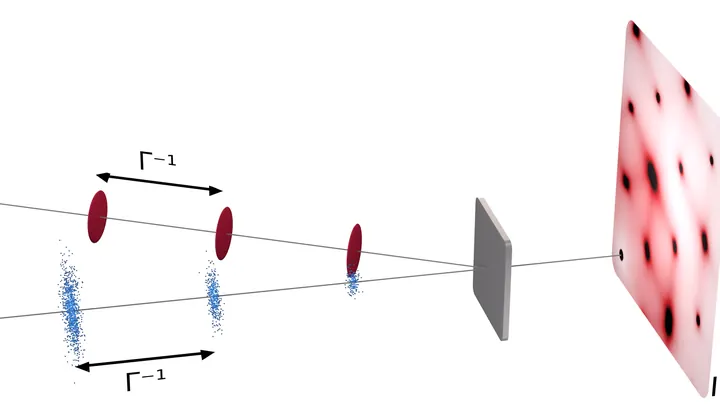
Two electrons that leave a metal needle tip almost simultaneously start to repel each other, like two people trying to squeeze through a narrow door at the same time. The closer they are, the more they get in each other's way.
A superconducting qubit is like a finicky musical instrument: until you tune it, you won't get a clean note. But even after tuning, the pitch drifts. The culprits are tiny defects in the material that physicists call two-level systems. They're like invisible cracks that appear and disappear, throwing off the processor's rhythm.
Decades of radio astronomy have listened to space, hoping to catch narrowband radio transmissions — the technogenic 'voice' of distant exoplanets. But our own technological evolution reveals a paradox: loud analog signals, like 1960s TV broadcasts, are just a brief squawk of a newborn civilization.
A factory laser that cuts and welds metal on production lines has been made to work as a particle accelerator for the first time. Physicists took a standard ytterbium laser, its heart is a crystal the size of a palm, and turned its flashes into a tool for accelerating electrons to nearly the speed of light.
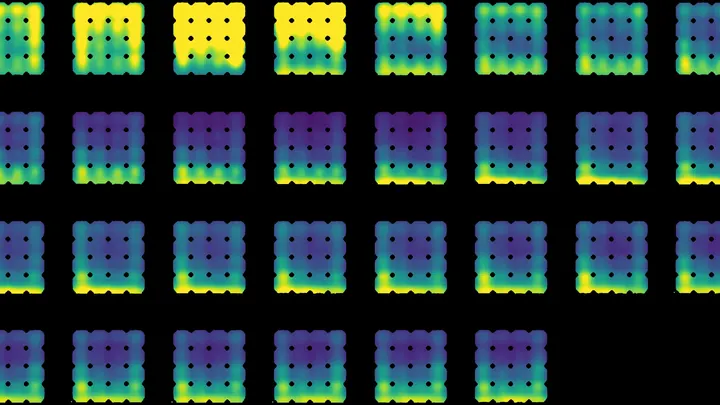
A charged particle streaks through a silicon sensor, leaving behind a trail of free electrons. The time it takes for this charge to be collected at the electrode depends on how deep in the crystal it was born. A particle entering head-on carves identical paths through neighboring pixels: their signals arrive almost simultaneously.
A pendulum swings with such precision that, had it been counting seconds since the Big Bang, it would have drifted by only half a second by today. That is the stability of the new portable ultraviolet laser — the heart of aluminum atomic clocks.
An ordinary laser emits narrow lines, like a string that sounds only one note. For spectroscopy, this is inconvenient: if a substance absorbs light between the lines, you might miss it.
A laser hits a target of thin wires, and within tens of femtoseconds (billionths of a billionth of a second) knocks out a stream of protons. These protons fly into a converter made of lithium and deuterium, where neutrons are born.
When you flip a switch, the light doesn't come on immediately — electrons in the wires need time to 'get going' and move together. In ordinary metals and semiconductors, current builds up gradually, like water in a hose when you first open the tap.
A copper wire hit by a laser is like a kitchen where the chef turns on the stove and watches the stopwatch at the same time. Copper atoms start to dance, losing the order of the crystal lattice, while electrons, like waiters in the dining room, instantly feel the change. But how much disorder do they need to notice?
An ordinary camera flash lingers for hundredths of a second, but for atoms, that's an eternity. Inside molecules, electrons jump in attoseconds: billionths of a billionth of a second. To capture that, you need a light pulse shorter than the event itself.
Physicists take an electron beam in a linear accelerator and compress it so that individual bunches become thinner than a hair — in time.
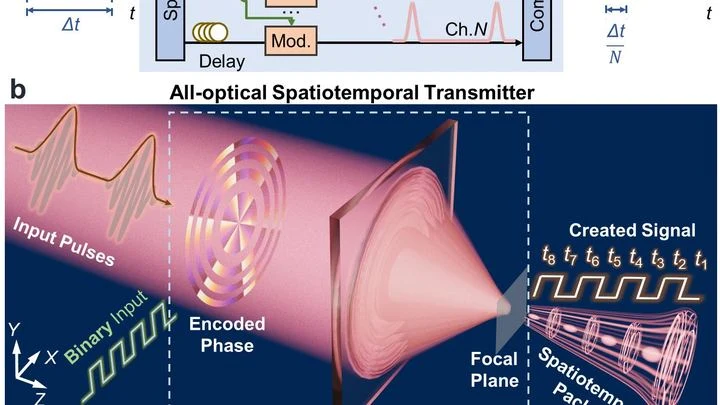
Light can carry information faster than any electronics. But usually, between a computer and a laser sits a digital-to-analog converter — a device that turns zeros and ones into electrical signals. It's the bottleneck.
The new transmitter does away with this middleman.
A compass needle turns slowly, but inside some materials, tiny magnetic moments can flip over timescales that are hard to imagine. A team of physicists has calculated how to make them change direction in a quadrillionth of a second — faster than a lightbulb blinks.
Electrons in a crystal sometimes behave like a stadium crowd doing the wave: areas of higher density alternate with nearly empty ones. This wave blocks the free flow of charges — under normal conditions, the material is not superconducting. But apply pressure, and the wave vanishes, letting electrons move without resistance.
A laser flash lasting 50 femtoseconds is like a shot that lasts one billionth of a second. In that time, light travels only 15 micrometers — less than the thickness of a human hair. But if you send such a flash through an amplifier, it starts to stretch like a rubber band and loses its sharpness.
An ultra-thin crystal made of tungsten and sulfur atoms resembles a perfect parking lot: every spot is taken, everything is neat. But sometimes an atom is missing — leaving a defect pit. If an exciton (a pair consisting of an electron and a 'hole' that carries light energy) falls into such a pit, it can get stuck and emit light differently than in a pristine area.
Radio waves that oscillate less than once per second pass through the earth and water with almost no loss. Such signals are used to communicate with submarines and to search for minerals. But a conventional antenna for them would need to be hundreds of meters long, and its sensitivity leaves much to be desired.
Two laser beams, like two pencils, draw an invisible scale on the wall. One tip moves slightly faster than the other, and by the way their strokes alternately coincide and diverge, you can calculate the distance to the wall with an accuracy down to the thickness of a spider's thread.
In the new work, physicists made these two beams work continuously, without pauses.
A laser flash hits a one-atom-thick layer of silver sitting on bilayer graphene, and within quadrillionths of a second, a gap opens in graphene's electronic structure where none existed before. It's as if an ordinary wire momentarily became a semiconductor: electrons stop flowing freely, and a band gap appears.
A camera that captures not light but a stream of electrons reflected off a crystal is a hybrid pixel detector. It can count every electron that hits it, generating almost no noise of its own. In normal mode, when the electron beam flows continuously, the detector works perfectly.
An ordinary free-electron laser is like a musical instrument with a single string: it can play only one note until you change its design. To get a different wavelength, you have to retune magnets or accelerate electrons harder. That's expensive and bulky.
An ordinary rubber pad dampens vibration the way a thick blanket muffles sound: the thicker and heavier, the better. Engineers have long dreamed of a material that is light yet "eats" oscillations as well as a massive damper.
Vanadium oxide is a material that can act as an insulator, not conducting electricity, or as a conductor, like a metal. The switch takes trillionths of a second, and that's what makes it a candidate for ultrafast electronic devices.
But exactly how it happens has long been a mystery.
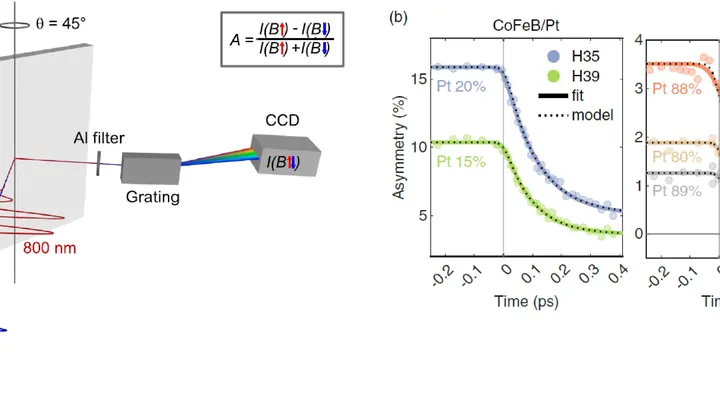
A fridge magnet holds on thanks to tiny internal arrows: each one like a miniature compass. If you hit the metal with an ultrashort flash of light, these arrows start to jitter chaotically, and magnetism melts away in a millionth of a billionth of a second. Previously, such 'melting' was too fast to observe.