A technique measuring the difference in absorption of left and right circularly polarized X-rays by a material in a magnetic field, revealing its magnetic properties.
X-ray magnetic circular dichroism (XMCD) is a spectroscopic technique that measures the difference in absorption of left- and right-circularly-polarized X-rays by a material placed in a magnetic field. This difference arises because the X-rays interact with the magnetic moments of electrons in the material, and the absorption depends on the relative orientation of the photon's angular momentum and the electron's spin. By analyzing the XMCD signal, researchers can determine the magnetic properties of a material, such as the size and direction of its magnetic moments, with element specificity — meaning they can probe the magnetism of individual chemical elements in a compound. This makes XMCD a powerful tool for studying magnetic thin films, nanoparticles, and complex oxides.
History
XMCD was first predicted theoretically in 1975 by Erskine and Stern, and experimentally demonstrated in 1987 by Gisela Schütz and colleagues at the German synchrotron DESY. It has since become a standard tool at synchrotron facilities worldwide.
How it works
The technique relies on the fact that circularly polarized X-rays carry angular momentum. When such X-rays hit a magnetic material, the absorption probability depends on whether the photon's angular momentum is aligned or anti-aligned with the magnetization. By measuring the absorption spectra for both polarizations and taking the difference, the magnetic contribution is isolated. The effect is strongest at absorption edges, such as the L-edges of transition metals, where the X-rays excite core electrons into unoccupied states. The magnitude of the XMCD signal is proportional to the magnetic moment, and by applying the sum rules, one can extract separate values for the spin and orbital contributions to the magnetization.
In practice
XMCD is used to characterize magnetic storage media, spintronic devices, and magnetic nanoparticles for biomedical applications, as well as to study fundamental magnetic phenomena in condensed matter physics.
Fun fact
XMCD can distinguish between the spin and orbital contributions to magnetism, which is crucial for designing materials for magnetic data storage, where the orbital moment often determines the stability of the magnetization.
Light born when a fast electron enters a material is usually assumed to be the same in all directions. But in crystals where optical properties depend on direction, that's not the case. Run your hand over velvet: one way it's smooth and shiny, the other — dark and rough. Similarly, a crystal responds differently to light depending on how it's oriented.
A sculptor shapes mountains from magnetic fields and heat, but the stone resists. A neutron star, the ultra-dense remnant of a supernova explosion, in a binary system pulls matter from its companion star. This infalling matter heats the star's crust unevenly, while the magnetic field tugs from within.
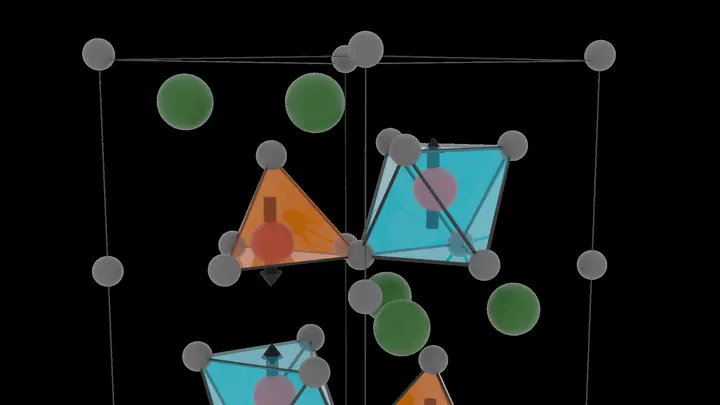
The crystal Mn₂Mo₃O₈ resembles a tiny city where manganese atoms are arranged in strict order: their magnetic moments (tiny internal arrows) point alternately up and down. This state is called collinear altermagnetism.
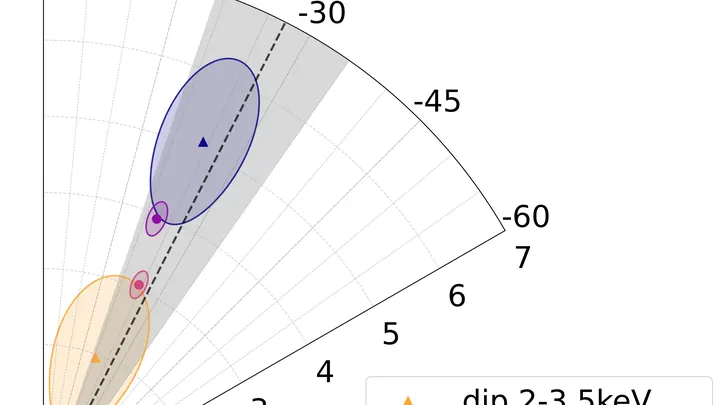
May 2022. The space polarimeter IXPE, the spectroscope NuSTAR, and the monitor NICER simultaneously stared at one spot in the sky — at the black hole in the Cygnus X-1 system, where it orbits a blue supergiant in a close binary system with a period of 5.6 days.
X-ray magnetic circular dichroism is a precise tool that has long allowed the separation of spin and orbital magnetic moments. However, the classical approach resembles judging an orchestra by its volume: it relies on sum rules, reducing the entire fine structure of the spectrum to a couple of integrals.
A powerful laser strikes a diamond like a sledgehammer, with matter itself serving as the anvil. The impact lasts only an instant but generates pressures a million times greater than atmospheric. Physicists have long dreamed of peering into that moment to see how atoms rearrange under the onslaught.
The X-ray beam here is like a camera flash.
An ocean permeates all of space, yet remains invisible to us. This ocean is dark matter, and the waves on its surface are particles called axions. They are so light and elusive that they pass through Earth without noticing it. But if these waves crash against a shore made of a special material, they might leave a trace — a tiny electric current.
Two ultra-thin sheets, each just one atom thick, are placed on top of each other and slightly rotated. Like two sheets of colored tracing paper: while they lie flat, the picture is one thing, but give them a twist and a moiré pattern appears. Here, though, the pattern isn't visible to the eye, but it completely changes how the material handles light.
Neutron stars are the ultra-dense remnants of stars, where matter is compressed to the limit described by Subrahmanyan Chandrasekhar. Magnetars are a type of neutron star with a magnetic field a quadrillion times stronger than Earth's.
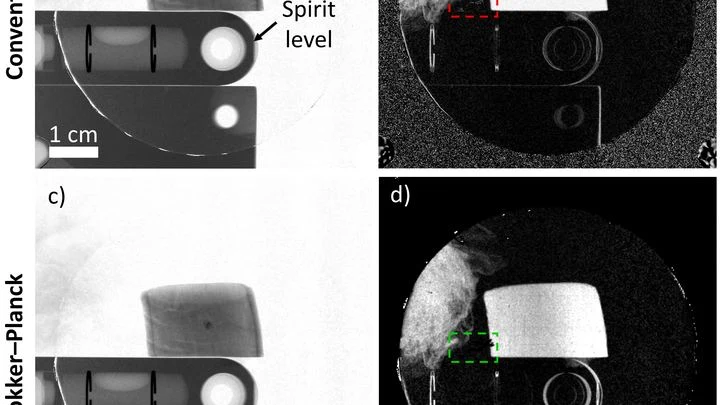
An X-ray machine with gratings takes not one but three pictures at once: a regular image, a map of beam deflections invisible to the eye, and an image of tiny structures that scatter light. Together, they help spot, for example, emphysema or pulmonary fibrosis. But there's a catch: to separate these three layers, you need a clever mathematical trick.
A thin film for a solar cell or display is like a dense crowd in a square: each person faces a different direction, and whether light passes through the crowd or gets stuck depends on which way everyone is looking. In organic electronics, molecules play the role of passersby. Until now, instruments could only measure the crowd's overall direction — the average head tilt and its spread.
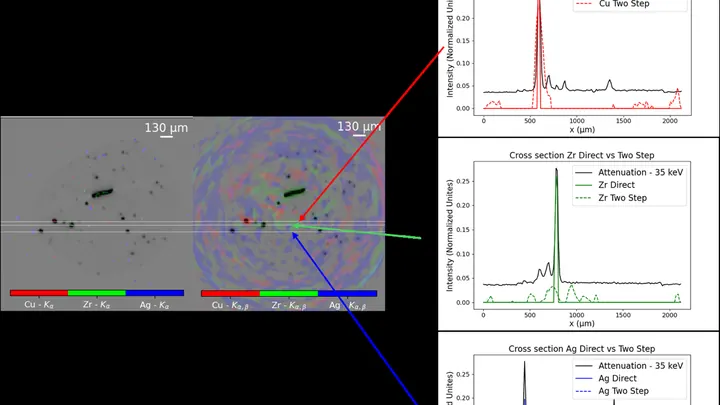
Conventional X-ray fluorescence analysis works like a meticulous scribe: to learn the composition of a picture, it walks over every square centimeter and logs whether lead or copper is present. For a flat sheet, that's tolerable, but for a three-dimensional object, it's torture.
When matter is compressed to pressures of millions of atmospheres and heated to thousands of degrees, it is neither solid nor gas. This warm dense state is like the interiors of giant planets or the moment of a meteorite impact. You can't look inside directly, but you can shine X-rays and see how they scatter off electrons.
Fibers in composites, paper, or biological tissues are often hidden from view, but their orientation determines the strength and properties of the material. Previously, to see fiber directions, you had to take many images at different angles and assemble a three-dimensional picture, like slicing a loaf of bread into thin pieces. For thin samples, this approach doesn't work: you can't slice what isn't thick enough.
A lithium cobalt phosphate crystal resembles a chessboard, where the black and white squares are regions with opposite directions of the magnetic moments of cobalt ions. These regions are called antiferromagnetic domains, and until now they have been hard to see: conventional methods required complex equipment or damaged the sample.
In a piece of manganese oxide just a few atomic layers thick, electrons behave like a crowd on an escalator: each moves by its own rules, but together they create a common flow. Physicists shone soft X-rays on such a film and knocked electrons out.
If you hold an iron nail near a magnet, it will be attracted. Inside the magnet, tiny atomic magnetic arrows point in the same direction, like soldiers in formation. But in some crystals, the formation is different: neighboring arrows point in opposite directions. This order is called altermagnetism, and it is hard to see directly.
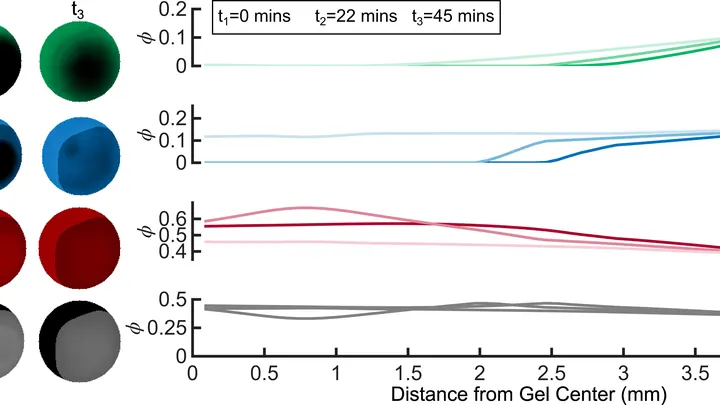
In winter, puddles freeze, and ice cracks the asphalt. Inside a living cell, freezing does something similar: ice crystals tear its membrane. To prevent this, the cell is soaked in a special solution, like antifreeze for a car. But precision is key: too little solution and ice still forms; too much and the solution itself poisons the cell.
Neutron stars are ultra-dense remnants of supernovae the size of a city. In the 1930s, Fritz Zwicky hypothesized their existence, and later Jocelyn Bell Burnell discovered pulsars — rapidly rotating neutron stars.
For thirteen straight years, the Swift space observatory recorded the X-ray "breathing" of the pulsar GX 301-2. Every few minutes, the BAT instrument measured how much hard radiation came from this pair — a neutron star and its massive companion.
A ruthenium oxide film is like a soap bubble film stretched over a frame, but made of atoms. For a long time, it was believed that in this film, ruthenium atoms align in a magnetic order, like compass needles pointing in opposite directions. This order was dubbed altermagnetism, and great hopes were placed on it for future electronics.
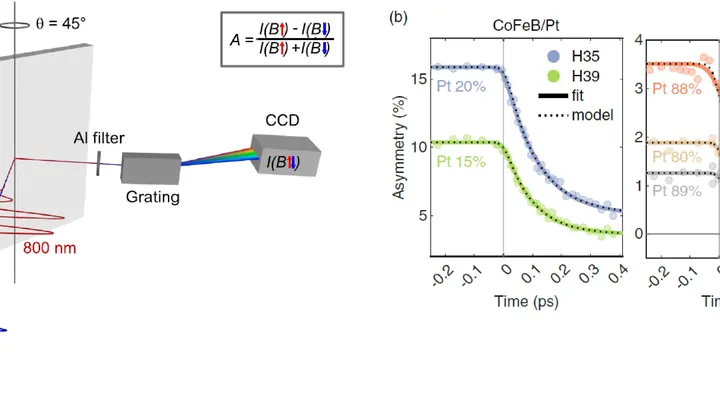
A fridge magnet holds on thanks to tiny internal arrows: each one like a miniature compass. If you hit the metal with an ultrashort flash of light, these arrows start to jitter chaotically, and magnetism melts away in a millionth of a billionth of a second. Previously, such 'melting' was too fast to observe.
A cell doesn't just lie on a surface: it probes it, pulls it, and pushes it. Until now, instruments could only detect direct forces: how hard a cell presses or stretches its support. But if you grab a cell by the "shoulders" and give it a slight twist, it responds by rotating, and until recently, no one could measure that rotation.
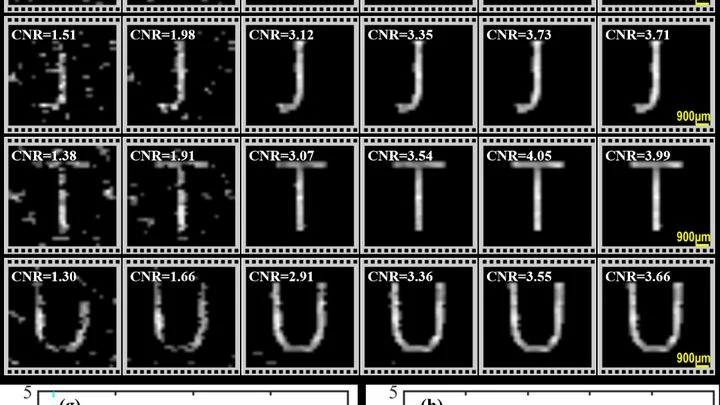
An X-ray image is like a photograph taken in the dark with a very short flash: anything that moves comes out blurred. Conventional X-ray detectors are large arrays of millions of pixels, and by the time they read out one frame, the next is already missed. For a spinning turbine or a beating heart, such sluggishness is a death sentence.
A team of researchers sidestepped this problem by ditching the array altogether.