Thin Disks of Galaxies Already Existed in the Young Universe express
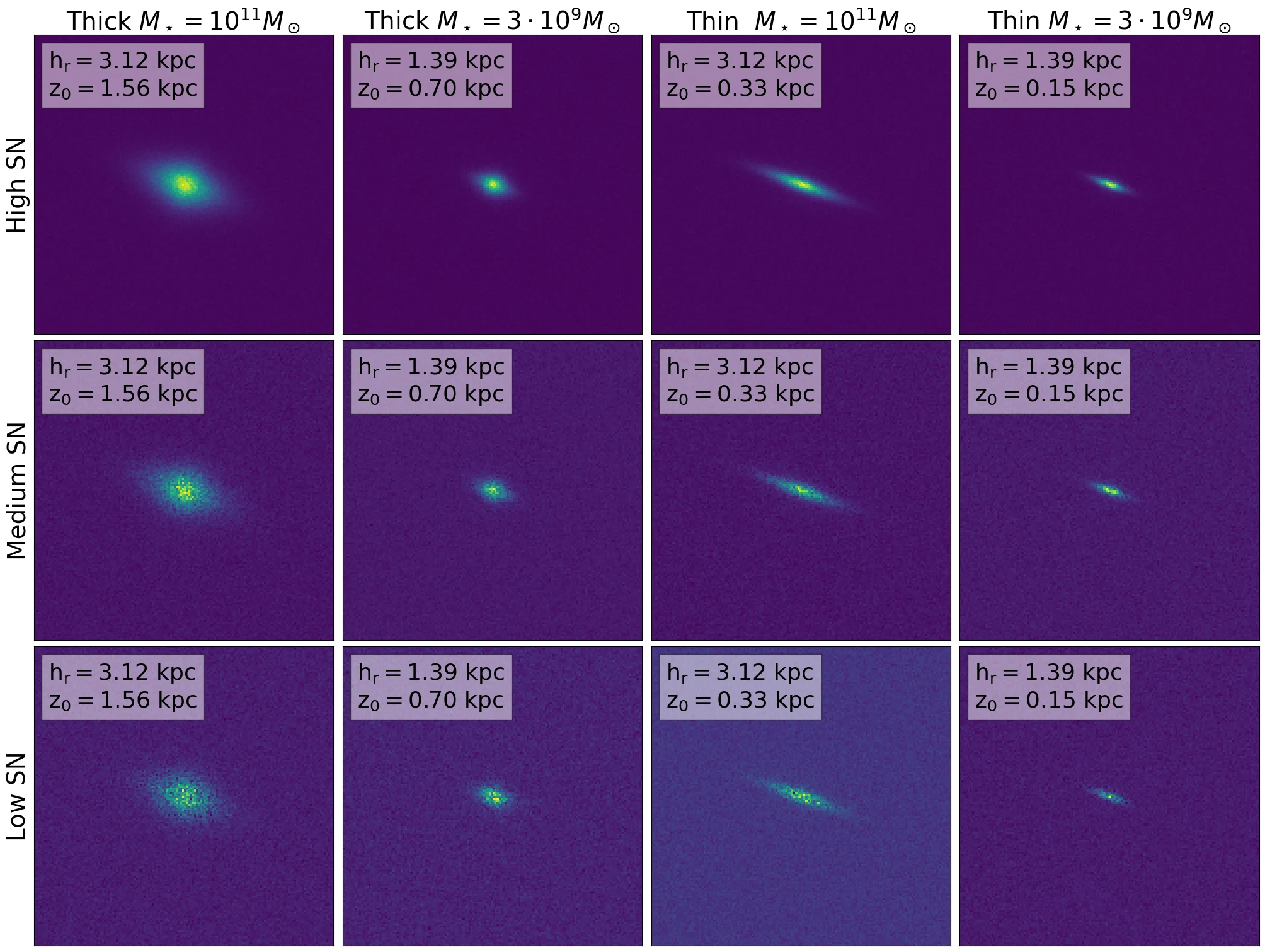
The James Webb Space Telescope peered 11 billion years back in time and spotted galaxies turned edge-on toward us. To measure their thickness, scientists devised a clever method: they calculated it the same way you'd measure the thickness of a slightly tilted pancake, not a perfectly flat one. Previous estimates were imprecise because they assumed an ideal angle.
It turns out those ancient stellar pancakes are nearly as thin as our Milky Way's disk: their diameter is about eight times their thickness. This discovery flips the script: thin disks aren't the end result of long evolution, but the natural state of young galaxies in an era when the Universe was expanding rapidly. And what's more, no noticeable thick layer was found in them.
So, the thick disks we see in nearby galaxies piled on later — probably when their stellar populations got "shaken up" by collisions. Here's an unexpected twist: our own Milky Way was just as slim in its youth; its current bulk is a scar of a turbulent history.
If you shrunk the disk of our Milky Way to the size of a vinyl record, its thickness would be comparable to a sheet of paper.