Stellar archaeology is the study of ancient stars — their chemical compositions, motions, and positions — to reconstruct the history of the Milky Way and other galaxies. Unlike direct observation of the past, which is limited to looking at distant galaxies, stellar archaeology uses nearby stars as 'fossils' that preserve the chemical and dynamical conditions of the era when they formed. By analyzing the abundances of elements in old, low-mass stars (which have long lifetimes and retain their original composition), astronomers can piece together how the galaxy assembled, merged with smaller systems, and enriched its gas with heavy elements over billions of years.
History
The field was pioneered in the 1970s and 1980s by astronomers like Beatrice Tinsley and Leonard Searle, who used chemical abundances to infer galactic evolution. Modern large-scale surveys like Gaia and SDSS have revolutionized it by providing millions of stellar spectra and precise motions.
How it works
The method relies on spectroscopy to measure the detailed chemical composition of individual stars. Stars born at different times have different metallicity (abundance of elements heavier than helium) and different abundance patterns, depending on the nucleosynthesis processes that enriched the gas at their birth. By combining these chemical fingerprints with stellar kinematics (velocities and orbits) and ages, astronomers can identify distinct stellar populations — such as the ancient, metal-poor stars of the galactic halo versus the younger, metal-rich disk stars. Machine learning techniques, like unsupervised neural networks, are now used to classify large stellar samples and uncover hidden structures, such as the recently discovered globular cluster Tonantzintla 2, which appears to be a relic of the Milky Way's ancient bulge.
In practice
Stellar archaeology is used to map the merger history of the Milky Way, identify the remnants of dwarf galaxies accreted long ago, and constrain the timescale of chemical enrichment in the early universe.
Fun fact
The oldest known star in the Milky Way, HD 140283 (the 'Methuselah star'), is estimated to be about 14.5 billion years old — nearly as old as the universe itself.
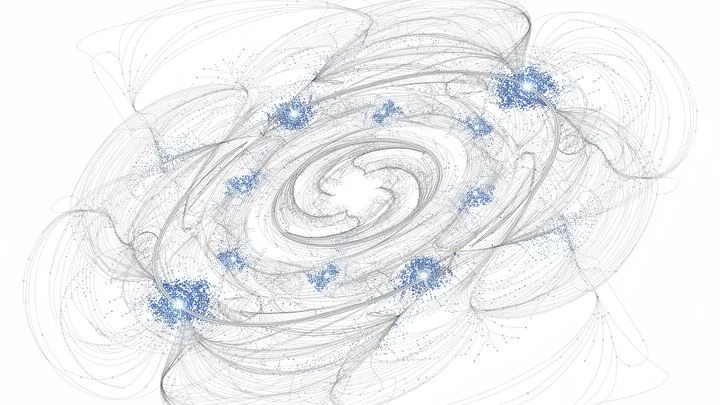
A river drawn on a map is always a single line. But stand on the bank, and you will see that within the channel there are faster currents, eddies, and branches that merge and split. The cosmic web is like that river, but made of dark matter, and until recently astronomers drew it as a single line.
A telescope stares at a star for many nights in a row. Somewhere in the stream of light hides a tiny dip in brightness — an Earth-sized planet briefly blocking part of the star. Such a dip lasts a few hours and repeats once a year or less. Catching it is like hearing a single quiet click in a noisy hall.
The night sky seems unchanging, but galaxies constantly exchange matter. The Milky Way, like a great river, absorbs smaller streams — dwarf galaxies. Along with their stars, planets may also come to us.
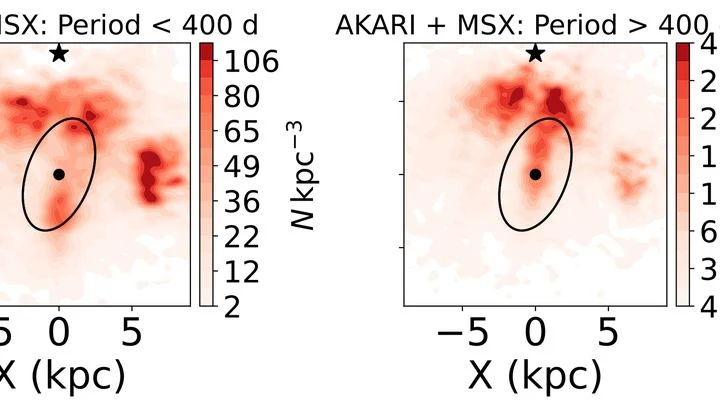
Red giants in the center of the Milky Way resemble distant lighthouses that brighten and dim. Their light pierces through dense dust, but standard distance-measuring methods fail here: the stars are too bright and unstable, and dust distorts the picture.
Astronomers found a workaround.
In the heart of an old city stands a clock tower whose hands have never been adjusted since it was built. By how far it runs slow, you can calculate how much time has stretched since then. In space, the role of such towers is played by relic galaxies — dense stellar systems that formed in the first few billion years and have since neither merged with neighbors nor given birth to new stars.
A galactic disk is like a frozen ripple on water: every disturbance leaves a trace that can be read billions of years later. When a dwarf satellite galaxy flies past or a head-on merger occurs, stars in the disk start to oscillate, like bobbers rocked by a wave.
15 175 107 stars. Each one got an age. But no number is free of uncertainty: a star's age isn't a nail hammered into the timeline: it's a probability cloud, a fog hiding the true value. For galactic evolution, such a timestamp is priceless: without it, the map of the Milky Way remains flat.
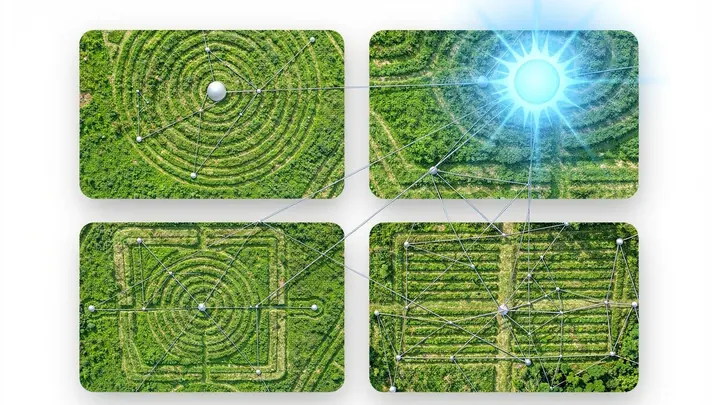
Deep in the Amazon rainforest, beneath a multi-layered canopy of leaves, lie vast earthen figures — squares, rectangles, the occasional rhombus. For decades they teased archaeologists with their silent geometry, until a researcher armed with orbital optics saw them as an astronomical instrument.
The formation of the Milky Way is a grand cosmic performance, in which mergers of satellite galaxies were woven into a single score. Each event left a trace in the dynamics and chemical composition of stars, much like notes capture the composer's intent.
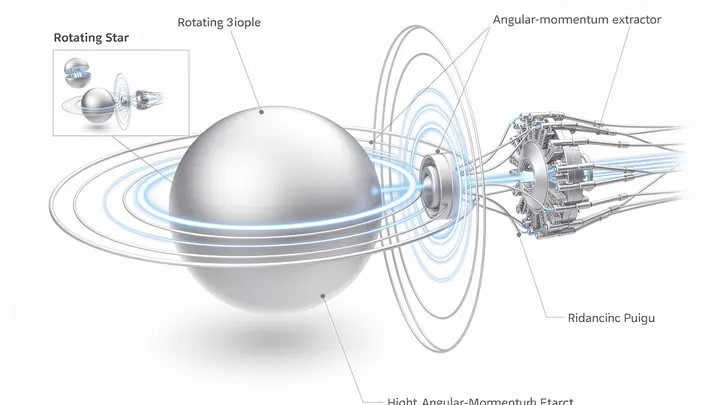
For decades, SETI has hunted for Dyson spheres — hypothetical shells that capture a star's light stars and re-radiate it in the infrared. But the cosmos remains silent. Perhaps an alien intelligence operates more elegantly: instead of collecting light, it tames the rotation of a sun, like a giant flywheel.
In the young Universe, about ten billion years ago, galaxies resembled endless fields after a thunderstorm: everywhere, giant — thousands of light-years across — clumps of star formation were boiling up, where young stars were born with unbridled energy. Today, these patches are an almost vanished species: in nearby galaxies, raucous hotbeds are rare.
Massive stars are cosmic titans, living under the sign of indomitable energy. When such a star enters the B[e] supergiant phase, its radiation is so powerful that it would seemingly pulverize any molecule into atoms. The spectral lines, once systematized by Johann Balmer, blaze here with particular fury.
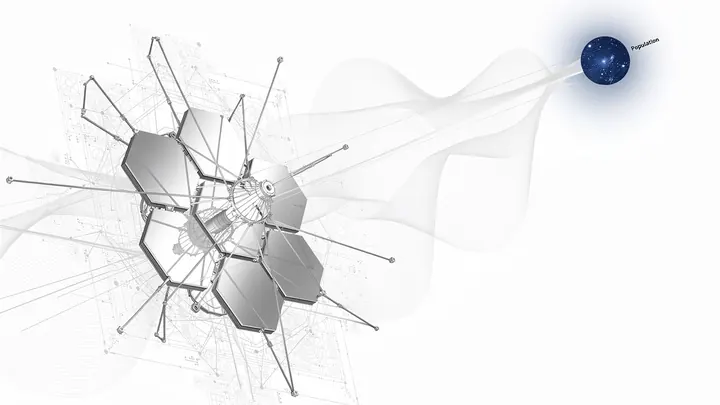
Right after the Big Bang, the Universe was a chemical desert — only hydrogen and helium, not a hint of metals. But moments passed (by cosmic standards), and the birth of the first stars — Population III — began.
The Moon is a natural archive that has been collecting cosmic dust for billions of years. Among the microscopic grains that arrived from distant stars, there could be techno-specks — particles created by alien civilizations.
Civilizations in the Universe are separated not just by distance, but by the vast gulf of time. Hunting for their traces is like archaeology: instead of palace ruins, we find clouds of cosmic dust.
The story began almost a century ago, when Edwin Hubble showed that galaxies are receding, and Fritz Zwicky and Vera Rubin later realized: to explain their motions, invisible mass is needed — dark matter.
Seven snapshots of the sky after the eruption of Mount Pinatubo. Each snapshot is a map of concentrations for dozens of substances. The question is simple: which substance turns into which? But how do you infer a causal chain from seven frames when you have more variables than time points?
M-CaStLe looks at the map differently.
Imagine a spring being compressed with tremendous force. The harder you press, the denser it gets, but at some point the compression stops being uniform — some parts give way more easily, others are stiffer. That's roughly how the matter inside a neutron star behaves — an object born in the flames of a supernova.
A handful of coins accelerates to one-fifth the speed of light. That's what Coracle interstellar probes will be like — tiny spacecraft weighing just a few grams, each with an ultrathin sail film. A powerful laser beam pushes them forward: light presses on the sail like wind fills a yacht's sails, except instead of air, it's a stream of photons.
Conventional dark matter detectors are like a soccer goalkeeper waiting for a powerful shot while the ball barely rolls. The invisible particles filling our galaxy often move too slowly to be noticed by sensitive sensors.
The Red Planet is surrounded by the rubble of failed worlds — rocky boulders stuffed with metal. Shipping a kilogram of steel from Earth to Mars costs as much as several cars. It's far cheaper to pick up space junk right in orbit.
At the edge of the Milky Way, there are stars that move against the general flow, like cars driving in the wrong lane. Previously, it was thought that all of them were remnants of one dwarf galaxy that our Galaxy tore apart and swallowed. But new research shows that there were several such 'oncoming' galaxies.
A star inherits the chemical makeup of its parent gas cloud, just like a child inherits genes from its parents. Astronomers turned this into a method: by measuring the fraction of carbon and other elements with spectroscopy (splitting light into colors), they construct family trees for the stars in a galaxy.
Light from a distant quasar, the bright core of a galaxy, passes by a massive galaxy and bends, like a flashlight beam through uneven glass. If the lens and source align almost perfectly, we see not one quasar but several copies.
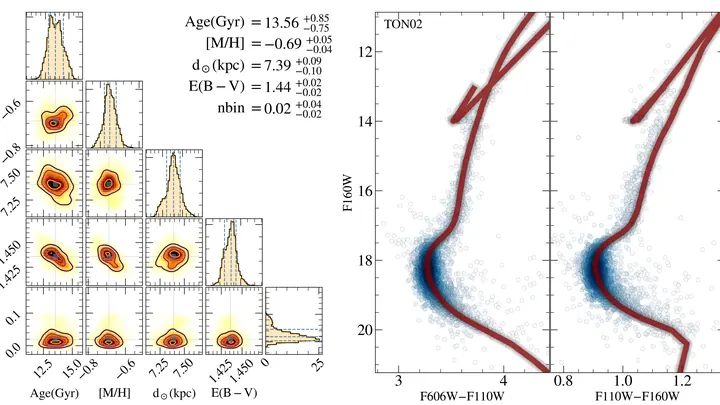
Globular clusters are dense stellar archives, where the youth of the Galaxy is recorded. But reading this chronicle was hindered by imprecise chronometers: age estimates diverged by a billion years.
Inside cold clouds of gas and dust where new stars ignite, astronomers have spotted unexpectedly delicate structures. The ALMA telescope, working in the millimeter range, has revealed more than 323 ultra-thin dust filaments within 121 massive clumps.
A galaxy is like a city where no new houses are being built. Stars are no longer born there, and the old buildings tell you when construction was bustling. Astronomers peered into 14 such 'ghost towns' on the edge of the visible universe: their light has been traveling to us for 11–12 billion years.
Imagine a city map where streets are replaced by car speeds and buildings by the metal content of stars. Such a map can tell you where the center is and where the outskirts are, even without knowing exact distances. This is precisely the approach astronomers took with our Galaxy, using longitude–velocity (ℓ–v) diagrams.
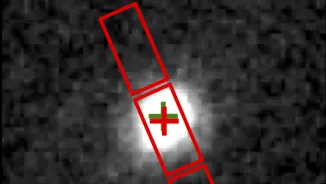
Hidden in the dense swarm of stars at the center of the Milky Way lies the globular cluster Tonantzintla 2. It went unnoticed for decades, yet it holds the key to the earliest history of our galaxy.
The night sky looks like a scattering of identical sparks. But hidden among them are true giants — red supergiants. These stars are hundreds of times wider than the Sun and shine so brightly that they can be seen from enormous distances. You'd think there'd be no better beacons for a map of the galaxy.
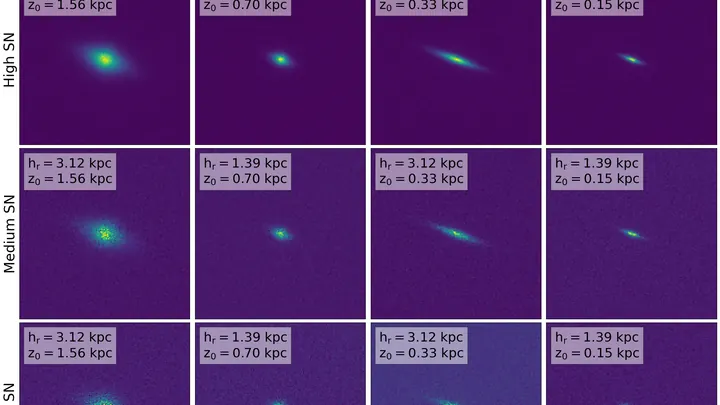
The James Webb Space Telescope peered 11 billion years back in time and spotted galaxies turned edge-on toward us. To measure their thickness, scientists devised a clever method: they calculated it the same way you'd measure the thickness of a slightly tilted pancake, not a perfectly flat one. Previous estimates were imprecise because they assumed an ideal angle.
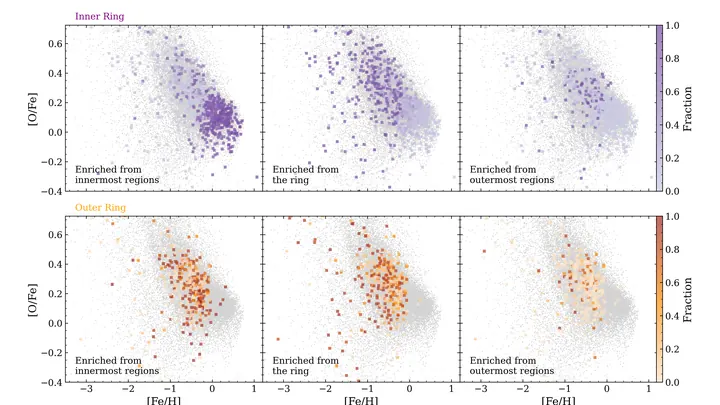
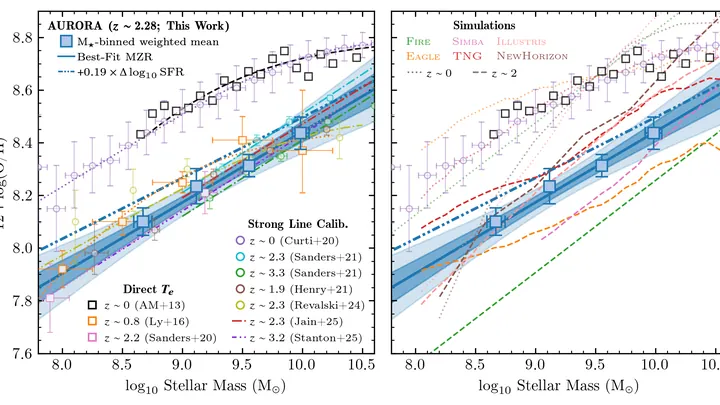
Galaxies are like giant kitchens where, in stellar cores, light atoms are fused into heavy ones — much like flour and water becoming bread. When a star dies, it spills its accumulated riches into the interstellar gas, seasoning it with 'spices': oxygen, carbon, iron.
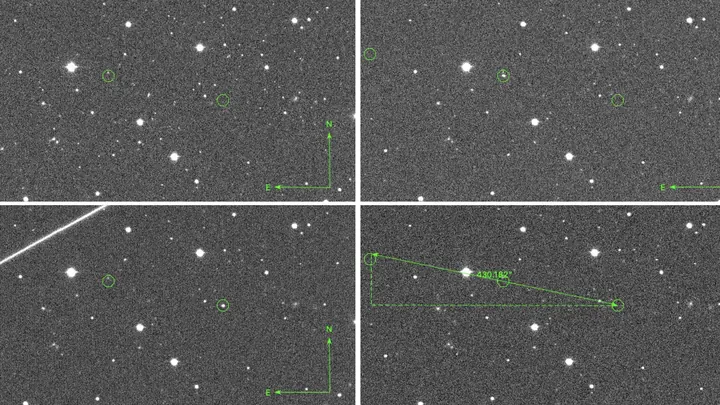
Back in the 18th century, William Herschel was searching for life on Mars. Today, astronomers are targeting not planets but artifacts — for example, alien probes lurking in the Solar System. The problem is that spotting a tiny object next to the blinding Sun is nearly impossible.