Stellar Prominences Ignite Radio Flares express
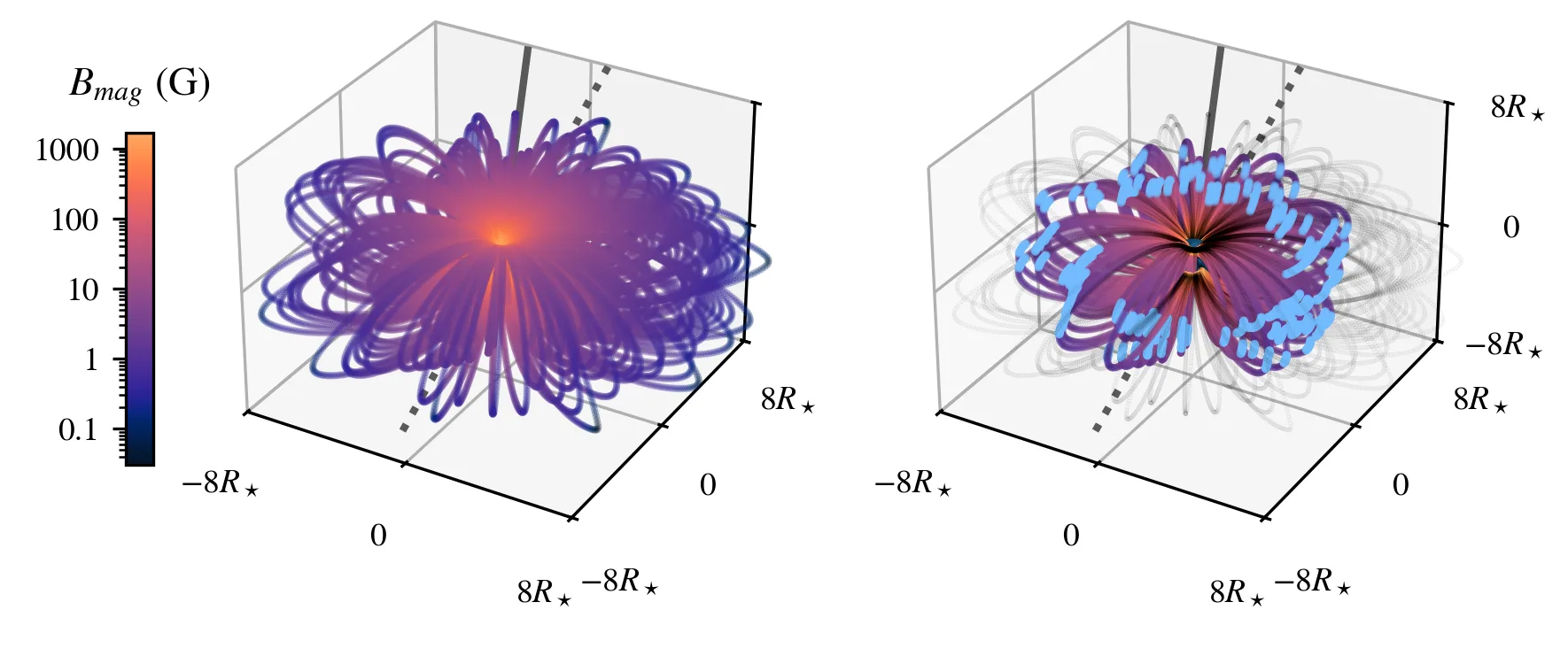
The red dwarf V374 Pegasi is a star one-third the size of the Sun, but with the temperament of a volcano. Every few hours, giant clumps of plasma tear away from its surface, like steam bubbles from a boiling cauldron. These ejections, called prominences, fly off into space and generate bursts of radio waves.
Astronomers have long detected powerful radio signals from this star, resembling lighthouse pulses. It was thought that a special mechanism produces them: electrons spiraling in the magnetic field emit like tiny radio stations. But where the electrons with the right energy came from remained a mystery.
The new study combined a computer model of the star's magnetic field with archival data from radio telescopes. It turned out that the ejected prominences can accelerate electrons to the required speeds. Moreover, the flares should be visible not all the time, but only when the ejection is on a certain side of the star, like a flashlight that shines in only one direction.
The match between the model and the actual flares confirms that prominences indeed act as particle accelerators. Now astronomers want to conduct new observations to catch more such events and understand how often they occur on other stars.
V374 Pegasi spins so fast that its day lasts less than eleven hours — during which the star manages to show all its sides.