Solar Flare: The Boiling Starts Before the Stove Is Turned On
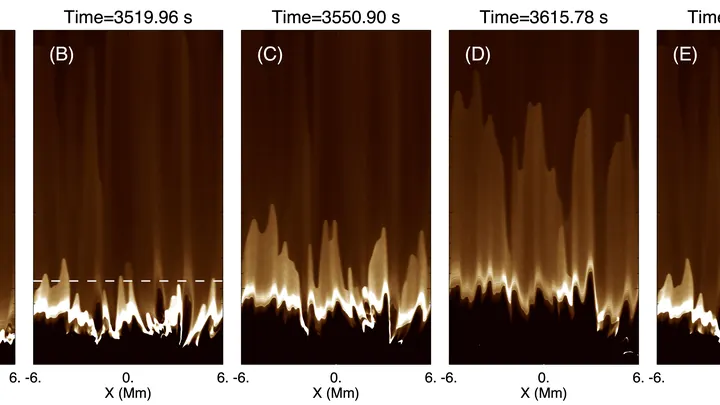
In a pot on the stove, water starts to churn from the bottom long before the whole thing boils. Bubbles of steam rise from the base even though the burner itself hasn't heated up yet.
A large expulsion of plasma and magnetic field from the Sun's corona.A coronal mass ejection (CME) is a massive burst of plasma and magnetic field ejected from the Sun's corona into space. These events can carry billions of tons of solar material at speeds of hundreds to thousands of kilometers per second. When a CME reaches Earth, it can compress our planet's magnetic field, trigger geomagnetic storms, and produce spectacular auroras, but it can also disrupt satellites, power grids, and communication systems. Understanding CMEs is therefore crucial for space weather forecasting.
CMEs were first observed in 1971 by the OSO-7 satellite, though their connection to solar activity was recognized earlier. The term 'coronal mass ejection' was coined in the 1970s as observations from space revealed these events distinctly from solar flares.
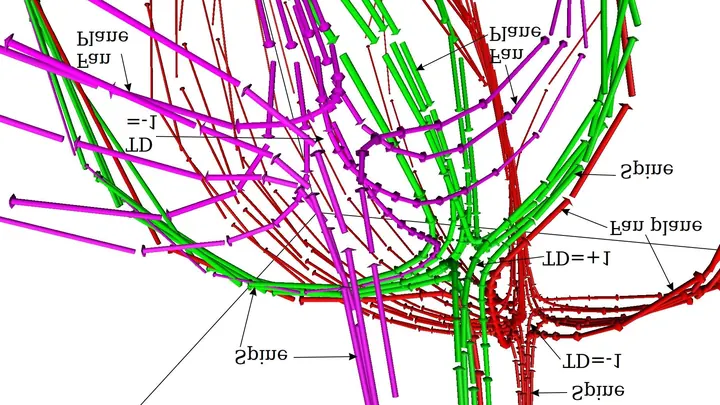
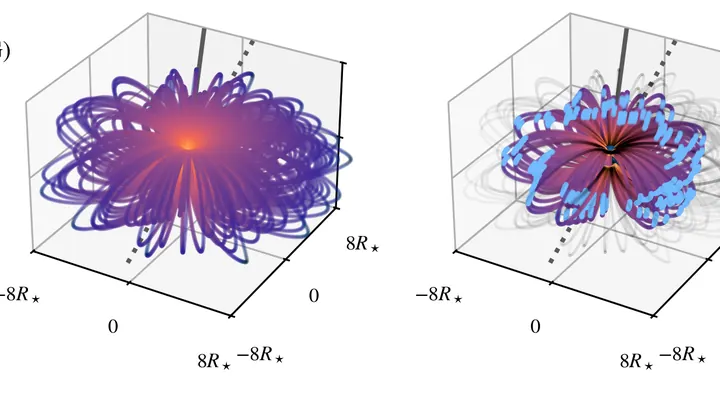
CMEs originate in regions of the Sun's corona where magnetic field lines are twisted and stressed by the motion of plasma. When the stress exceeds a threshold, the magnetic field reconnects, releasing stored energy and launching a large bubble of plasma and magnetic field outward. The ejected material travels through the solar wind, and if it is directed toward Earth, it arrives one to three days later, interacting with our magnetosphere and transferring energy into it.
CME monitoring is used by space weather agencies to protect satellites, power grids, and aviation from the effects of geomagnetic storms.
The fastest CMEs can travel from the Sun to Earth in under 18 hours, covering the 150 million kilometers at speeds exceeding 2000 kilometers per second.