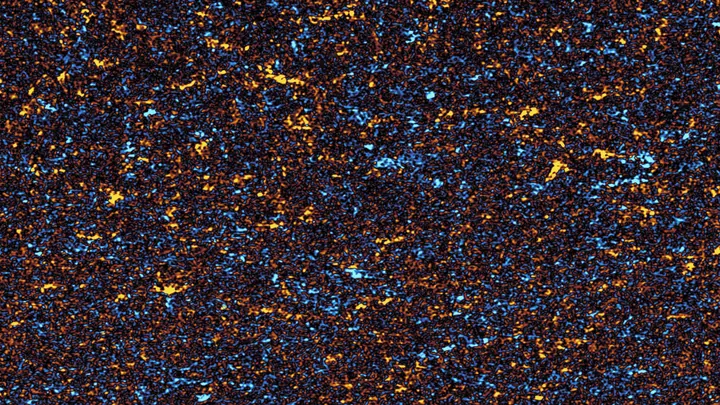
Solar Flare: The Boiling Starts Before the Stove Is Turned On
In a pot on the stove, water starts to churn from the bottom long before the whole thing boils. Bubbles of steam rise from the base even though the burner itself hasn't heated up yet.
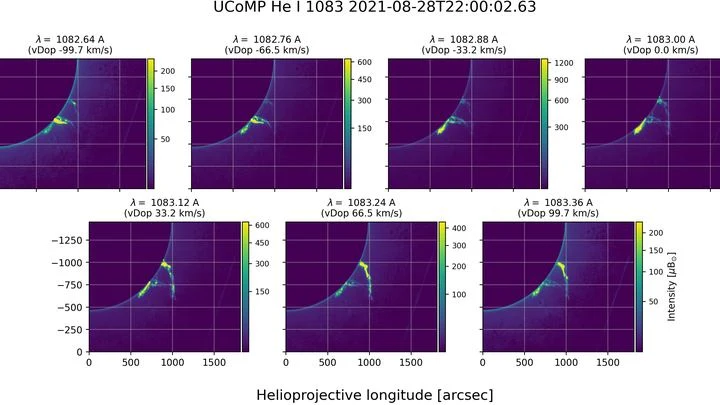
A large, bright, gaseous feature extending outward from the Sun's surface.A solar prominence is a large, bright, gaseous feature that extends outward from the Sun's surface, often forming loops or arcs that can span hundreds of thousands of kilometers. These structures are made of plasma—ionized gas—trapped by the Sun's magnetic field, and they can persist for days or even weeks. Prominences are most easily seen during a total solar eclipse, when they appear as reddish-pink flames around the edge of the Sun, but they are also observable through specialized telescopes that block the Sun's bright disk.
Prominences have been observed since the 13th century during solar eclipses, but the first detailed scientific description was made by Angelo Secchi in the 1860s, who also coined the term 'prominence' and recognized their connection to the Sun's magnetic activity.
Prominences form in the Sun's corona, the outermost layer of its atmosphere, where temperatures reach millions of degrees. The Sun's magnetic field lines, which are constantly shifting due to the churning of plasma beneath the surface, can become twisted and looped. When these magnetic loops rise above the surface, they trap cooler, denser plasma (around 10,000 K) from the chromosphere, holding it suspended against the Sun's gravity. The plasma glows brightly in hydrogen-alpha light, making the prominence visible. When the magnetic field becomes unstable, the prominence can erupt, ejecting plasma into space—a phenomenon known as a coronal mass ejection.
Studying prominences helps scientists predict space weather, as their eruptions can disrupt satellite communications, power grids, and GPS systems on Earth.
A single prominence can be larger than the diameter of Jupiter, and the plasma within it can flow along magnetic field lines at speeds exceeding 100 kilometers per second.