How Young Stars' Rotation Destroys Their Magnetic Field express
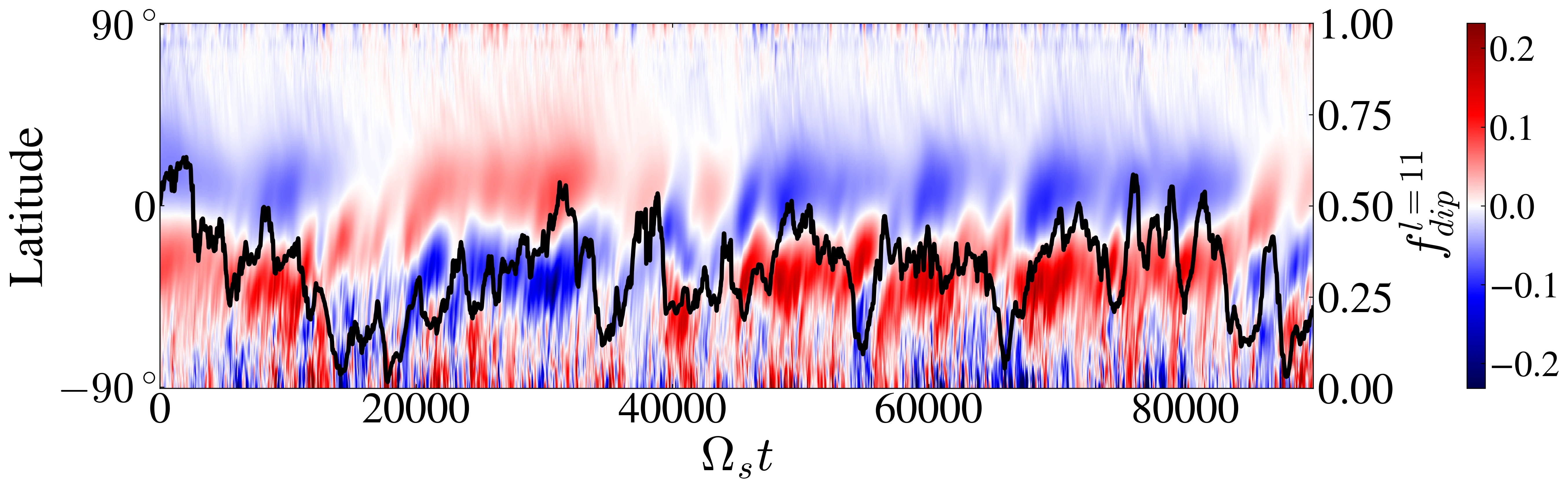
A young star is like a layered spinning top: its outer layers rotate slower, its inner ones faster. The magnetic field here acts like sturdy threads binding these layers together. When the speeds differ, the threads begin to twist and stretch more and more. Eventually they snap, and the simple dipolar field (like that of a bar magnet) is destroyed, replaced by a weak, chaotic one.
That's exactly what happens inside stars, mostly made of hydrogen and helium. Analysis of their light (spectroscopy) confirms the fields are chaotic and unstable. The paradox: fast rotation, which should strengthen the magnet, actually breaks it.
For sun-like stars, this link between spin rate and magnetic chaos is a key to their past: from the current field, we can deduce how fast the star spun in its youth.
The Sun flips its magnetic field every 11 years, like a giant switch. But for many stars, internal twisting disrupts this cycle, and the field leads its own unpredictable life.