Digital Twins Teach the CT Scanner express
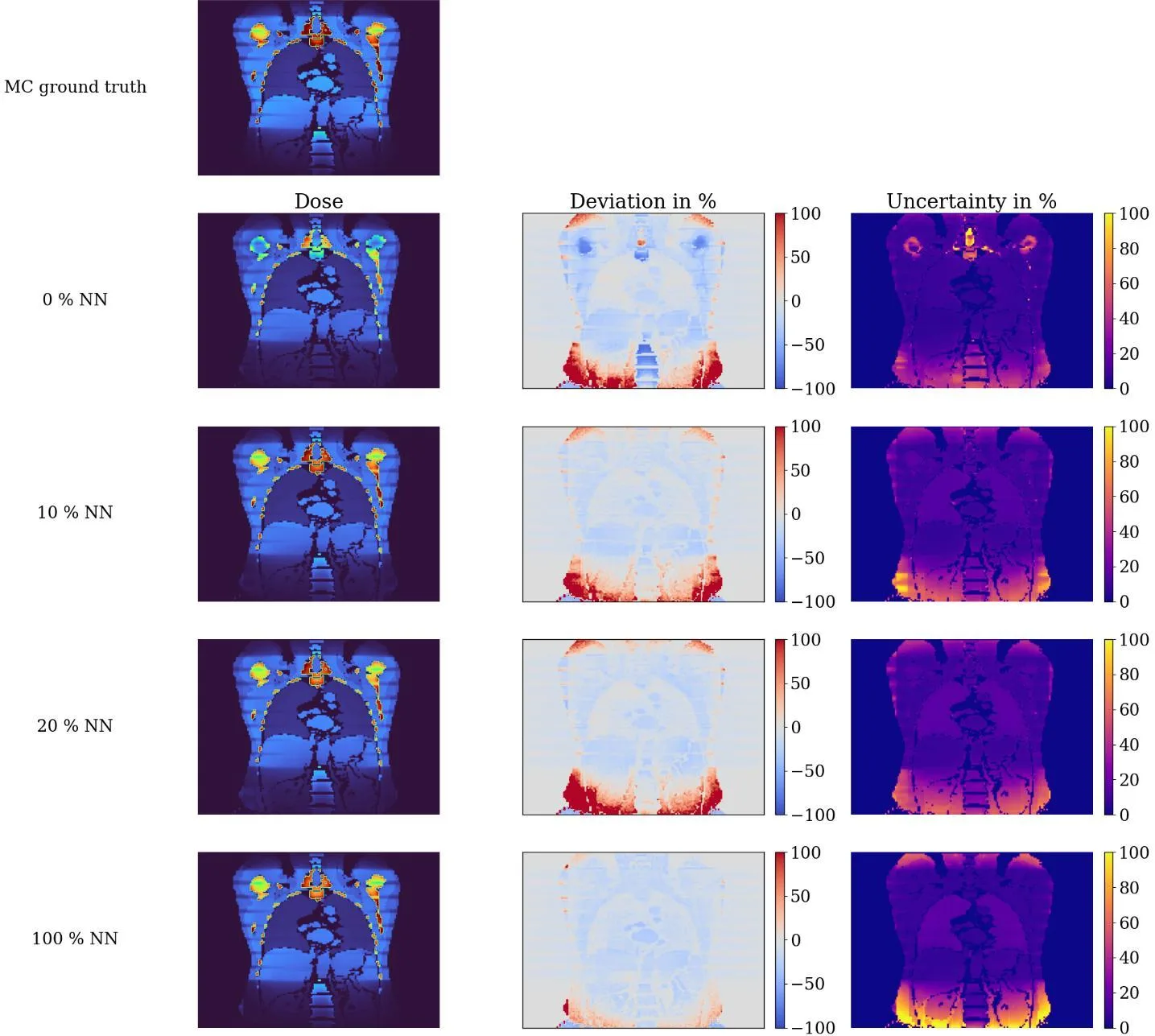
Computed tomography is like an X-ray that takes hundreds of images from different angles and stitches them into a 3D picture of the body. But each image delivers a small dose of radiation, and doctors need to know how much each organ receives. Currently, this is often estimated roughly using average tables rather than for the specific patient.
Researchers trained a neural network to predict the dose for each organ. Training requires examples, but real data are scarce: you can't irradiate people just for an experiment. So they created thousands of virtual bodies — computer phantoms with varying organ sizes and body shapes. A model trained only on such synthetic data made errors on small organs like the eye lens or thyroid gland.
This hybrid approach is like pilot training: first hundreds of hours on a simulator, then a few flights with an instructor. Virtual bodies provide variety, while real data anchor the model to reality. This reduces the need for actual medical records and helps make dosimetry personal.
The virtual phantoms for training were created with a controlled spread of organ volumes, from very small to very large, so the model wouldn't be surprised by the diversity of human bodies.