A 3D image is a visual representation that conveys depth, allowing the viewer to perceive the spatial structure of an object or scene. Unlike a flat photograph, a 3D image can be viewed from different angles or rendered to show depth cues such as parallax and occlusion. In scientific contexts, 3D imaging is crucial for understanding complex structures, from biological tissues to astronomical phenomena.
History
The concept dates back to stereoscopy in the 19th century, but modern computational 3D imaging emerged with the invention of CT scanning in the 1970s by Godfrey Hounsfield and Allan Cormack.
How it works
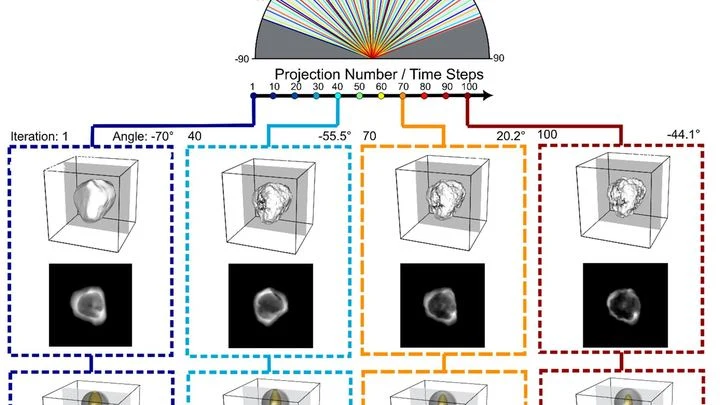
3D images are typically constructed from multiple 2D projections or measurements taken from different viewpoints. Techniques like computed tomography (CT) or magnetic resonance imaging (MRI) collect data from many angles and use reconstruction algorithms to build a volumetric model. Alternatively, depth-sensing cameras use structured light or time-of-flight to directly measure distances, creating a point cloud that can be rendered as a 3D surface.
In practice
Used in medical diagnostics (CT, MRI, ultrasound), industrial inspection, autonomous navigation, and scientific visualization of molecular structures or cosmic maps.
Fun fact
The first 3D image of a human brain was produced in the 1970s using a CT scanner, revolutionizing neurology by allowing doctors to see inside the skull without surgery.
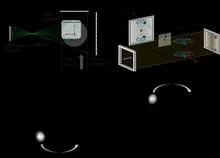
In a dark room, a sunbeam passes through a pinprick in cardboard, and an upside-down image of the street appears on the wall. A pinhole camera needs no lenses: the tiny hole itself selects the rays coming from each point of the scene. Scientists at the ESRF applied this principle not to light but to X-rays, and made the camera see not shape but chemical composition.
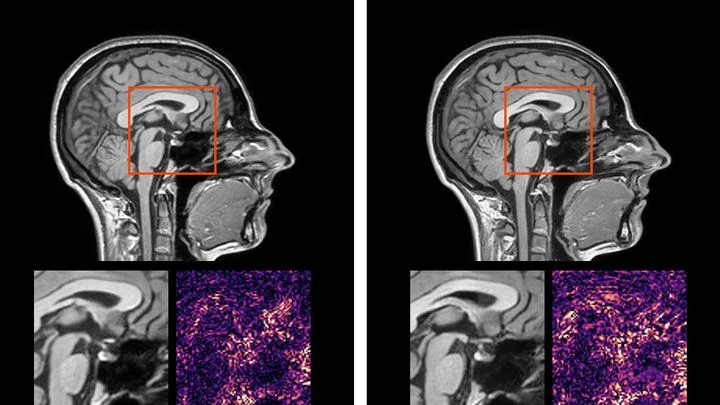
A doctor looks at a screen and sees two images of the same part of the body. One shows where blood is rich in oxygen, the other shows how fast it rushes through the finest vessels. Previously, these images were made by different devices, and combining them was difficult. Now engineers have built a device that takes both images simultaneously.
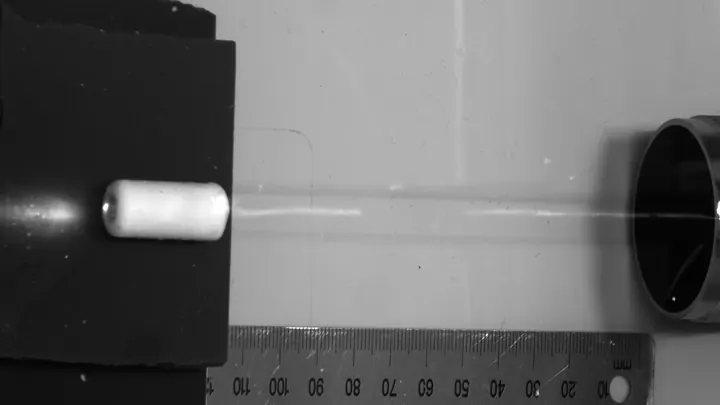
The laser beam in an optical tweezer is not just a spot of light but a force bag. A particle caught in it usually rolls toward the brightest point, like a ball into a dimple.
Light from the hottest stage of the universe has been traveling toward us for nearly 14 billion years. This is the cosmic microwave background — a faint glow filling the entire sky.
To capture every detail of a statue's shape, you could break it into millions of tiny cubes and describe each one — slow, heavy, and your computer's memory would groan at the seams. That's how 3D medical scans are usually handled: a CT or MRI is a huge array of such cubes (voxels), and to create or improve an image, the machine has to plow through all of them.
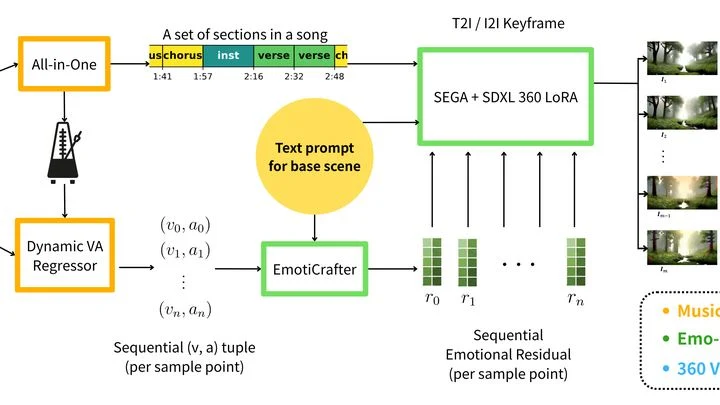
A conductor holds not a baton but a brush, and each stroke gives birth to color and form. New technology works the same way: it transforms a song's mood into a panoramic video that surrounds the listener.
First, the algorithm decomposes the track into emotions, similar to how light is analyzed by spectrum.
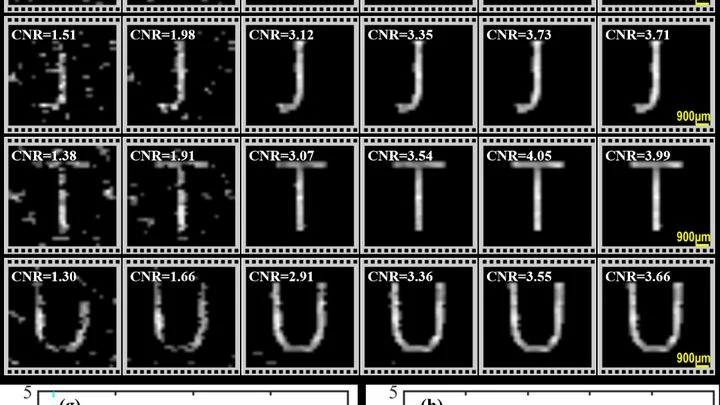
The data from a single CT scan is comparable to several feature-length films. TCAM-Diff bypasses this bottleneck: the program compresses the 3D scene into three shadow projections — like a sculptor reconstructing a solid statue from silhouettes on three walls.
On the screen is the result of a complex simulation: two planets collided, a shockwave ripples outward. A couple of clicks in an editor, and harsh shadows soften, noise smooths out, the background darkens. This kind of digital retouching (image editing to enhance appearance) has long been part of the scientist’s toolkit.
Imagine a philharmonic orchestra playing, but the microphone picks up only a blended roar — a tutti where double basses, flutes, and timpani all merge. Physicists have grappled with a similar task for decades, staring at fields of density, temperature, or magnetic induction.
Magnetic vortices just tens of nanometers across are like tiny tornadoes frozen in metal. Called skyrmions, they are remarkably stable: hard to destroy but easy to move. That's why engineers see them as ideal 'bits' for future memory — fast, energy-efficient, and resilient.
But until now, no one knew how such a vortex is structured within the material's depth.
Through the ripples on the water, pebbles at the bottom of a pool look shifted and warped. In a similar way, the gravity of invisible dark matter bends the light of distant galaxies — a phenomenon known as weak lensing.
Light needs space. A camera lens sits several centimeters from the sensor so the rays have room to focus. Now, that gap has been squeezed to the thickness of a sheet of paper, and light still behaves as if it had traveled its rightful centimeters. That's what 'spaceplates' do: flat elements that mimic free-space propagation.
A conventional lidar is like an artist who paints a landscape but sees only gray shadows. It measures distances to each point accurately, but can't tell whether it's looking at rock, wood, or plastic. To learn the composition, you need a spectrometer — a separate device that works slowly and can't keep up with a fast scanner.
The new system takes a different approach.
In the operating room, the surgeon illuminates the tumor with a special agent that makes it glow. But how do you know whether it glows brightly because there are many cancer cells or simply because it lies close to the surface?
A conventional light microscope hits a fundamental limit: it cannot distinguish two points closer than 200 nanometers — roughly the thickness of a soap bubble divided by a hundred. To see deeper, scientists have made molecules in the sample blink or fade, but these tricks are slow and harmful to living cells.
On the surface of a thin film of bismuth iron oxide, you can see neat stripes, like furrows in a plowed field. What lies beneath them has remained a mystery until now.
A tiny gold star melts under the beam of an electron microscope, its points slowly rounding off. In the past, such a process could only be seen in snapshots taken with long pauses, and the probing beam itself would alter the sample.
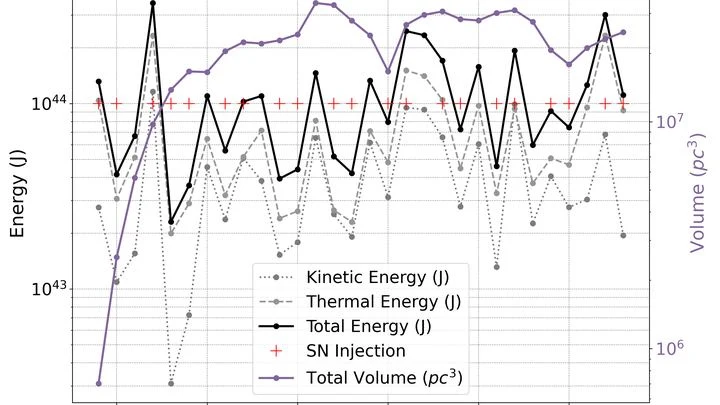
Superbubbles are cosmic giants, akin to soap bubbles, but instead of soap film, they contain rarefied interstellar gas, and they're inflated not by a breath but by a series of supernova explosions. In computer simulations, they behave like living things: they grow, cool, and move. But until now, we couldn't precisely trace their boundaries.
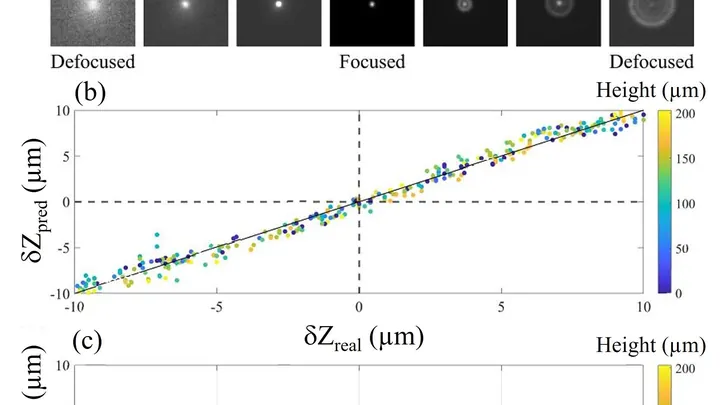
To avoid losing a fast soccer player in the frame, a drone doesn't need a bright beacon — recognizing the silhouette is enough. Similarly, a neural network now tracks microbes: the algorithm analyzes an ordinary microscope image and instantly finds a bacterium in a drop of water.
A teacher in class explains the difference between 'dog' and 'tog': put your hand on your throat and feel the vibration. A speech recognition machine does much the same thing, except inside it's not a throat but long lists of numbers. It turns out these numbers can be sorted onto shelves, like alphabet blocks in a child's room.
Your back hurts, and the doctor asks you to bend forward and backward to see how your vertebrae move. Usually, this means a series of X-rays: they show motion, but only in a plane, like a shadow on a wall. And volumetric methods like CT scans can't keep up with movement.
Engineers proposed a different approach: a robot sweeps an ultrasound probe over your back while you bend.
Quantum light is not just a stream of particles but an intricate pattern woven from space and time. A single photon can be stretched, squeezed, smeared across different directions.
A photo taken through frosted glass always comes out blurry. As light passes through a sample, it scatters, and the camera sees only a smudge instead of a sharp image. Scientists have long known how to recover an image from such a smudge, but old methods are finicky: they either get stuck on a wrong solution or require too many exposures, bombarding the fragile sample.
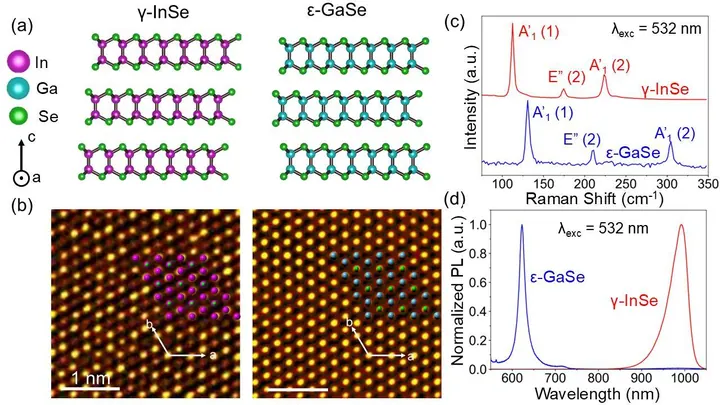
Light passing through a window pane refracts the same in all directions. But in thin layered crystals, it's a different story: light traveling along the layers sees the material differently than light traveling across them. It's as if a sheet of paper were transparent but transmitted light differently along and across its fibers.
Light is like a many-voiced choir: color, direction of oscillation, and instantaneous changes all intertwine. An ordinary camera hears only one voice, while the rest are lost. Scientists have built a camera that listens to the entire choir at once, and from a single image understands what is happening.
Vanadium oxide is a material that can act as an insulator, not conducting electricity, or as a conductor, like a metal. The switch takes trillionths of a second, and that's what makes it a candidate for ultrafast electronic devices.
But exactly how it happens has long been a mystery.
Light is a great tool for studying tissues, but it fades fast deep inside the body. Within a few millimeters, photons scatter so much that you can't make out anything. Scientists came up with a workaround: instead of shining light from outside, deliver a tiny light source right inside. The challenge is how to power that source without wires.
An X-ray image is like a photograph taken in the dark with a very short flash: anything that moves comes out blurred. Conventional X-ray detectors are large arrays of millions of pixels, and by the time they read out one frame, the next is already missed. For a spinning turbine or a beating heart, such sluggishness is a death sentence.
A team of researchers sidestepped this problem by ditching the array altogether.