Quantum Link Through 62 Kilometers of Air express
Two photons, like two halves of the same coin, fly tens of kilometers apart but remain linked: measure one, and you instantly know the state of the other. This property is called entanglement, and it underpins quantum communication.
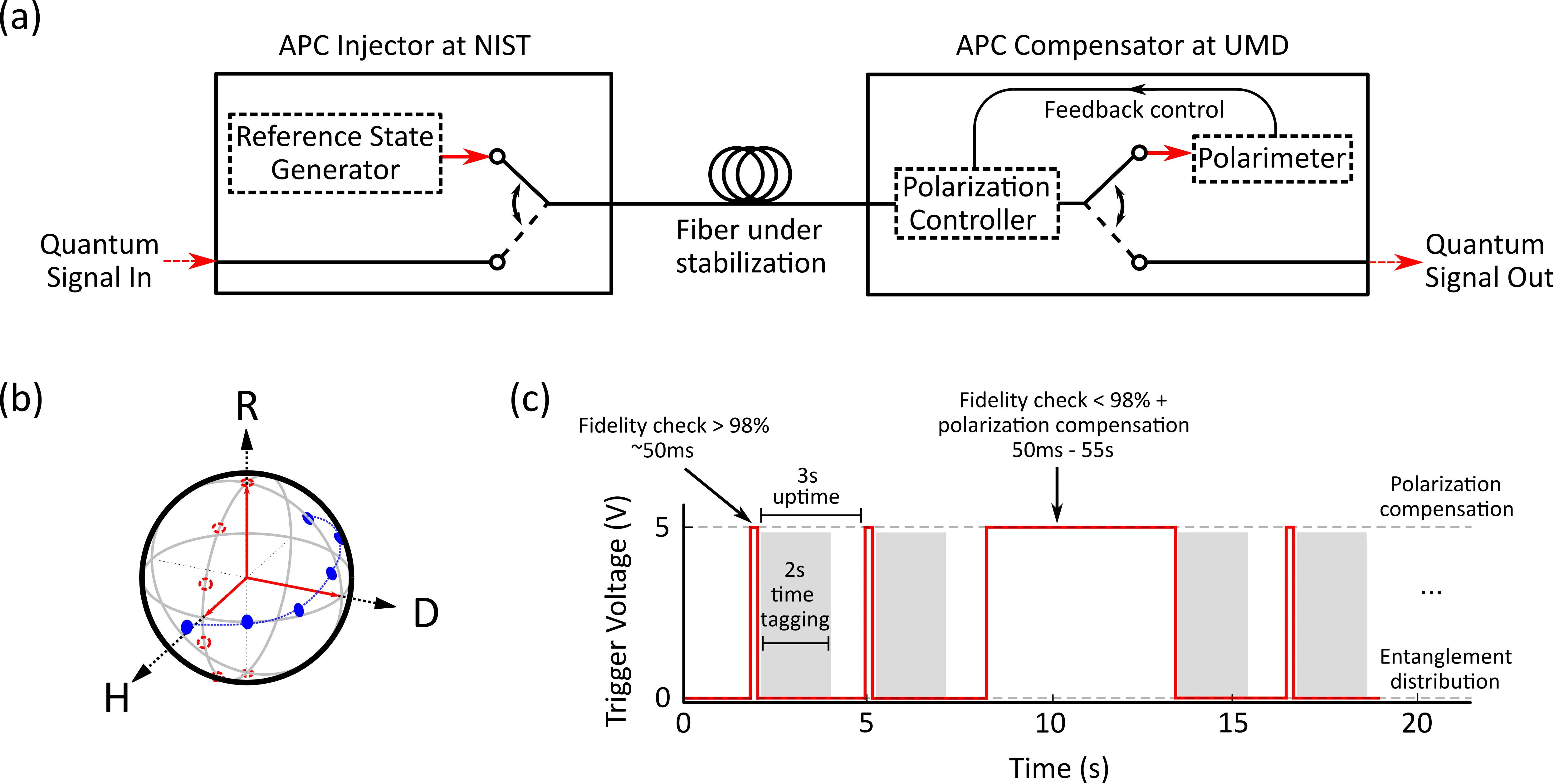
In the new experiment, entangled pairs were sent through a 62-kilometer optical fiber. Part of the cable lay in the ground, and part hung on poles like regular wires. Wind, temperature swings, vibrations — all of these change the polarization of light in the fiber, degrading the signal. To avoid this, the scientists continuously adjusted the polarization, like a tuner tweaking the pegs of a guitar while playing.
As a result, they managed to transmit about 1500 photon pairs per second. The test showed a violation of Bell's inequality: S=2.34, with a limit of 2 for classical physics. It's as if two people, without conspiring, always gave identical answers to random questions — impossible by ordinary logic, but quantum mechanics explains it.
The 62 km fiber length is comparable to the distance between neighboring cities, and photons traverse it in a third of a millisecond.