A Thin Film Turns into a Ferroelectric express
A cube of potassium tantalate behaves like an ordinary dielectric: it doesn't store an electric field. But grow this material as a thin film on a substrate of another crystal, and everything changes.
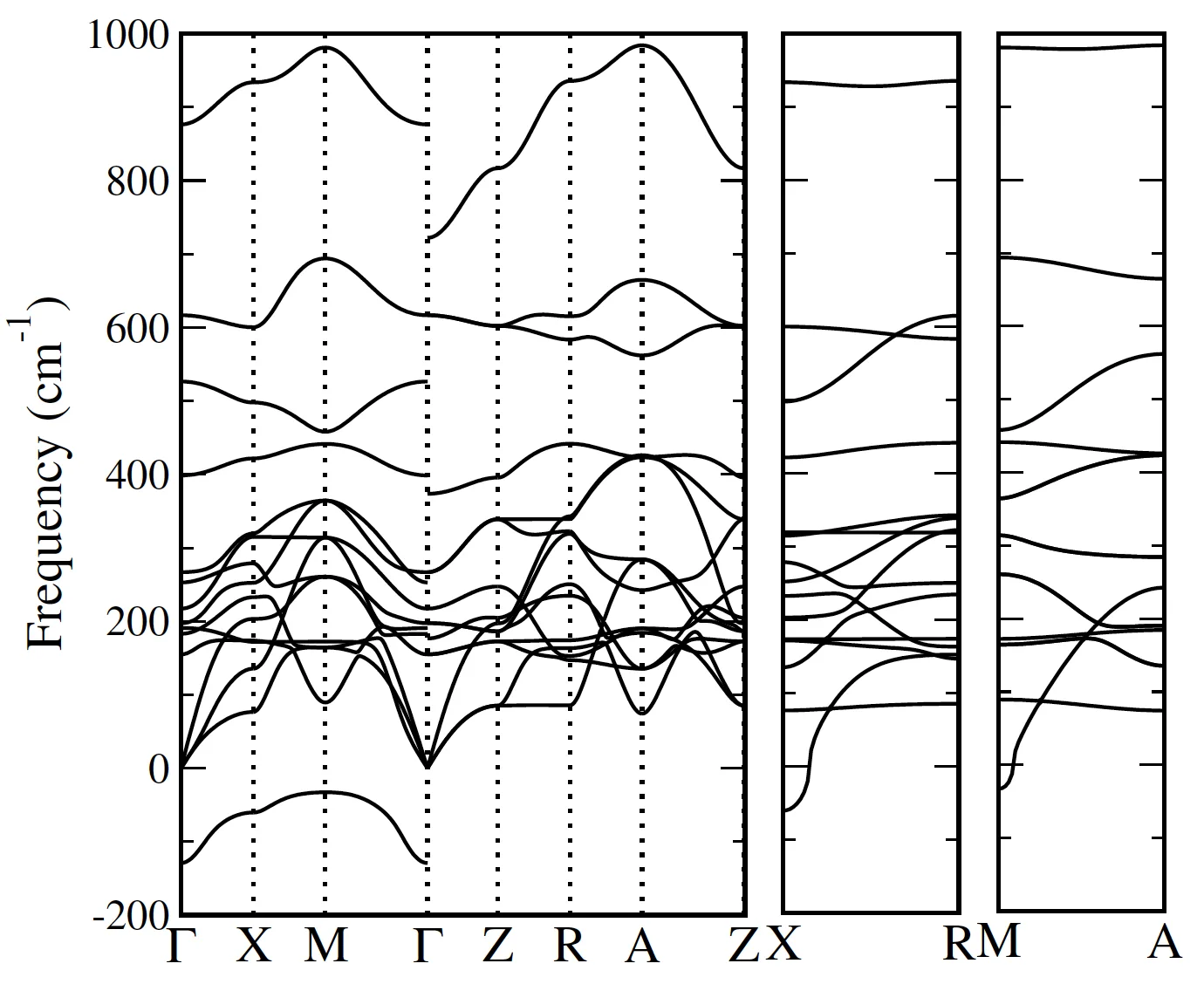
The crystal lattices of the film and the substrate don't match in size, so the film has to adapt: it compresses by 2.1 percent. This compression stretches the cubic unit cell, and a polar direction emerges: plus and minus separate on their own, without any external field. That's how you get a ferroelectric.
Experiments showed that the more you compress the film, the higher the transition temperature and the larger the charge it can hold. That means you can tune the properties in advance, simply by choosing the right substrate.
Under a microscope, you can see potassium and tantalum atoms shifting in opposite directions: that's the polarization. And electrical measurements confirmed that the film remembers the direction of the field, like a good rechargeable battery that you can flip.
Original abstract
as written by the authors arXiv:2601.14627
Epitaxial strain is a powerful means to engineer emergent phenomena in thin films and heterostructures. Here, we demonstrate that KTaO3, a cubic perovskite in bulk form, can be epitaxially strained into a highly tunable ferroelectric. KTaO3 films grown commensurate to SrTiO3 (001) substrates experience an in-plane strain of -2.1 % that transforms the cubic structure into a tetragonal polar phase with transition temperature of 475 K, consistent with our thermodynamic calculations. We show that the Curie temperature and the spontaneous electric polarization can be system- atically controlled with epitaxial strain. Scanning transmission electron microscopy reveals cooperative polar displacements of the potassium columns with respect to the neighboring tantalum columns at room temperature. Optical second-harmonic generation results are described by a tetragonal polar point group (4mm), indicating the emergence of a global polar ground state. We observe a ferroelectric hysteresis response, using metal-insulator-metal capacitor test structures. The results demon- strate a robust intrinsic ferroelectric state in epitaxially strained KTaO3 thin films.
Ferroelectrics are used in memory chips: they remember their state without constant power, like magnetic tape, but faster.
In the series 'The Expanse,' materials with tunable properties allow building ships that withstand extreme forces — similar to how compression changes the crystal's behavior here.