Walther Nernst in 1906 suggested that at absolute zero, the entropy of chemical reactions becomes zero. Later, Max Planck generalized this to the statement that the entropy of any perfect crystal at T=0 is zero. Entropy is a measure of disorder or the number of ways a system can be arranged at the micro-level; at absolute zero, only one, the most ordered, is possible.
History
Walther Nernst, studying chemical reactions at low temperatures, formulated the heat theorem in 1906: the entropy change in a reversible isothermal reaction tends to zero as absolute zero is approached. Max Planck in 1911 gave it a modern statistical interpretation, linking entropy to the number of microstates and postulating that at T=0 this number equals one.
How it works
The law defines the reference point for entropy and allows calculation of absolute entropy values for substances. Applied in cryophysics, in achieving ultra-low temperatures, in superconducting magnet technology. Limits: the law holds for equilibrium systems; glasses and amorphous bodies may have residual entropy at T=0 due to frozen-in disorder.
In practice
This limitation prevents perpetual motion machines from working, explains why something cannot be cooled exactly to −273.15°C, and sets the efficiency limit for refrigerators.
Fun fact
A kettle will never boil by itself, absorbing heat from the room — the third law prevents it, narrowing the path to free energy.
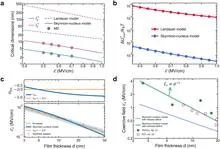
In a perfect crystal of lead titanate, the atoms line up like soldiers on parade: all electric dipoles point the same way. To flip that formation by 180 degrees, old calculations demanded energy comparable to heating the crystal to millions of degrees.
In 1934 Jean Leray proved that the Navier–Stokes equations always have solutions "in a generalized sense". Whether a solution stays smooth or can break down into a singularity he could not tell, and nobody could for ninety years. In 2000 the Clay Institute made the question one of its seven Millennium Prize problems.
In a thin layer of liquid crystal, molecules usually lie like matches in a box — aligned in one direction but randomly oriented: some point up, others down. To make all the matches point the same way, you need a special molecular architecture. Scientists have found a chemical trick that does this almost automatically.
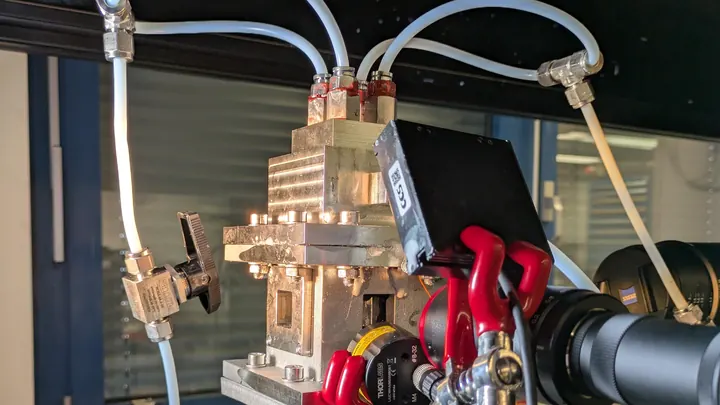
A superconductor is a material in which electricity flows without loss, like water through a perfectly smooth pipe. But if you squeeze it slightly, like a spring, its properties change. Scientists have long wanted to measure how much heat such a compressed material absorbs, but instruments couldn't fit into the cramped setup. Now they've devised a way around this obstacle.
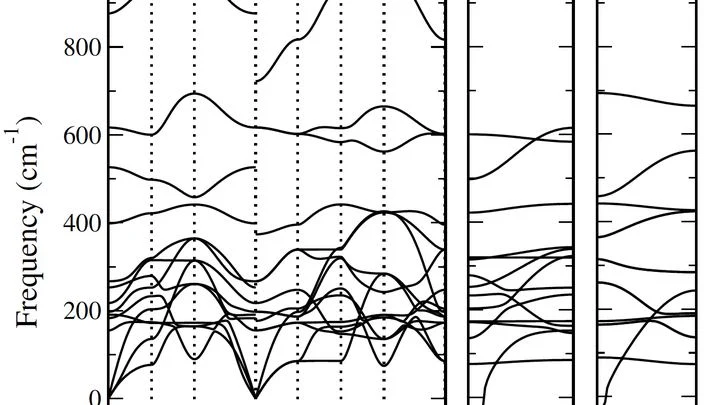
A translator who has memorized all the lines in advance responds instantly — no need to listen to the whole conversation again. That's how the new model works: instead of running atoms through a computer for hours, it immediately outputs the crystal's free energy at any temperature and pressure.
A black hole has three laws, just like an ideal gas. The first: energy is conserved. The second: the horizon area never decreases. And the third, the most finicky, demands that at zero temperature the entropy (a measure of disorder) tend to zero or a universal constant.
The wind carries pollen, and each grain moves as if on its own. But once the air swirls into a vortex, the pollen trajectories can no longer be separated: they are tangled. This is roughly how electrons behave in a strange metal: their motion is so strongly coupled to soft fluctuations of the medium that the usual particle carriers disappear.
The river splits in two. One branch is wide and fast, with water flowing smoothly, but as temperature rises, the flow slows: eddies and waves appear. The second branch is narrow, with rapids, where water leaps from rock to rock. This flow, on the contrary, becomes more lively with warming.
A pot of water always boils the same way: hit 100 degrees and bubbles start. Quantum fluids are different. When a cloud of atoms is cooled to near absolute zero, it can turn into a single matter wave — a Bose–Einstein condensate. But the transition itself, it turns out, can happen in three different ways.
Imagine a packed dance floor where dancers glide without any friction — passing through each other without a touch. That's a superfluid. In a neutron star's crust, neutrons could behave this way, but a rigid lattice of ions gets in the way, like suddenly sticking the dance floor full of pillars.
A mathematical doughnut, a torus, sits on the boundary of a three-dimensional world where gravity acts. You can crumple and stretch it, and physicists decided to see how it behaves. Inside this world, space can be flat like a table, expanding like a soap bubble, or curved like a saddle. The doughnut boundary refused to stay smooth.
Plutonium is a metal with attitude. One form shrinks when cooled, another swells. But at room temperature, the alloy behaves strangely: the ruler says one thing, X-rays say another. The ruler shows the sample barely grows, while X-rays see atoms in the crystal lattice moving further apart.
At the Large Hadron Collider, not only nuclei but also individual protons collide. Even in such small systems, collective behavior resembling the flow of a liquid is observed. But the proton is a quantum object; its state is described by a wave function, not by temperature and pressure.
Water can be ice, liquid, or steam. Physicists call these states phases. In theory, each phase has its own measure — a way to describe how likely it is. But not every measure you can imagine occurs in nature. Some phases are real, while others are just mathematical illusions.
Scientists have found a simple criterion that separates reality from mirage.
In an orchestra where every musician plays the same note, the sound merges into a powerful unison. This is how a Bose–Einstein condensate is born: many boson particles at extremely low temperatures behave as a single entity.
Splitting water into hydrogen and oxygen with electricity is an age-old dream of clean fuel. But tiny gas bubbles stand in the way: they cling to the electrodes like foam on the side of a soda glass, interfering with the current's work. Each bubble is a tiny plug, blocking part of the surface where the reaction should occur.
Water in a pot, when heated, doesn't boil: it turns into ice. That's roughly how ultracold atoms behave in an optical lattice — a light-based crystalline grid that holds atoms in place. Scientists simulated this system on a computer to understand how order changes as temperature rises.
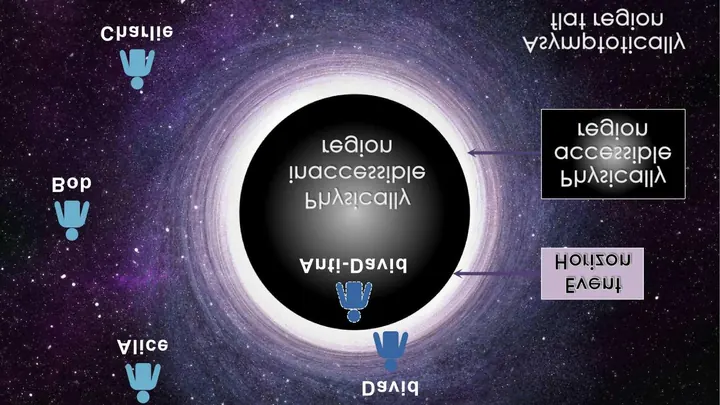
Fragile as ice in a furnace, quantum entanglement usually perishes from the slightest heat. Near a black hole, where space is twisted by Einstein's gravity and Hawking radiation Hawking's heats things up, any bond should be destroyed.
A cube of potassium tantalate behaves like an ordinary dielectric: it doesn't store an electric field. But grow this material as a thin film on a substrate of another crystal, and everything changes.
Run a current through a wire, and the wire heats up. Anyone who has ever touched a phone charger knows this. Physicists call this heating Joule heating, after James Joule, who in the mid-19th century measured how much heat electricity produces. Since then, the formula has been simple: the greater the resistance and the current, the hotter the wire.