Electron wind flows around obstacles express
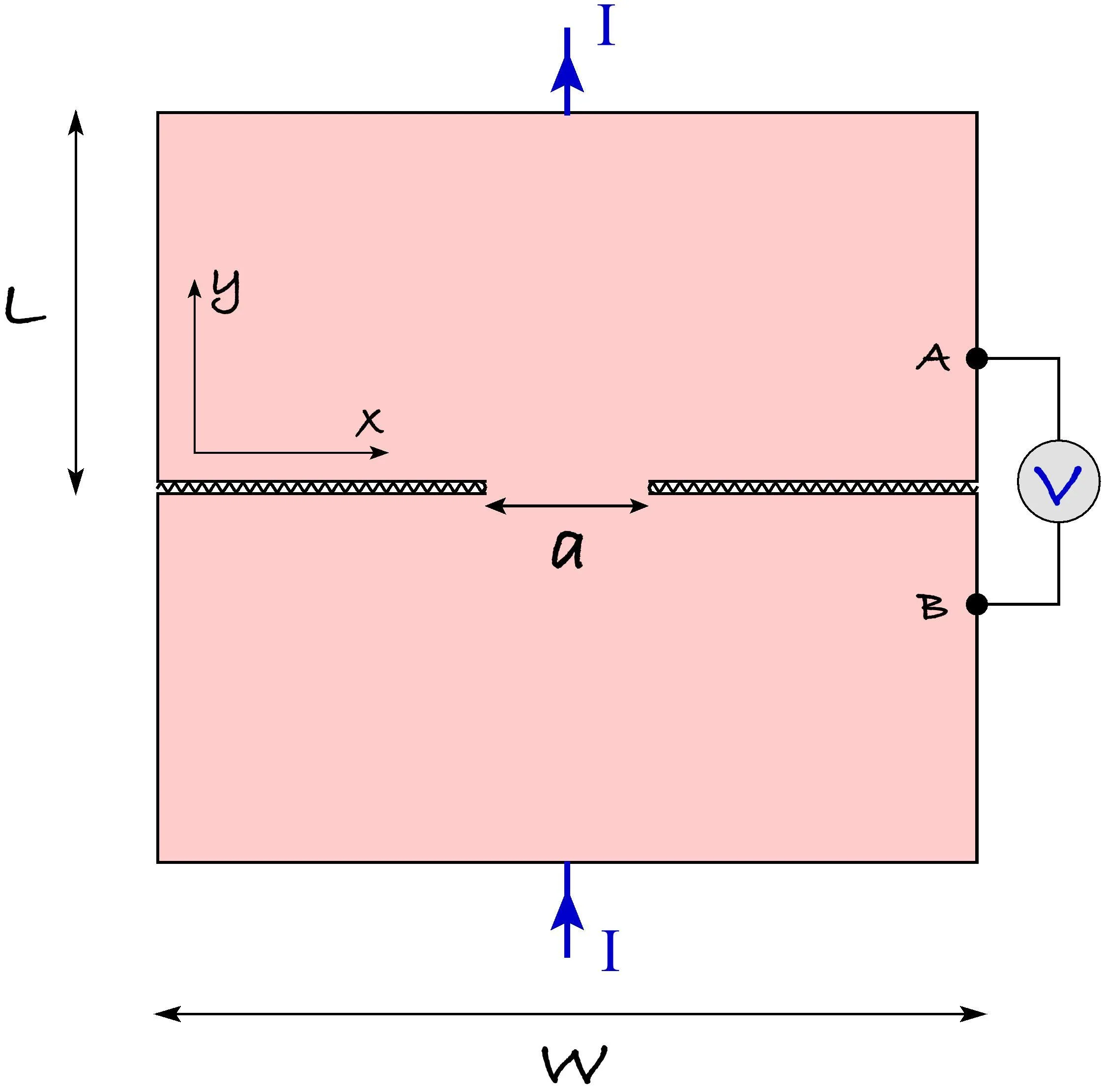
If you force water through a narrow neck, the flow speeds up right at the edge, and a whirlpool forms behind the obstacle. Electrons in ultra-clean two-dimensional materials, such as a thin layer of graphene, behave in much the same way. There, they move not as individual particles but as a viscous fluid, and friction between them becomes more important than the resistance of the material itself.
The authors took simple equations describing slow fluid flow and applied them to the electron stream. It turned out that sharp obstacles create a "skin effect": the current intensifies near the obstacle's edges but weakens away from them, where the flow is unconstrained. This is like wind bending around the corner of a building: it accelerates sharply right at the corner, and a calm zone sets in behind the building.
Experiments with scanning magnetometry on graphene have already shown strange current profiles — with enhancement at the edges and double humps. The new work provides a natural hydrodynamic explanation: it all comes down to sample geometry and the viscosity of the electron fluid. This helps correctly interpret current maps and avoid confusing viscosity effects with other phenomena, such as ballistic electron motion without collisions.
This view of electron transport opens the way to designing devices where current is controlled not only by fields but also by channel shape. Just as an architect uses a building's shape to manage wind, engineers could create channels that direct the electron flow in desired ways.
The viscosity of the electron fluid in graphene at low temperatures can be comparable to that of honey, even though the electrons themselves move at about a million meters per second.
In Stanisław Lem's story "The First Journey," an electronic mind controls particle flows like a shepherd herding sheep — here, channel geometry becomes a similar shepherd for electrons.