A Cosmic Necklace with a Carbon Conundrum express
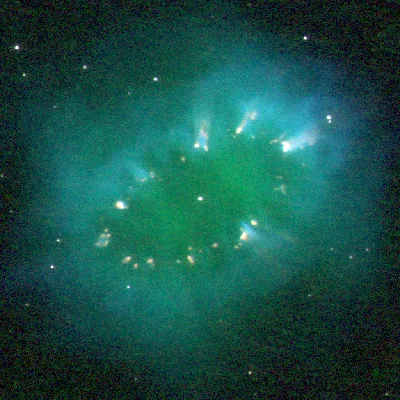
Deep in space, there's a cloud of gas that looks like a necklace with bright beads. This is the Necklace Nebula — the remains of a star that once swelled up and swallowed its neighbor. At the center, a pair remains: a small, hot star and its bloated companion, rich in carbon.
Scientists pointed the Hubble Space Telescope at the nebula and measured how much carbon lies in its inner region. It turned out that carbon is scarce there, as if someone had scooped it out with a spoon. But the companion star nearby is literally stuffed with carbon. How did that happen?
Likely, the first star expelled carbon-rich gas before its death, and the companion pulled it in. But then why is the inner part of the nebula poor in carbon? Perhaps that gas drifted farther away, leaving the center "empty." Or we are only seeing part of the picture.
This mystery is like a detective story: the clues contradict each other, but together they piece together a tale of how one star gave its substance to another. And how, from that chaos, a beautiful cosmic necklace was born.
The Necklace Nebula is located about 15,000 light-years from Earth in the constellation Sagitta.
In Stanislaw Lem's novel "Solaris," the planet's ocean also behaves unexpectedly, much like this nebula hiding its secrets.