How Observation Changes Chaos express
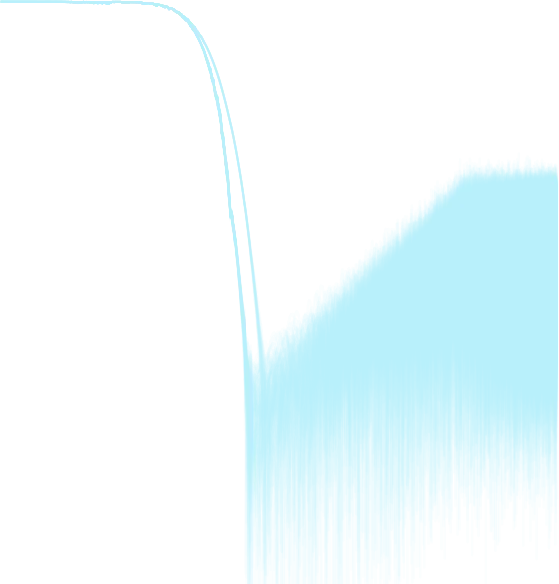
The quantum world is full of surprises: even simply observing a particle changes its behavior. In a new study, physicists showed that continuously measuring energy can make quantum chaos more pronounced. They used a quantity that indicates how long a quantum state remains similar to itself under repeated measurements.
It turned out that with ideal measurements (when every outcome is known exactly), chaos is enhanced compared to the no-measurement case. This is because measurements destroy quantum correlations that usually smooth out chaotic behavior.
Such an effect could be useful for creating new quantum technologies where one needs to control chaos or, conversely, harness it.
Original abstract
as written by the authors arXiv:2602.02663
We investigate the role of quantum monitoring in the dynamical manifestations of Hamiltonian quantum chaos. Specifically, we analyze the generalized spectral form factor, defined as the survival probability of a coherent Gibbs state under continuous energy measurements. We show that quantum monitoring can tailor the signatures of quantum chaos in the dynamics, such as the extension of the ramp in the spectral form factor, by varying the measurement strength and detection efficiency. In particular, a typical quantum trajectory obtained by monitoring with unit efficiency exhibits enhanced quantum chaos relative to the average dynamics and to unitary evolution without measurements.
Even in the classical world, observation can affect a system: for example, a thermometer immersed in water slightly changes its temperature.
In Greg Egan's novel 'The Permutation City', characters explore worlds where the laws of physics depend on observation.