The Mystery of White Dwarfs with a Long Delay express
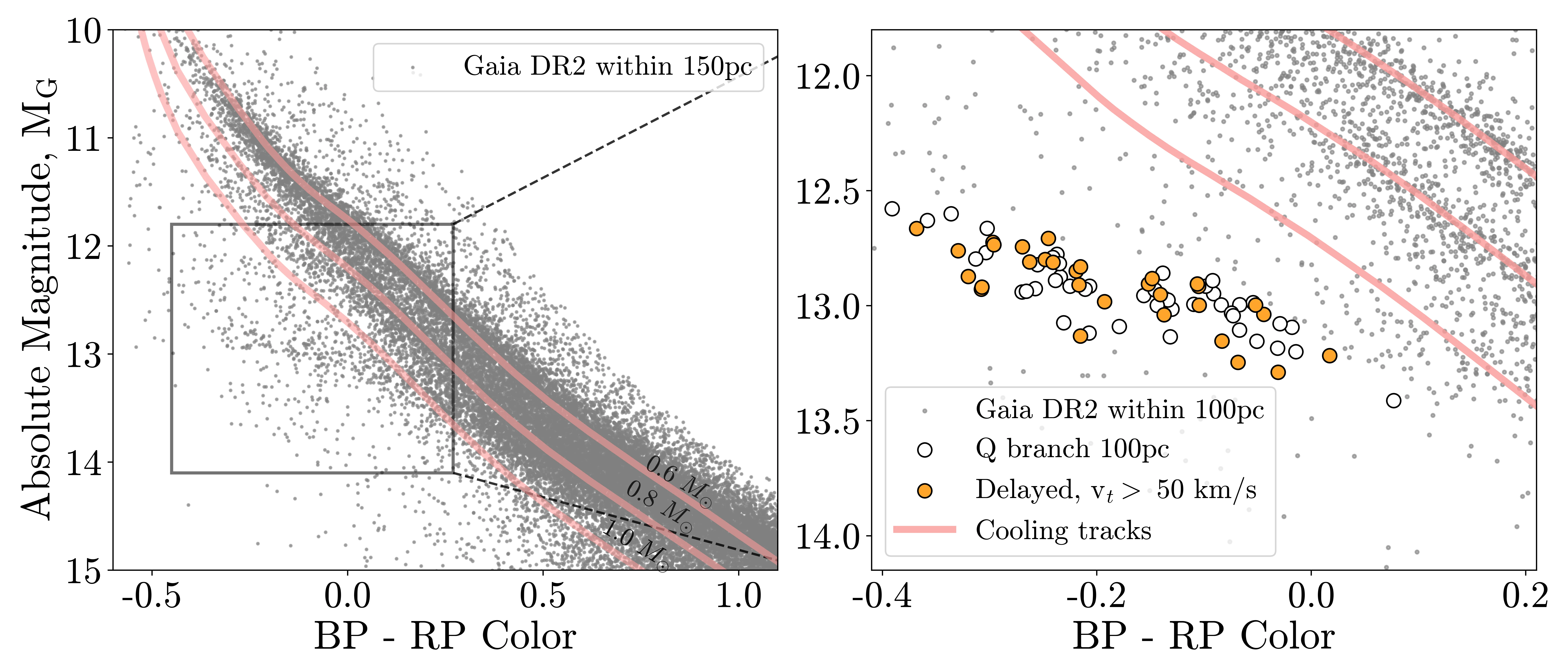
An old star like the Sun, at the end of its life, shrinks into a white dwarf — a dense sphere about the size of Earth. After that, it simply cools down, like embers in a campfire. But some white dwarfs somehow stay hot for billions of years. Astronomers studied such objects within a radius of one hundred parsecs from us and found an unexpected pattern.
It was thought that the long cooling delay is linked to the merger of two white dwarfs: the collision releases energy and produces a strong magnetic field. But the most "delayed" dwarfs show no magnetism and rotate slowly. It seems that the signs of merging are erased over the cooling time, or these stars were born differently.
In addition, two dwarfs with hydrogen atmospheres showed brightness pulsations. One of them is hotter than expected for such pulsations. This pushes the boundaries of the zone where white dwarfs can "shiver."
A white dwarf is so dense that a teaspoon of its material would weigh as much as several elephants.