GW170817 is the first gravitational-wave signal detected from the merger of two neutron stars, observed on August 17, 2017. It was a landmark event because it was also accompanied by electromagnetic radiation across the spectrum, from gamma rays to radio waves, marking the dawn of multi-messenger astronomy. The signal provided direct evidence that neutron star mergers produce heavy elements like gold and platinum, and it allowed a new measurement of the expansion rate of the universe.
History
GW170817 was detected by the LIGO-Virgo collaboration and announced on October 16, 2017. It was the first gravitational-wave event to have a confirmed electromagnetic counterpart.
How it works
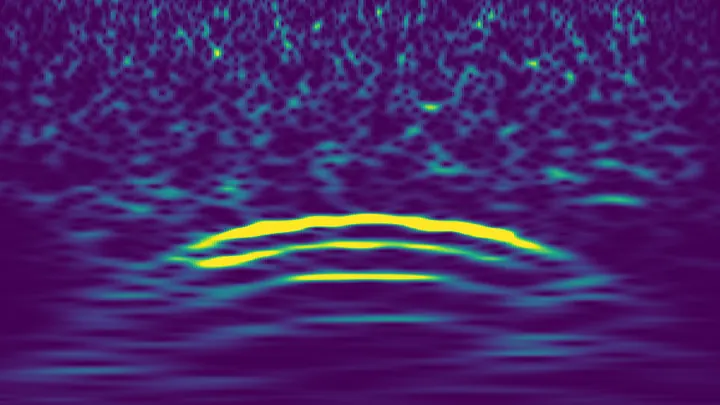
The signal was detected by the LIGO and Virgo gravitational-wave observatories as a chirp lasting about 100 seconds, as the two neutron stars spiraled closer and eventually merged. The gravitational waves carried information about the masses of the stars (about 1.4 and 1.1 solar masses) and the distance to the event (about 130 million light-years). The subsequent gamma-ray burst, observed 1.7 seconds later, and the kilonova afterglow, seen in optical and infrared, pinpointed the host galaxy NGC 4993.
In practice
The event has been used to test general relativity, measure the Hubble constant, and understand the origin of heavy elements in the universe.
Fun fact
The merger produced about 200 Earth masses of gold and platinum, confirming that neutron star collisions are cosmic gold mines.
At night, a lighthouse on a rock doesn't go dark, but sometimes the keeper draws the curtains over the lamp. The light is still there, just less of it. Something similar happened to the X-ray pulsar 4U 0114+65: it didn't disappear, it merely dimmed its emission.
A pulsar is a neutron star that captures material from a neighboring star and emits X-ray pulses with every rotation.
Two snapshots of the same lighthouse. One is taken from a boat sailing straight into the beam, the other from the shore, where the beam only grazes the edge of the sky. From these two frames, you can reconstruct how the lighthouse light is distributed across angles without ever getting close to it. That is roughly what astronomers did with two gamma-ray bursts they consider twins.
Imagine an interpreter distracted by every rustle in the hall, turning a one-hour meeting into two. That's roughly how gravitational wave detectors behaved when analyzing long signals: each turn of the Earth added noise to the calculations, and processing a day-long neutron star merger threatened to stretch into weeks.
A beacon at the edge of the galaxy blinks without a schedule: sometimes silent for years, sometimes emitting hundreds of flares in a single day. Such a beacon needs a watchman who never sleeps and never gets distracted.
Imagine two spinning tops set on a table. If they spin in the same direction, their combined rotation is large; if they spin toward each other, the total rotation can be zero even though each top spins rapidly on its own. In a pair of neutron stars approaching merger, their individual rotations, spins, play the role of such tops.
A lighthouse doesn't flash steadily but in short, bright pulses. The neutron star in the system 4U 1323-62 is such a lighthouse in the X-ray range. It pulls gas from a companion star, and when enough material accumulates on its surface, a thermonuclear explosion occurs — an X-ray burst.
The galaxy cluster RXC J0528.9−3927 is like a city shrouded in fog: at its center, a radio halo shines brightly, but farther out, beyond the usual boundaries, astronomers have spotted a barely visible glow. It stretches for two million light-years — three times farther than the halo itself.
Somewhere in the depths of space, two supermassive black holes are circling each other. Their dance is not smooth — the orbit is stretched, like a rubber band that alternately tightens and relaxes. Each revolution sends ripples through the fabric of spacetime — gravitational waves.
The merger of two neutron stars is not just a collision. Even before they touch, they deform each other through tidal forces, and this deformation depends on how 'soft' or 'stiff' the matter inside is. Stiff matter resists more; soft matter changes shape more easily.
A gravitational wave from a black hole merger is like a bell tolling in the night. The loudness tells you how far away the source is. But to learn how fast the night itself, the cosmos, is expanding, you usually need a second signal: a flash of light or a catalog of galaxies. Both are rare to catch.
When a star many times heavier than the Sun dies, it collapses and explodes as a supernova. This is not just a flash of light — the entire process, from core collapse to the ejection of the outer layers, makes space itself tremble. These ripples are called gravitational waves.
A thrown stone sends ripples across water. A gravitational wave is the same kind of ripple, but in spacetime. It is produced, for example, by the merger of two black holes. In classical physics, this ripple is eternal: once created, it travels through the Universe without fading.
In the first moments of its life, the universe resembled a boiling cauldron. Matter wasn't spread evenly — clumps and voids were brewing within it, and their violent motion gave rise to a trembling of space itself: gravitational waves.
In the first 10⁻³⁵ seconds after the big bang, the most rapid part unfolded. Space expanded faster than light — that's expansion of the universe (inflation). Almost the entire score was performed by a single field, the inflaton, conducting the tempo and key.
The early Universe was like a rapidly cooling ocean. At colossal temperatures, everything was one — quarks, electrons, forces all blended into a symmetric 'steam.' But as it expanded and cooled, this steam condensed, phase transitions cascading one after another like water turning to ice.
A huge bowl of water. Drop a stone into it — ripples spread across the surface. The fabric of spacetime works much the same way: when two massive stars merge, they create ripples — gravitational waves. These waves travel to Earth and are picked up by giant detectors like LIGO and Virgo.
It takes the stellar pair J05+50 nearly two months to complete one orbit around their common center. From Earth, it appears as a faint point in the constellation Hercules — 4625 parsecs away. Photometry of the binary star only captures a steady flicker of brightness, like the pulse of a giant heart.
In August 2019, the LIGO and Virgo detectors picked up gravitational waves from the merger of two compact objects in a binary star. One weighed 23 solar masses — a standard black hole. The other came in at 2.5–2.67 M⊙.
A neutron star is the collapsed core of a massive star, squeezed to the size of a city. A teaspoon of its material weighs as much as a mountain. But inside this superdense sphere, a surprise may lurk: under unimaginable pressure, neutrons break apart into quarks, giving the star a new, more compact core.
A spinning top that makes a hundred turns per second suddenly starts losing speed dramatically — much faster than any known top. That's exactly what pulsar J0435+3233 is doing. It's a dead star, crushed to the size of a city, but whirling at a furious rate.
In the first moments after the Big Bang, the Universe hummed like a bell. Inflation, the epoch of rapid expansion confirmed by measurements of the cosmic microwave background, ended, and the inflaton field began oscillating around the minimum of its potential.
When two black holes merge far away, we receive a tremor of space — gravitational waves. Usually, they are described by Einstein's equations, but what if gravity works differently at the tiniest distances? The authors took one such hypothesis — Hořava–Lifshitz gravity.
In 2017, the LIGO and Virgo detectors recorded the spacetime tremor from the collision of two neutron star merger — event GW170817. After the initial burst came an after-ring: a kilohertz oscillation of the newly formed superdense remnant.
In 2019, the LIGO facility recorded a gravitational waves, a ripple in the fabric of spacetime, whose time-frequency map resembled a strange comb. Each such signal from a black hole merger leaves a unique pattern, like a fingerprint.
13.8 billion years ago, the universe swirled in a waltz. The right turn was forbidden. Today, the echoes of that cosmic ball reach us as a barely perceptible ripple in spacetime — gravitational waves. Their existence was predicted by Albert Einstein.
The Universe is humming, but our ears catch only the bass. LIGO hears the rumble of black hole mergers — the infrasound of space. Higher up, in the gigahertz range, the flutes and violins of primordial gravity ring out.
Seventeen minutes: that’s the heartbeat frequency of AM Canum Venaticorum, setting the rhythm for the entire class of ultracompact binaries. In these systems, two white dwarfs whirl in a death dance, tightening their orbit to the still-inaudible whisper of gravitational waves.
Gravitational-wave detectors are like sensitive microphones, listening for the whispers of distant cataclysms. But every now and then, a sharp crack bursts in — a brief noise spike known as a glitch.
Two neutron stars spiral closer and collide. The result: a gravitational wave, a ripple in spacetime, a short gamma-ray burst, and a faint glow astronomers call a kilonova. But sometimes the signal passes by a massive galaxy.
A low rumble coming from underground could be the noise of a distant construction site, or it could be the echo of an ancient earthquake. Astronomers faced a similar puzzle in 2023 when they detected ultra-low-frequency gravitational waves — the trembling of spacetime itself, rippling across the universe.
Two ultradense spheres, each the size of a city, whirl in a dance. Their masses are less than the Sun's, but inside them is matter compressed to unimaginable limits. One sphere is a neutron star; the other is a strange star, made entirely of quarks — the elementary particles that build up protons and neutrons.
The universe rewrites its history again and again. Where ordinary astronomy sees only a point, a black hole, gravitational waves peel back thin layers of the past, like an ancient palimpsest. The idea that black holes can grow by devouring each other, and their offspring can enter new unions, has been discussed by astrophysicists for half a century.
In the ocean of space, every storm of birth or merger of supermassive black holes generates ripples — gravitational waves traveling at the speed of light. Over billions of years, these waves superimpose, merging into a low-frequency hum, like a distant surf.
The mystery of dark matter has puzzled physicists for nearly a century. Among the candidates for its role are primordial black holes (PBHs), born in the fiery embrace of the first moment after the Big Bang.
Think of a merry-go-round: it's easier to spin a light one, harder to spin a heavy one. Neutron stars, the ultra-dense remnants of exploded stars, behave in a similar way. Astronomers looked at fifty binary systems where one neutron star orbits another and noticed: the heavier the star, the longer its spin period. The link isn't strict, but it's statistically noticeable.
Two neutron stars, ultra-dense remnants of massive stars, merge into one, and the space around them shudders: a gravitational wave is born, a ripple in the very fabric of spacetime. Almost simultaneously, a narrow stream of matter, the jet, erupts from the scene.
The early universe resembled an overcrowded hall where heavy particles collided and decayed at a deafening pace. Among them could have been scalar leptoquarks — particles that simultaneously latch onto a quark (a building block of matter) and a lepton (such as an electron).