Roughness That Decides a Flight's Fate express
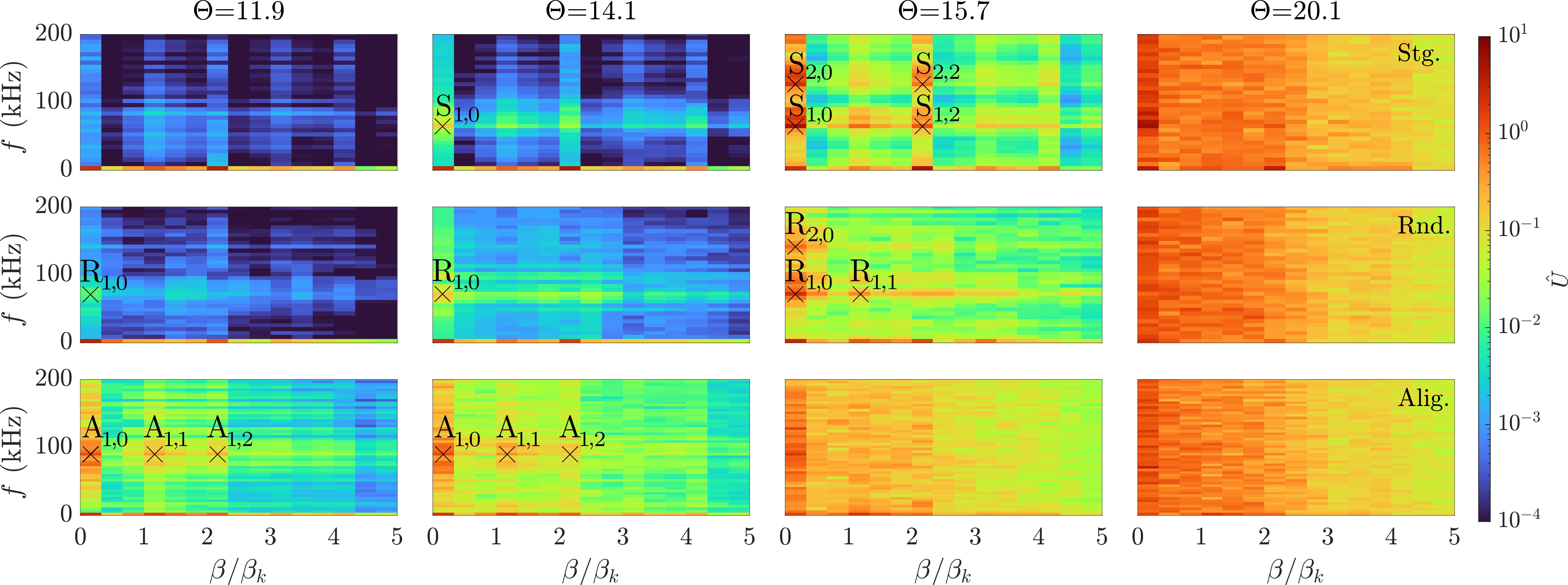
A blunt cylinder flying at six times the speed of sound isn't the most elegant object, but it's the star of a new simulation. The surface of such a vehicle is never perfectly smooth: during atmospheric entry, the heat shield ablates, leaving bumps and pits. How these imperfections turn a calm flow into wild turbulence has only been glimpsed in isolated experiments and has resisted precise modeling. Now, for the first time, scientists have run a detailed numerical experiment, covering the cylinder with rows of artificial sand grains, like sandpaper.
It turns out that the pattern of roughness decides the flight's fate. When the grains sat in neat rows, the transition to turbulence began with wavy streaks — the flow rocked itself like a flag in the wind. But when the rows were staggered or scattered randomly, waves like ocean swell woke up first, rolling over the bumps and growing stronger. Both mechanisms eventually spawned hairpin vortices, and the flow collapsed into chaos.
For engineers, this means: by changing the layout of roughness on a heat shield, you can delay or hasten the moment of transition to turbulence. And that determines how much the vehicle heats up during atmospheric entry. Perhaps one day, spacecraft surfaces will be deliberately made not perfectly smooth but with a clever pattern that keeps the flow calm for as long as possible.
The height of the roughness in the simulation was only about a third of the boundary layer thickness, like bumps a fraction of a millimeter high on a golf ball. It's these tiny details that decide whether the flow becomes turbulent.
In the movie The Martian, the Hermes spacecraft's heat shield looks perfectly smooth, but in reality, after atmospheric entry, its surface would be covered with thousands of imperfections, and those very bumps could control the transition to turbulence.