Supercapacitor from an Old T-Shirt express
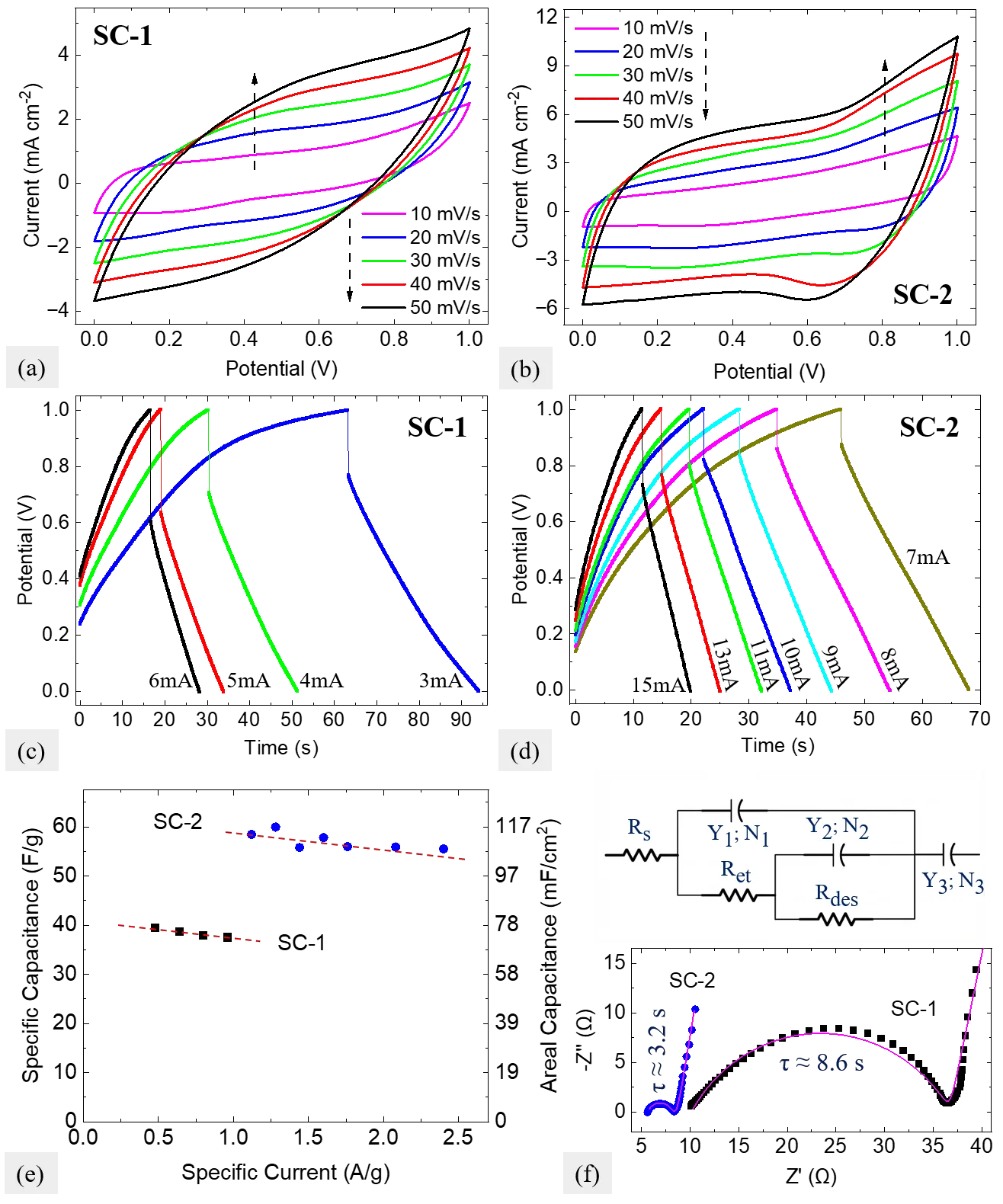
An old T-shirt was dissolved in alkali to produce a gel, and it became the heart of an energy storage device. The second component was made from chitosan, a substance derived from shrimp shells. No metals: just recycled cotton and seafood.
The gel was soaked in ammonium salt, and its conductivity nearly doubled: from 17.1 to 37.8 millisiemens per centimeter. It's like replacing a narrow footpath for ions with a wide highway — charges move faster. In tests, the device showed a response time of 3.2 seconds, comparable to commercial counterparts.
After 1000 charge cycles, the capacitance didn't drop but increased by 12.3%. Resistance rose slightly: from 18 to 22 ohms. The cause: tiny traces of iron from the steel casing reacted with the gel. In a compact coin-cell battery, this wouldn't happen. It's not a defect but a quirk of the lab setup.
Such a supercapacitor can be disposed of without harming the environment. It doesn't require rare metals like lithium or cobalt, and it's made from what is usually thrown away. Soon, old jeans might power wearable electronics.
Original abstract
as written by the authors arXiv:2602.13432
This study presents an eco-friendly and bio-based symmetric supercapacitor using cotton textile waste-derived hydrogels as electrolytes and chitosan-based carbon electrodes as metal-free charge-storage components. Cotton-derived hydrogels were synthesized via an alkaline dissolution-gelation route and modified with ammonium thiocyanate (NH4SCN) to enhance ionic conductivity. The ionic modification increased the hydrogel conductivity from 17.1 to 37.8 mS cm^-1, confirming a nearly twofold improvement in ion transport efficiency. The resulting hydrogel exhibited improved thermal stability, homogeneous ionic transport, and strong polymer-ion interactions confirmed by FTIR and TGA analyses. In a symmetric device, the ion-modified hydrogel enables reduced equivalent series resistance, faster charge-transfer kinetics, and a short time constant (tau = 3.2 s), comparable to commercial energy-storage systems. After 1000 cycles, the device exhibits a 12.3% increase in specific capacitance, confirming stable proof-of-concept operation. Cycling leads to a moderate increase in R_ESR (18 to 22 ohm) and tau (3.2 to 4.1 s), indicating slower charge-ion redistribution. Notably, this R_ESR includes the contribution of the test-cell setup; in compact coin-type configurations, the resistance would be considerably lower. EIS reveals a concurrent rise in interfacial resistive terms, consistent with post-cycling hydrogel darkening and FTIR evidence of Fe-SCN coordination, suggesting that resistance buildup mainly originates from minor Fe-SCN interactions when the expelled liquid reaches the stainless-steel collector, rather than from loss of capacitive functionality. Overall, these results demonstrate the viability of cotton waste-derived hydrogels and chitosan-based electrodes as sustainable components for green energy storage, offering a recyclable and eco-friendly alternative to conventional systems.
Chitosan, used in the electrodes, is derived from shrimp and crab shells — food industry waste that amounts to millions of tons annually.