Light Pierces Milk: Lensless Microscope Sees Through Murky Media express
Light in murky water behaves like a person in thick fog: every step is a collision, and the picture blurs. That's why a regular microscope can't see through skin or milk. Engineers found a workaround — look in the infrared range, where light collides less with particles.
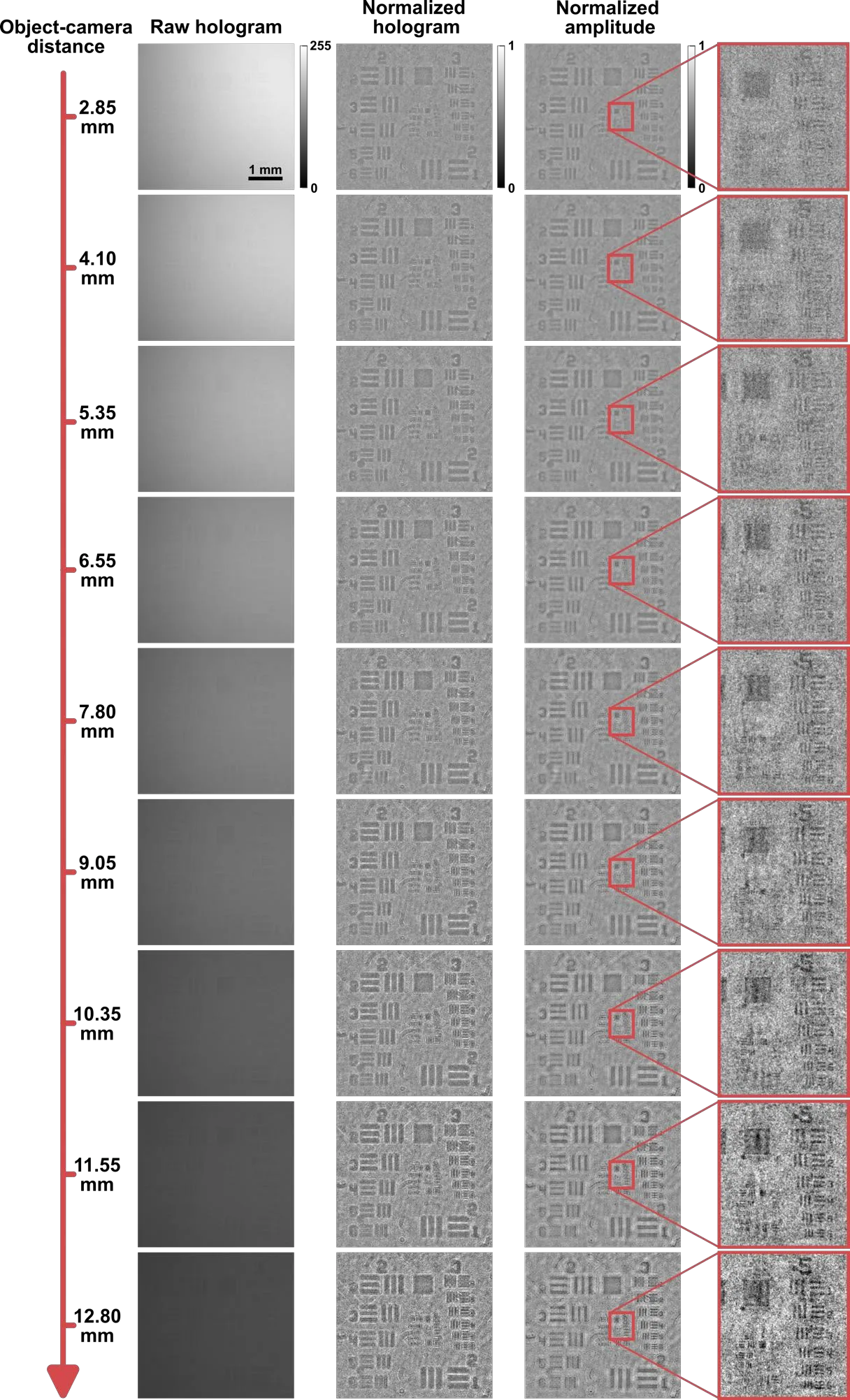
They assembled a lensless microscope — a device where a computer algorithm, not a glass lens, builds the image. A camera with a standard smartphone sensor captures light that passes through the sample, and software reconstructs the picture. Instead of visible light, they used near-infrared with wavelengths up to 1100 nanometers, like switching a flashlight from white light to an invisible but more penetrating beam.
Tests on mouse tissues showed: in the brain, structures are visible down to 250 micrometers; in the liver, down to 60. The camera sensor captures only 0.19% of photons at 1100 nm — light is barely registered, yet the algorithm still assembles a sharp image.
This work paves the way for cheap, compact devices for medical diagnostics that need no incisions or dyes. Light once deemed useless for such tasks now helps peer inside the living body.
At 1100 nm, the camera sensor catches just one photon out of every five hundred, yet computational processing still yields a crisp image.
The idea of 'seeing through the murky' evokes sci-fi devices that scan the body without cutting — except here it's real technology based on an ordinary camera.