Millions of Recipes for Better Batteries express
Modern batteries with liquid electrolytes can leak or catch fire. Polymer electrolytes (solid, plastic-like materials) solve that problem, but ions move through them more slowly, so the battery loses power.
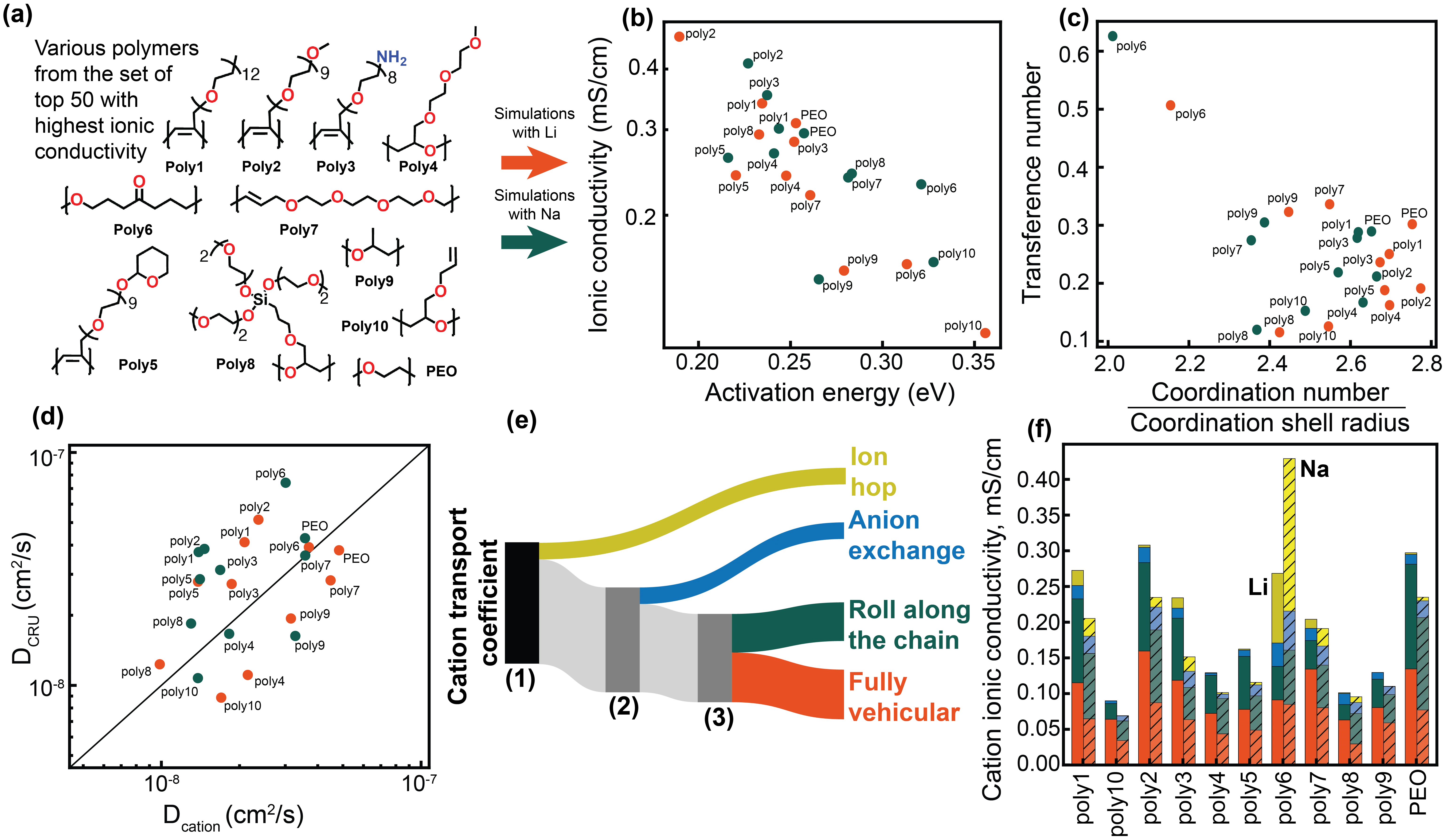
Researchers set up a virtual assembly line: a computer program generated new polymer structures the way a chef experiments with new dough recipes. Out of 1.7 million options, the algorithm picked 767 promising ones and calculated how lithium ions move through each. The best samples outperformed the standard polyethylene oxide with lithium salt — the current benchmark.
The method works for sodium batteries too: comparisons showed that sodium ions are larger and move differently, but suitable polymers can still be found. This approach is like searching for a needle in a haystack, but instead of hands you have a supercomputer, and instead of hay, millions of chemical formulas.
Polyethylene oxide is the same material used in some laxatives and cosmetics, but with lithium salt it conducts ions.