Mountains on Exoplanets Prevent Eternal Winter express
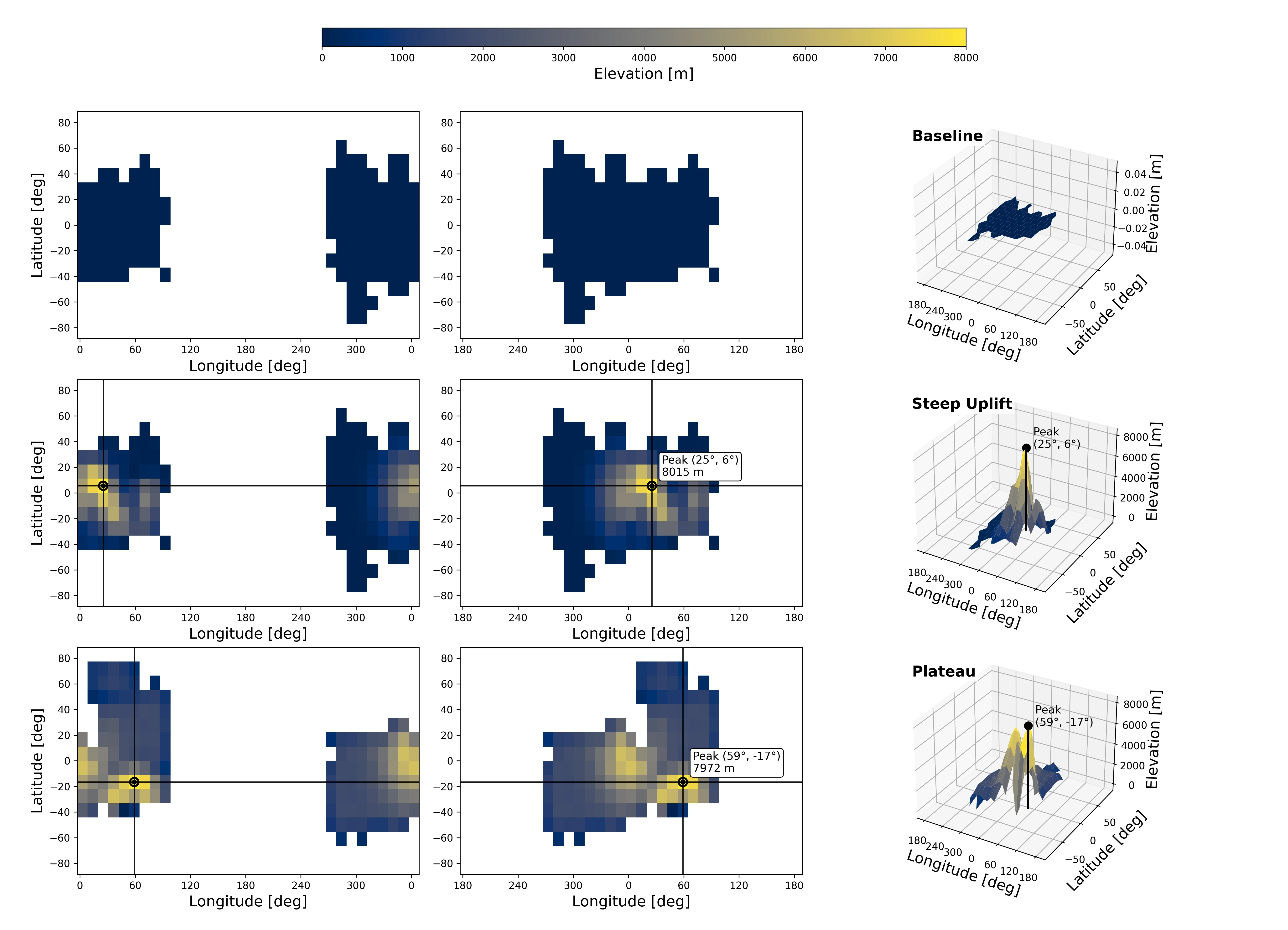
For exoplanets that always face their star with one side, the night side is doomed to eternal cold. But mountains can turn things around. Surface irregularities shake up the ocean of air, steering moisture flows across the day-night boundary. Once in the dark, water freezes into clouds, and clouds act like a blanket: they trap heat and keep the world from cooling down. Computer models show that even modest hills (not the Himalayas, just small uplifts) break symmetrical air vortices and give birth to a jet stream. Like a conveyor belt, it hauls moisture into the night, making the blanket thicker. The planet thaws, even under a weak-star glow. The James Webb Space Telescope can check this by analyzing light filtering through the atmosphere (spectroscopy). So the fate of distant worlds hinges not just on distance from their star, but on every wrinkle of their surface.
On Earth, mountain ranges spawn atmospheric waves that cause drought on one side and downpours on the other. But on exoplanets, that very mechanism can thaw an entire frozen world.