Black hole vortex shifts quantum rhythm express
A spinning black hole drags spacetime with it, like a spoon swirling thick honey. This vortex is a manifestation of curved spacetime. But the key point: it can change the quantum rhythm of matter, even where there are no forces.
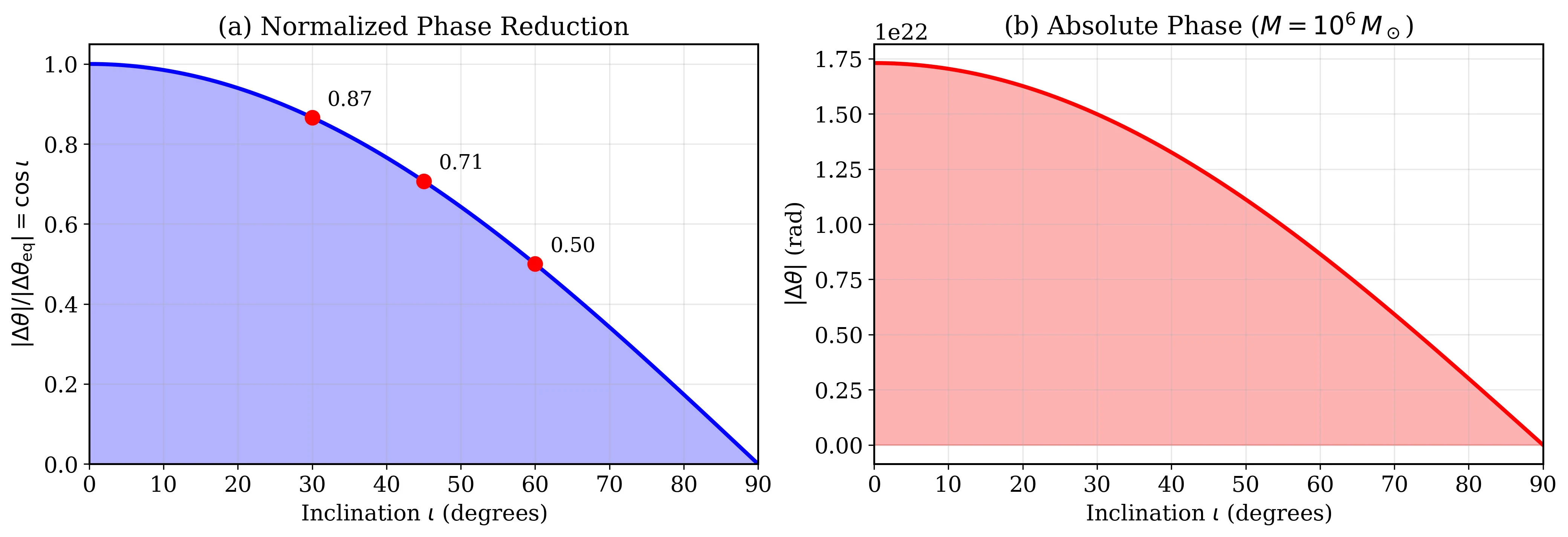
The culprit is an effect discovered by Yakir Aharonov and David Bohm: the “wave rhythm” of a quantum particle (called its phase) can shift under the influence of an invisible field. Scientists applied this idea to electron pairs — the main carriers of superconductivity. Near a supermassive black hole (like Sagittarius A* at the center of the Galaxy) the phase shift reaches 10²⁴ radians. For comparison: a full turn of a clock hand is only about 6 radians, while here the shift is equivalent to billions of rotations.
We can't test it directly yet, but the same effect, only much weaker, is already being captured in Earth-based experiments: there, space is twisted by our planet’s rotation.
Original abstract
as written by the authors arXiv:2602.20337
The unification of quantum mechanics and general relativity remains among the most profound challenges in fundamental physics. Here we investigate a novel quantum probe of strong-field gravity: the gravitomagnetic Aharonov-Bohm (AB) effect for Cooper pairs propagating in Kerr spacetime. The frame-dragging induced by a rotating black hole (BH) generates an effective vector potential through the off-diagonal metric component $$g_{t\phi}$$, which couples to the macroscopic phase of the superconducting condensate. We derive the gauge-invariant AB phase shift $$\Delta\theta = (4\pi m^* Ma/\hbar)(1/r_2 - 1/r_1)$$ for an interferometer with arms at radii $$r_1$$ and $$r_2$$, where $$m^* = 2m_e$$ is the Cooper pair mass and $$a$$ is the BH spin parameter. Remarkably, the predicted phases reach $$|\Delta\theta| \sim 10^{24}$$ radians for Sgr~A* and $$\sim 10^{27}$$ radians for M87*, reflecting the enormous gravitomagnetic flux near supermassive BHs. We analyze the dependence on interferometer geometry, demonstrate that tidal disruption of Cooper pairs is negligible at distances $$r \gtrsim 10\,r_s$$, and establish connections to the geometric Berry phase. Although direct experimental realization remains beyond current technology due to the vast distances involved, our framework provides quantitative predictions linking quantum coherence to spacetime curvature, complementing recent observations of gravitational AB phases in atom interferometry.
This shift is so huge that it would correspond to 10²³ full turns — trillions of times more than the number of stars in our Galaxy.
In the movie Interstellar, the characters saw how the black hole Gargantua twists space itself.