We have retold 6 papers by this author. 1 of them with a full read. most often about: black hole, gravitational singularity, event horizon. 7 co-authors across our retellings.
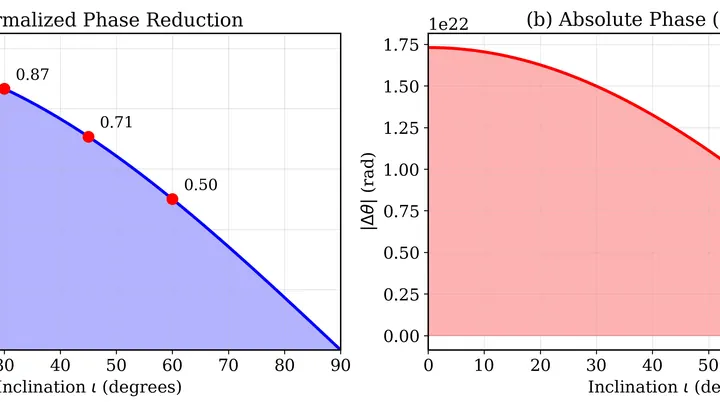
A spinning black hole drags spacetime with it, like a spoon swirling thick honey. This vortex is a manifestation of curved spacetime. But the key point: it can change the quantum rhythm of matter, even where there are no forces.
Some solutions to Einstein's equations allow closed timelike curves — loops that let you travel to the past. Two well-known designs, the Ori geometry and the Ahmed geometry, do without exotic matter, catching physicists' eyes.
At the centers of many galaxies lurk supermassive black holes. One of them, Sagittarius A* at the heart of the Milky Way, has become a testing ground for a new idea. The authors of the work took Einsteinian gravity and added an unusual electromagnetic field to it.
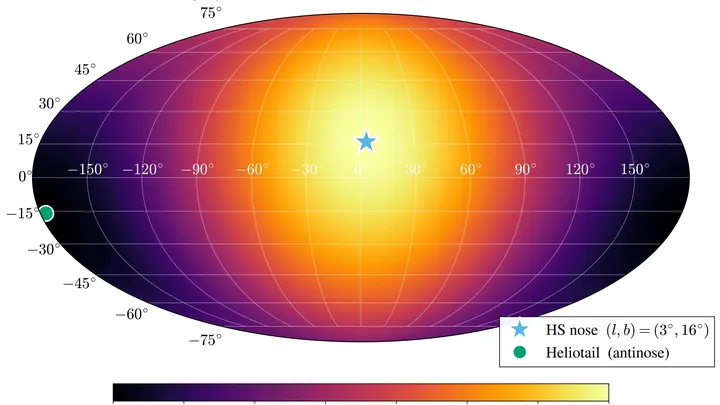
The cosmological debate is like two craftsmen measuring the same wall but getting different lengths. One uses a tape measure, applying it to nearby landmarks — Cepheids (pulsating beacon stars) and Type Ia supernovae (flashes of dying stars). He finds the wall is stretching at 73.5 arbitrary units.
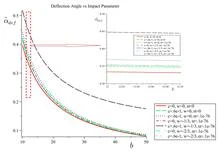
A black hole doesn't just spin: it's surrounded by bristles of an extra field (the Kalb–Ramond field). This paper explores how a massive field (waves with mass) behaves near such a black hole when it's almost spinning at its maximum rate.
The Klein–Gordon–Fock equation for this field was separated into two independent parts — radial and angular.