Black hole vortex shifts quantum rhythm express
A spinning black hole drags spacetime with it, like a spoon swirling thick honey. This vortex is a manifestation of curved spacetime. But the key point: it can change the quantum rhythm of matter, even where there are no forces.
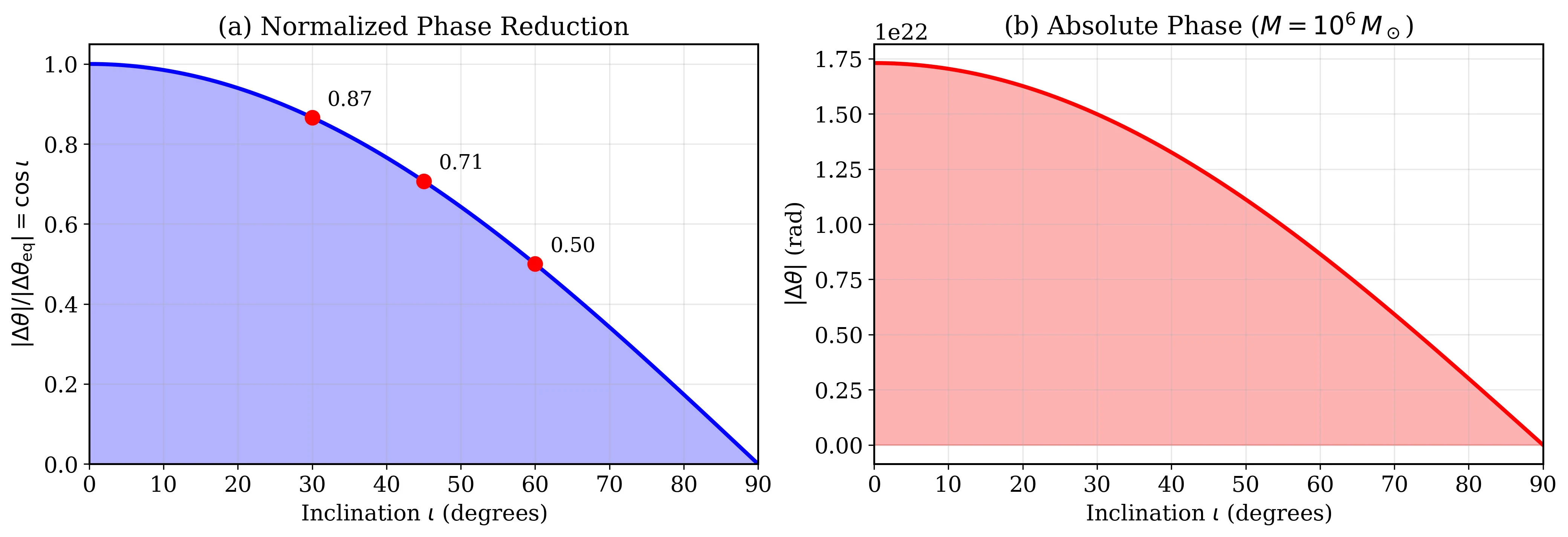
The culprit is an effect discovered by Yakir Aharonov and David Bohm: the “wave rhythm” of a quantum particle (called its phase) can shift under the influence of an invisible field. Scientists applied this idea to electron pairs — the main carriers of superconductivity. Near a supermassive black hole (like Sagittarius A* at the center of the Galaxy) the phase shift reaches 10²⁴ radians. For comparison: a full turn of a clock hand is only about 6 radians, while here the shift is equivalent to billions of rotations.
We can't test it directly yet, but the same effect, only much weaker, is already being captured in Earth-based experiments: there, space is twisted by our planet’s rotation.
This shift is so huge that it would correspond to 10²³ full turns — trillions of times more than the number of stars in our Galaxy.
In the movie Interstellar, the characters saw how the black hole Gargantua twists space itself.