Popular

Roger Penrose

1931 – настоящее время · general relativity, quantum gravity, cosmology
British physicist and mathematician, made fundamental contributions to general relativity and cosmology. Proved that the formation of black holes is an inevitable consequence of general relativity under realistic conditions. Developed twistor theory, which aims to unify quantum mechanics and gravity. Nobel Prize laureate in Physics for discoveries in the field of black holes.

Biography

Graduated from University College London and the University of Cambridge. Worked at Birkbeck College, University of Oxford. Collaborated with Stephen Hawking on singularity theorems. Received numerous awards, including the Nobel Prize (2020), the Wolf Prize, and the Copley Medal.

Key discoveries

💡 Penrose is known for his impossible figures, such as the Penrose triangle, which inspire artists and illustrate visual paradoxes.
Quote: "Consciousness is a phenomenon that cannot be explained solely by computation. There is something elusive about it."
Links in the knowledge graph 1
Related tags
black holegravityquasar
Related laws
Penrose processPenrose singularity theorem
Related scientists
Robert HookeFritz ZwickyJacob BekensteinSubrahmanyan ChandrasekharRainer WeissStephen HawkingKarl SchwarzschildJoseph Weber

Related articles

How a Neural Network Learned to See Quantum Foam

At the quantum level, space and time resemble a foam of microscopic bubbles. Neural networks have learned to instantly compute their interactions, replacing hours of calculations. This brings us closer to understanding the structure of the Universe at the smallest scales.
arXiv:2505.03255 · 2025-05-06

How to Tame Infinity in Space?

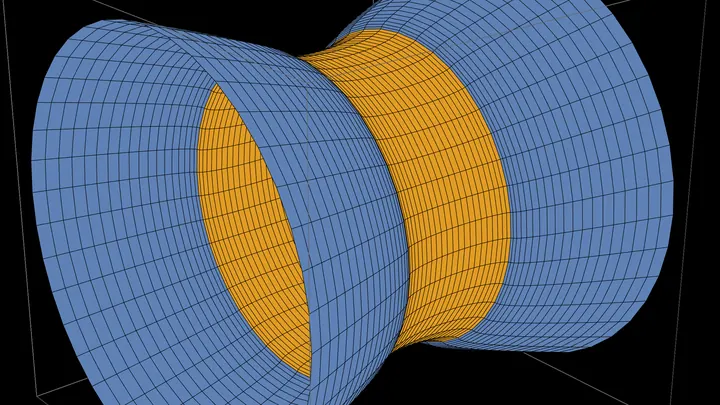
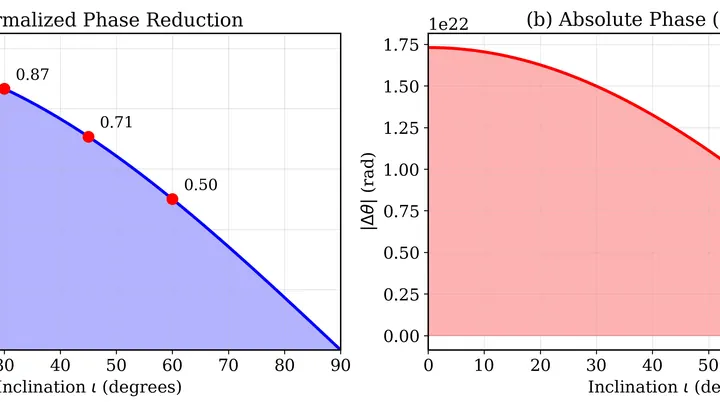
At the edge of the observable Universe, curved spacetime creates mysterious twistings — linked to infinite values. Roger Penrose's method compresses infinity into a point and yields a finite result. This is key to gravitational waves and the permanent deformation of space.
arXiv:2507.04245 · 2025-07-06

Why Does Time Only Move Forward?

A cup of coffee cools down but never heats up on its own—that's the arrow of time at work. Scientists have discovered: the direction from past to future depends not only on increasing disorder but also on how the cosmos expands.
arXiv:2508.01803 · 2025-08-03

The Higgs Field Opens a Passage Through a Black Hole

Usually passive, the Higgs field inside a black hole gives rise to antigravity, preventing collapse into a point and creating a tunnel. The i(SM+GR) theory unites particle physics and gravity, predicting traversable black holes and the possibility of a universe before the Big Bang.
arXiv:2509.06800 · 2025-09-08

Quantum Logic of the Brain: No Particles, No Fields

The brain oscillates between options like a quantum particle, but without any physical quanta. A mathematical model has shown that quantum-like states emerge from coordinated neural activity. This can be tested with EEG, turning philosophical debates about consciousness into observable science.
arXiv:2509.16253 · 2025-09-17

How to Make a Black Hole Perfectly Black

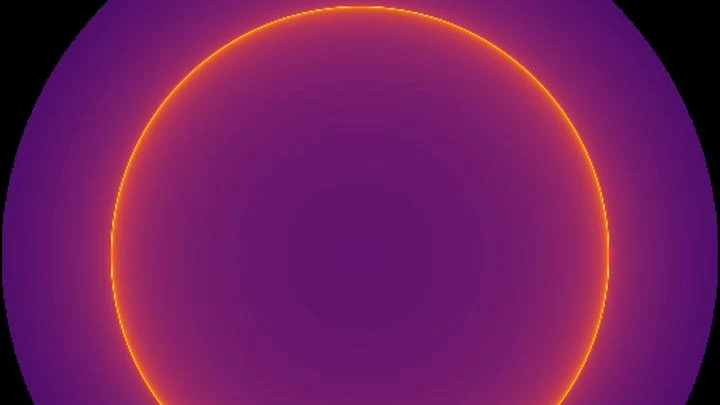
Black holes usually reflect some waves. By shaping these waves to hit a precise resonance, physicists forced a black hole to absorb all energy, turning perfectly black. The absorbed energy is then released as a distinct ring, like a bell's tone revealing its shape. This technique could unveil the se
arXiv:2509.19451 · 2025-09-23

Quantum Network Grabs Gravity by the Tail

The study describes a quantum web of many atomic groups. Atoms within are entangled like knots in a spiderweb, reacting sensitively to gravity changes. The network can notice how gravity alters time’s flow: at different heights, clocks tick differently. This is a first step toward testing gravity’s
arXiv:2509.19501 · 2025-09-23

Only Quantum Gravity Can Entangle Masses

The study settles the debate: Einstein's classical gravity cannot create quantum entanglement between massive bodies. Only if spacetime itself acquires quantum properties does such a connection become possible. This is an important step toward a theory uniting gravity and the quantum world.
arXiv:2510.19969 · 2025-10-22

Quantum Patterns from Chaos: How Disorder Gives Birth to Solid Flow

In a one-dimensional chain of particles with an interaction based on the golden ratio, structures with crystalline order but without periodicity spontaneously emerge. A quasi-supersolid phase has been discovered: it holds its shape like ice and flows without friction. Experiments with cold atoms wil
arXiv:2511.02218 · 2025-11-04

Black Hole with Double Flashes

Five years after ripping a star apart, a black hole in a distant galaxy is emitting regular X-ray emissions: every 12 hours, a powerful flare, and on its crest, micro-bursts. Astronomers explain this by oscillations in the gas disk, churned up by an unseen companion, and in the future, such systems
arXiv:2602.03932 · 2026-02-03

Gravity Can Push Away — A Quantum Experiment

Ordinary gravity only attracts. But if the source of gravity is in two places at once, you can make it push a test particle. This is impossible in classical physics and serves as proof of gravity's quantum nature.
arXiv:2602.12266 · 2026-02-12

Warp Drives Ranked: The Gentlest Way to Bend Spacetime

Scientists built a toolkit that checks warp drives for any observer, even at warp speeds. It ranks them by how much they violate nature's energy laws. The Rodal design is the calmest, Alcubierre's the wildest. This steers research toward more realistic warp concepts.
arXiv:2602.18023 · 2026-02-20

Time in Reverse: Dark Energy Saves the Universe from Exploding

Chaplygin gas is an exotic medium that behaves like dark energy. When the universe contracts, it makes time flow backward for matter, turning a catastrophic collapse into a smooth bounce. Surprisingly, adding other particles doesn't disrupt the mechanism.
arXiv:2602.21642 · 2026-02-25

Why can't large objects be in two places at once?

The mass of a large object warps space so much that any attempt to be in two places creates a deep energy well into which the object immediately falls. This explains why tables and rocks don't follow quantum laws, linking gravity to quantum physics and homing in on the measurement puzzle.
arXiv:2603.01811 · 2026-03-02

Black Holes Sing Gravitational Songs

Scientists have discovered how rapidly spinning black holes produce the lightest particles—axions. These particles accumulate and vibrate, emitting gravitational waves at a single constant frequency. The hum from millions of such holes in our Galaxy can already be 'heard' by existing detectors, open
arXiv:2603.15734 · 2026-03-16

Improvisation beneath the horizon: quantum bounce turns a black hole into a white hole

The event horizon of a black hole conceals not a point of infinite curvature, but a zone of quantum transformation, where time itself changes roles. New research in quantum gravity shows: the singularity vanishes thanks to relational dynamics — one of the metric variables serves as a clock, and the
arXiv:2605.01576v1 · 2026-05-02

Phantom Chords of Gravity: Boson Stars as Keepers of Quantum Memory

Quantum systems typically evolve toward equilibrium, losing all memory of their initial state. But occasionally, 'scars' are born — anomalously stable, weakly entangled states that challenge thermalization. New research shows that boson stars in anti-de Sitter space realize such scars, combining cha
arXiv:2605.02446v2 · 2026-05-04

Ashes of Inevitability: The Quantum Singularity of Evaporating Black Holes

The legacy of Penrose and Hawking asserted: the collapse of massive stars begets a singularity. But quantum evaporation casts doubt on the classical conditions, making us wonder if the core of a black hole is blurred by quantum fog. Engelhardt and Nagar put an end to it: by relaxing causality requir
arXiv:2605.05326v1 · 2026-05-06

When Gravity Knits Quantum Lace: Lessons from the Schrödinger–Newton Model

The hybrid Schrödinger–Newton equation for the first time analytically disentangled two faces of gravity: self-interaction and mutual attraction. It turns out that self-gravity does not alter the Schmidt spectrum, and hence the measure of quantum entanglement; however, the pairwise potential activel
arXiv:2605.06577v1 · 2026-05-07

Fuzzy-nova: A Quantum Wave Dissolving Black Holes

According to classical theory, the collapse of a massive star ends in a black hole with a singularity, where the curtain of physical laws falls. Roger Penrose proved the inevitability of singularities, and Stephen Hawking showed that quantum effects create the information paradox. New work proposes
arXiv:2605.07848v2 · 2026-05-08

Symphony of Collapse: The Algebraic Key to Black Holes

At the heart of a dying star lies an algebraic cipher that translates the language of matter into the language of black hole geometry. Physicists have found a precise two-way map: given a density profile, you can recover the exterior metric—and vice versa—without solving complex differential equatio
arXiv:2605.08807v1 · 2026-05-09

The Horizon's Silent Roar: The Fading Ring of Analog Black-White Holes

A new theoretical study demonstrates how analog black-white holes created in superconducting SNAIL chains respond to perturbations: they don’t explode, but quietly fade, emitting a pure dissipative tone. Supersymmetric quantum mechanics proves the absence of growing modes, and quasinormal frequencie
arXiv:2605.11565v1 · 2026-05-12

Cosmic Spinning Top: Gravity vs. Quantum Superpositions

Mass currents have now been introduced into the Diósi–Penrose wave function collapse model for the first time, adding post-Newtonian corrections from general relativity. It turns out that moving mass generates gravitomagnetic noise, causing angular momentum decoherence. The most dramatic effects app
arXiv:2605.12172v1 · 2026-05-12

Ancient Black Hole Jet Left a Gamma Trail in the Center of the Galaxy

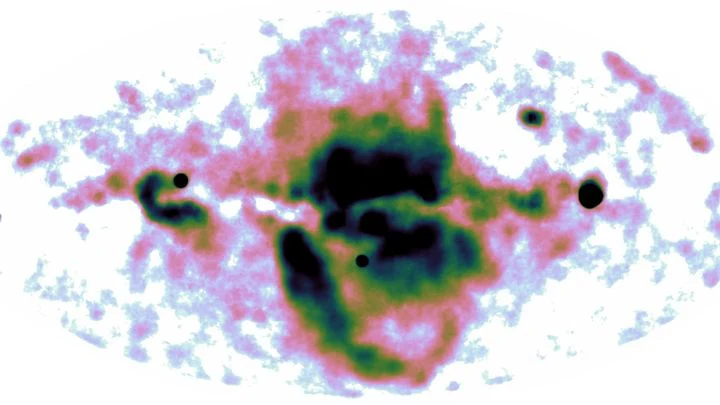
Mysterious gamma-ray glow in the center of the Milky Way has been attributed for 15 years to either dark matter or pulsars. New work links it to the echo of an ancient jet: the same black hole Sagittarius A* ejected particles millions of years ago and inflated giant bubbles. Collisions of these part
arXiv:2605.12448v2 · 2026-05-12

Gravity’s Gentle Touch Erases Quantum ‘Magic’

A new study uses a rule from heat physics to show how gravity slowly destroys a particle’s ghostly double life. When a massive particle in two locations shakes spacetime, it sends out ripples that carry away its secret. Heavier and wider-spread particles collapse faster. This bridges the quantum and
arXiv:2605.12955v1 · 2026-05-13

Bottomless Black Hole: A Quantum Recipe

Usually, a black hole’s center is an abyss of infinite density. But quantum effects, like an invisible spring, create a cushion of resilience. Even without complex quantum gravity, simple laws of the microworld can turn black holes from dead ends into passages.
arXiv:2605.13508 · 2026-05-13

Gravitational Echo: How Black Holes Weave a Quantum Web of Gravitons

Quantum gravity eludes experiments due to the Planck scale. But the 2026 Gravity Research Foundation award-winning work points to a natural super-amplifier: superradiant axion clouds around rotating black holes. This cosmic mechanism generates squeezed states with up to 10⁷ correlated gravitons, cre
arXiv:2605.14797v1 · 2026-05-14

Black Holes: Quanta Won't Break Cosmic Censorship

Roger Penrose proved that special surfaces inside black holes – “trapped” – guarantee the formation of a superdense core, forever hidden behind the boundary of no return. Quantum effects could break this rule. A new “sufficiently trapped” surface restores reliability: black holes keep their secrets
arXiv:2605.14798v1 · 2026-05-14

Cosmic Bellows: How Eternal Inflation Resurrects the Universe from the Ashes

The new model intertwines cyclic cosmology and inflation into a single dance: two scalar fields, like blacksmith’s bellows and a valve, alternately compress and inflate the Universe. This approach not only lifts the curse of the singularity but also explains the mysterious smoothness of the cosmos,
arXiv:2605.15374v1 · 2026-05-14

Black Hole Shadows Put Quantum Gravity to the Test

Images of the shadows of M87* and Sgr A* provided a way to test the predictions of loop quantum gravity. Quantum corrections slightly enlarge the shadow, and even without an event horizon, it remains a ring—classical models might be just an approximation.
arXiv:2605.28871 · 2026-05-23

When Black Holes Turn Inside Out

The transition of a black hole into a white hole produces an immensely powerful gamma-ray burst. Scientists have calculated that such a burst creates far more light and lightweight particles than heavy nuclei. This makes it visible across half the universe; especially if primordial black holes the s
arXiv:2605.25709 · 2026-05-25

Shadow of a Shaggy Beast: How Scalar Hair Shatters a Black Hole’s Image

The stronger the scalar field around a black hole, the more distorted its shadow. New simulations reveal that at extreme values, the shadow fractures into crescent-shaped shards.
arXiv:2605.28376 · 2026-05-27

Magnet in Superposition: Quantum Compass

Physicists have found a way to bring a large magnet into a quantum state where it spins both clockwise and counterclockwise at once. This split gives unimaginable precision for detecting weak magnetic fields. The main obstacle is collisions with air molecules, but a carefully chosen shape and a vacu
arXiv:2606.03676 · 2026-06-02

Weak Attraction: How Gravity Spares Quantum Superpositions

Scientists have rigorously described how gravity dampens quantum 'miracles'. The result: in terrestrial labs, superpositions die from molecular impacts, while the gravitational whisper remains inaudible. It grows only like a faint echo — each additional kilometer adds as much as the first meter.
arXiv:2606.04099 · 2026-06-02

Gravity: Classical or Quantum?

Physicists have shown: if gravity is classical and matter is quantum, then a qubit solves problems beyond any computer. This would violate a fundamental limit on computation. Since we don't see that, gravity must be quantum.
arXiv:2606.14806 · 2026-06-11

How a tiny satellite makes a black hole 'sing'

Researchers have shown: a tiny neighbor, through its tidal influence, rocks the almost eternal hum of a black hole. This resonance turns gravitational waves into a precise tool for measuring gravity at the very edge of the hole.
arXiv:2606.17883 · 2026-06-16

Gravity doesn't always hide the heart of a dying star

Imagine gravity as a stretched rubber sheet. A heavy star pushes it down into a deep funnel, which normally snaps shut, hiding the core. But new research shows: in some theories, the rubber is too bouncy, the funnel doesn't close, and light from the core seeps out.
arXiv:2606.20540 · 2026-06-18

When the Black Hole's Edge Doesn't Flinch

New research shows: if an imaginary light flow piercing spacetime converges on a spherical surface, the black hole's boundary remains unshakable. If the flow diverges, the horizon will shatter at the slightest disturbance. This rule will refine modeling of black hole mergers and decoding of gravitat
arXiv:2607.03128 · 2026-07-03

Quantum Dance of Dust Grains in a Magnetic Trap

The method allows particles to float in a magnetic field and behave like a dancer who is in two places at once. These experiments will help us understand the boundary between the quantum and classical worlds, and possibly detect dark matter.
arXiv:2607.03622 · 2026-07-03