Aluminum Granules Against Magnetic Fields express
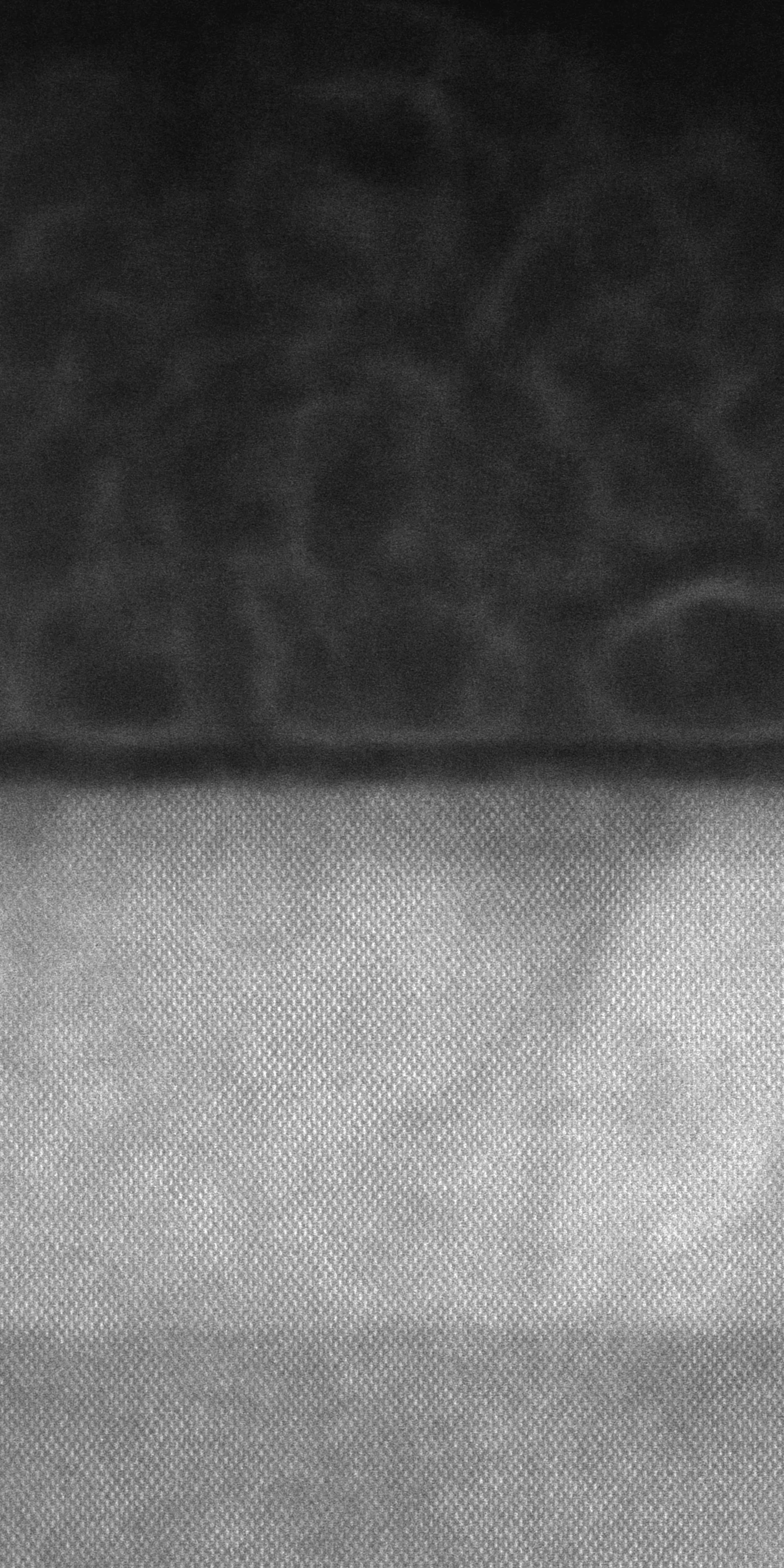
A regular superconductor and a magnetic field are like water and fire: the field tears apart the electron pairs that carry current without resistance. But if instead of a continuous film you use a scattering of tiny aluminum grains, each coated with a thin oxide layer, the situation changes. Such granules, deposited on a germanium-silicon wafer, withstand a field directed both along and across the surface.
In the experiment, a layer of granular aluminum showed a clear superconducting gap with peaks at an energy of 305 microelectronvolts: this is like a fingerprint proving the superconductivity is real. Moreover, the gap persisted in a magnetic field that usually suppresses it. Thanks to this resilience, they managed to split the energy levels of impurities by more than 50 microelectronvolts (a frequency of about 12 gigahertz)—an effect needed for spin control.
Such stability opens the door to creating quantum bits based on superconducting and semiconducting structures. By controlling the magnetic field, one can tune the interaction of spins, the internal 'arrows' of electrons, and build more reliable quantum devices.
Original abstract
as written by the authors arXiv:2602.21364
In superconductor-semiconductor hybrid structures, superconductivity and spin polarization are competing effects because magnetic fields break Cooper pairs. They can be combined using thin films and in-plane magnetic fields, an approach that enabled the pursuit of Majorana zero modes, Kitaev chains, and Andreev spin qubits (ASQs), but remains challenging for materials with small in-plane g-factors. Here we show that granular aluminum (grAl), composed of nanometer-scale aluminum grains embedded in an amorphous oxide matrix, can overcome this limitation. By depositing grAl on Ge/SiGe heterostructures, we induce a hard superconducting gap with BCS peaks at 305 $$\mu$$eV and magnetic-field resilience for both the in-plane and out-of-plane directions, allowing Zeeman splitting of Yu-Shiba-Rusinov (YSR) states beyond 50 $$\mu$$eV (12 GHz). Leveraging this robustness, we reveal signatures of hole physics and demonstrate g-tensor tunability.
Granular aluminum is made by depositing aluminum vapor in an oxygen atmosphere — the metal condenses into tiny grains, each immediately coated with an oxide shell.