How a Swallowed Planet Spun Up a Star: The Case of GJ 504 express
GJ 504, a star almost the same age as our Sun, is spinning with remarkable vigor: it completes a full rotation in just 3.4 Earth days, while actively emitting X-rays. For comparison, typical stars of the Sun's age rotate much more slowly, as if they've lost their youthful energy. GJ 504, however, behaves like a figure skater who has received a powerful push and launched into a rapid spin.
The clue came from computer modeling. By analyzing the star's light (using spectroscopy, a method that reveals the composition and motion of celestial bodies from their spectra) astronomers found that the usual braking mechanism, the stellar wind (a stream of particles flowing from the surface), cannot explain the observed speed. The only consistent explanation is that the star once swallowed an exoplanet, a planet outside our solar system, with a mass comparable to Jupiter's. This 'cosmic partner,' as it fell into the star, transferred its orbital angular momentum, much like a figure skater gaining extra spin from a partner's lift. Without such an event, the star would rotate sluggishly, taking about a month per revolution.
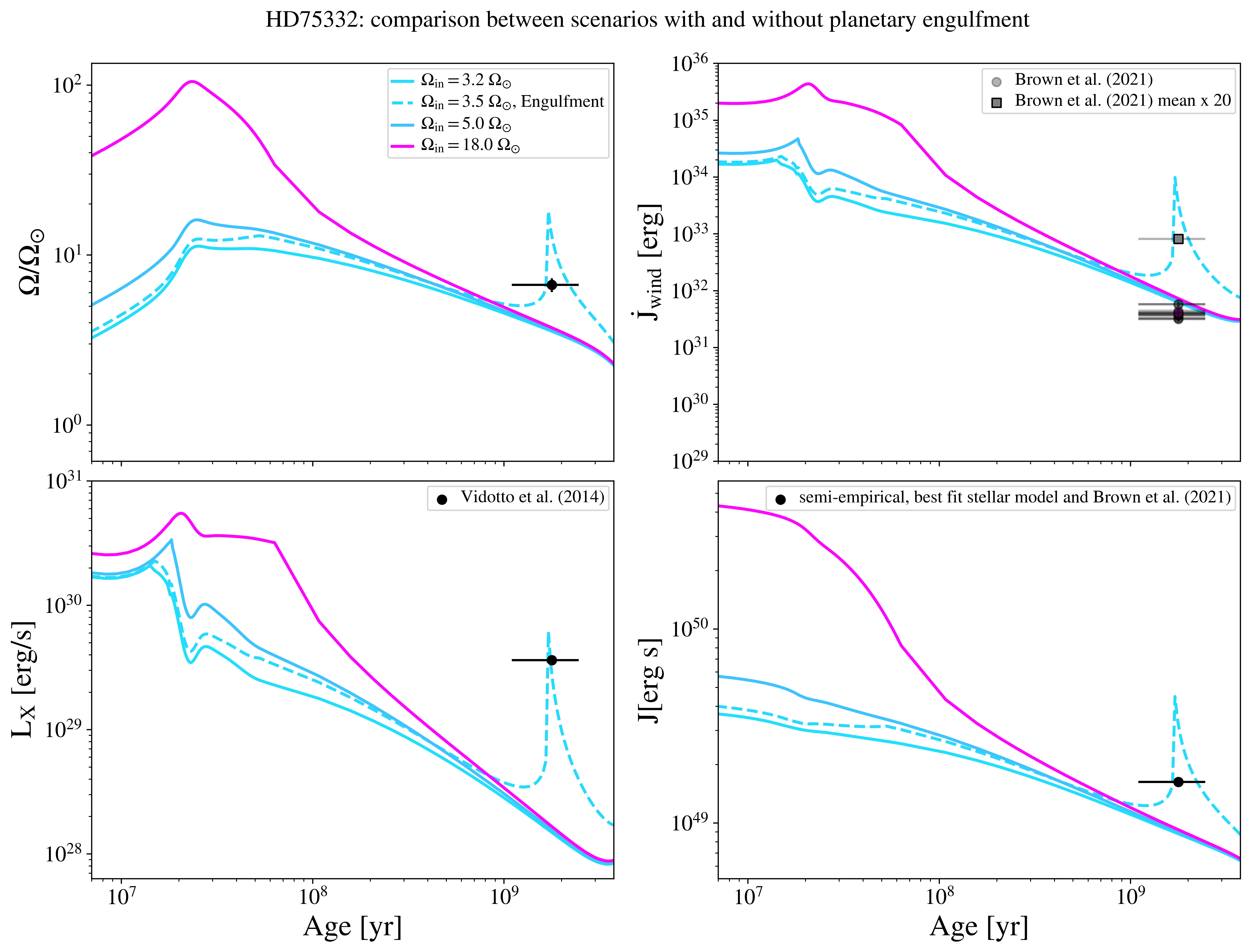
A similar 'dance duet' has been spotted at the star HD 75332. It seems that such celestial choreography, planets being engulfed and stars spun up, is more common than previously thought. The figure-skating analogy, of course, simplifies the picture: in reality, the momentum transfer happens not through a touch but through complex gravitational interactions and the accretion of the planet's material.
GJ 504 completes a full rotation in 3.4 days — seven times faster than our Sun.