A planet is a celestial body that orbits a star, is massive enough to be rounded by its own gravity, and has cleared its neighborhood of smaller debris. This definition, established by the International Astronomical Union in 2006, distinguishes planets from dwarf planets like Pluto. Planets form from the disk of gas and dust around young stars, and their properties—composition, atmosphere, and orbital dynamics—offer clues about the history of planetary systems, including our own.
History
The modern definition of a planet was adopted by the International Astronomical Union in 2006, following the discovery of Eris and other trans-Neptunian objects. The first confirmed exoplanetorbiting a sun-like star was discovered in 1995 by Michel Mayor and Didier Queloz.
How it works
Planets form through accretion: dust grains collide and stick together, growing into planetesimals, which then merge into protoplanets. As a protoplanet grows, its gravity attracts more material, eventually clearing its orbital path. The final structure of a planetary system depends on the initial disk's mass, temperature, and the migration of planets. Observations of young stars and their disks, as well as direct imaging and transit methods, reveal planets in various stages of formation, helping to refine models of planetary system evolution.
In practice
Understanding planet formation is crucial for interpreting exoplanet observations and for assessing the potential habitability of other worlds. It also informs our understanding of Earth's own history and place in the cosmos.
Fun fact
The first exoplanets were discovered orbiting a pulsar, a dead star, in 1992—a finding that was entirely unexpected and expanded the definition of where planets can exist.
Astronomers catch distant planets by the trembling of their stars: an invisible companion tugs the star toward us and away, and its light subtly shifts in color. But that trembling tells only half the truth. If the planet's orbit is tilted to our line of sight, only part of its weight rocks the star, so telescopes reveal not the true mass but its shadow.
Two stars, AF Lep A and ε Indi A, have become the focus of close attention. Using the GHOST spectrograph on the Gemini telescope, astronomers split their light into colors and, from absorption lines, determined how much carbon, oxygen, sulfur, and thirteen other elements are in the stars' atmospheres.
A star is not just a distant sun. It's a cradle for planets, and its light carries the birth story of the entire system. The chemical composition of a star is its DNA. Astronomers peer into this DNA to understand why some stars host rocky worlds like Earth, while others host gas giants.
In a single star system, two teams of planets orbit. Some follow neat paths, like figure skaters on an ice rink, avoiding collisions. Others crowd together, their trajectories cross, and sooner or later a cosmic accident occurs — a giant impact.
Around some young stars where star formation has recently ended, there swirl not just dust rings but actual planetary battlefields — extreme debris disks.
The gravitational dances of celestial bodies long remained silent to astronomers. We learned to catch the shadows of planets against stars with the transit method — a breakthrough that delivered thousands of worlds thanks to William Borucki and his Kepler telescope.
When a star dies, it turns into a white dwarf — a dense ball of carbon and oxygen the size of Earth. Predicted by Subrahmanyan Chandrasekhar, these objects were long thought to be lifeless graveyards.
Using James Webb, astronomers 'fished out' a third giant planet from the murky dust disk of the star β Pictoris. Two others were already known, but this one was hiding in the bright light, like a fish in muddy water.
Young Earth was a boiling sphere of liquid rock, while Theia, which crashed into it, had had time to cool and solidify. It’s like dropping a chunk of cold butter into a pot of soup: the soup splashes out, but the butter barely moves. Similarly, Earth’s interior spewed into space, forming a cloud of cosmic dust and debris.
Previously, Uranus and Neptune were considered ice giants because of assumed thick layers of frozen water, methane, and ammonia. New calculations paint a different picture: deep inside them hides an ocean of hot magma, which under immense pressure has absorbed a colossal amount of hydrogen.
On the periphery of the Solar System lurk thousands of objects comparable in size to an exoplanet — a body of planetary mass not bound to our star. Their orbits are chaotic, and from time to time the trajectory of such a wanderer crosses Earth's path.
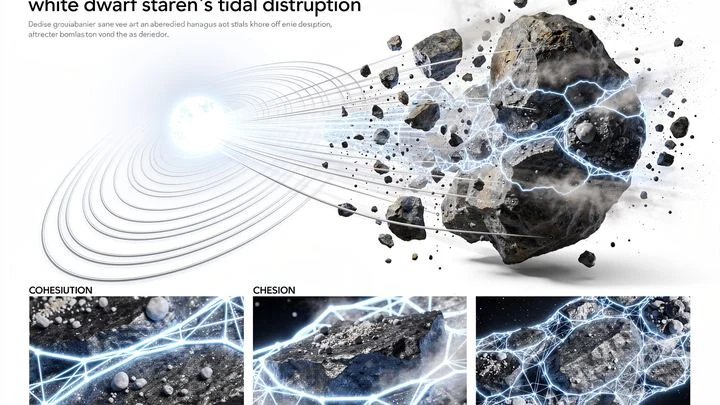
When a telescope catches the light of a distant white dwarf, the spectrograph sometimes fishes out heavy elements — calcium, iron, magnesium. These metals could not have stayed in the thin atmosphere of the stellar remnant; they are the traces of recently fallen planetary debris.
At the edge of the solar system, where the Sun is barely brighter than other stars, icy boulders, trans-Neptunian objects, circle around. Their orbits resemble hoops scattered by someone. But look closer: twelve of these hoops are not just floating in the void.
The first exoplanet was discovered around an unusual cosmic lighthouse — a neutron star known as a pulsar. These ultra-dense remnants of dead stars spin at tremendous speeds and emit precise radio pulses.
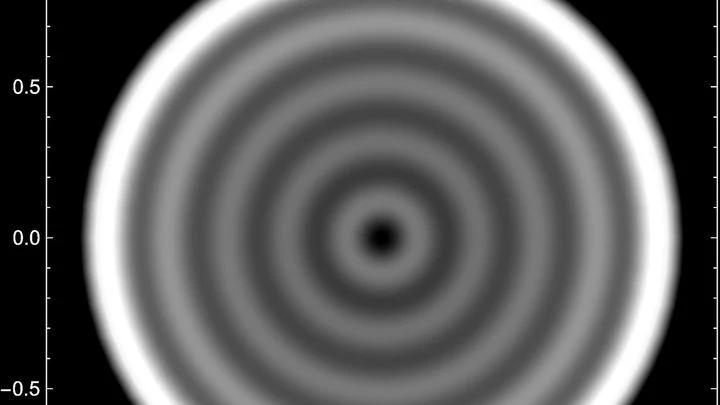
A guitar string only sounds at certain notes, when pressed at the frets. So it is with the gas-dust disk around a young star: it's shot through with standing waves, but only chosen oscillations survive. Where the wave crests, cosmic dust and hydrogen collect, and later exoplanets are born.
A baker adds more sugar to the dough, and the pie turns out different. So it is with a star: the composition of its "dough"—the cloud of gas and dust from which planets are born — determines what worlds will form around it.
At night, a distant streetlamp seems motionless, but if you walk closer and look carefully, you might notice it swaying slightly in the wind. That's roughly how astronomers hunt for planets around other stars: they measure how a star shifts ever so slightly under the gravitational tug of its invisible companions.
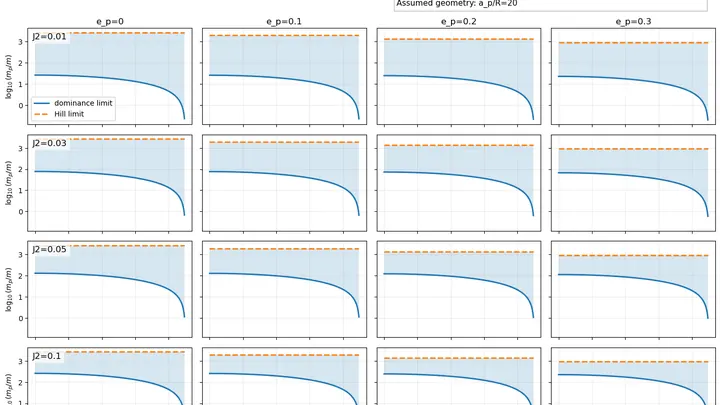
Around distant icy bodies the size of a city, circling beyond Neptune, rings of dust and ice have been found. Small moons often whirl nearby. Mathematical analysis shows that a moon's gravity rocks the ring like a swing, making it tilt.
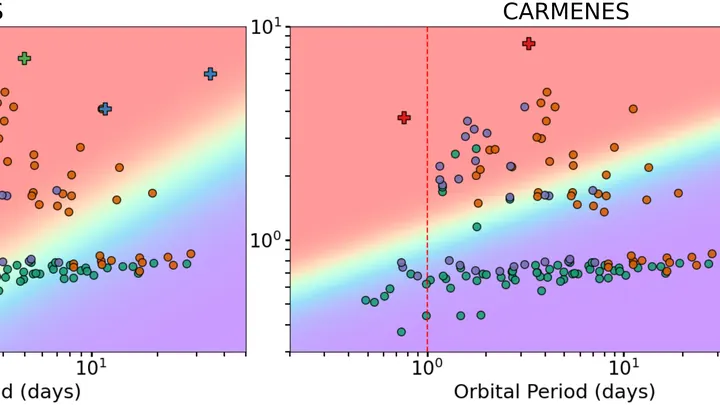
Rocky planets orbit dim red stars. Some of them have a year shorter than an Earth day: these worlds are called ultra-short-period planets. Their surfaces are scorching, and their skies are forever bathed in crimson light.
The Kepler telescope spent years watching thousands of stars, spotting planets by the tiny dips in starlight when a planet passes in front of its star. Such a passage, or transit, lets us measure the planet's size but not the shape of its path.
When a baker kneads dough, the grains of flour can tell you which mill they came from. It's the same with Earth: the composition of iron in its depths preserves a memory of where the pieces that assembled the planet were born.
An icy rock is flying through the Solar System on an open trajectory — coming in from interstellar space, swinging around the Sun, and heading back into the dark.
A sugar cube sits on a saucer next to a cup of hot tea. Drop it in, and it dissolves within minutes. But if you lower it slowly, the sugar melts gradually, releasing its sweetness into the drink. Something similar is happening in two newly discovered stellar pairs, except the sugar is a brown dwarf and the tea is a star.
Planets are born from dust. In a disk around a young star, tiny dust grains collide, stick together, and gradually grow like a snowball rolling down a hill. But there's a catch: the gas in the disk moves faster than the dust and drags on it, preventing it from clumping into large chunks.
For dust to stick together, there needs to be enough of it.
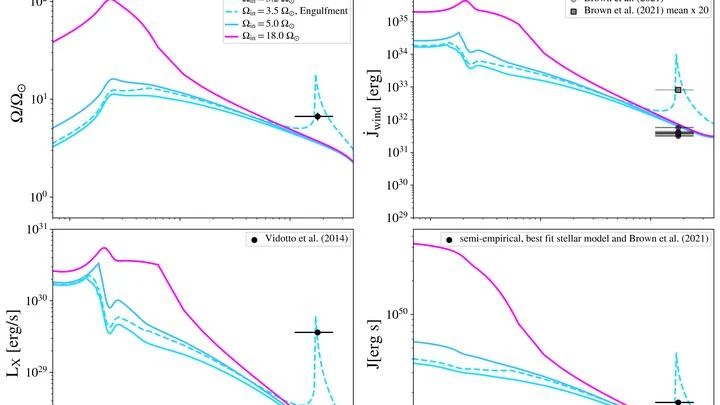
GJ 504, a star almost the same age as our Sun, is spinning with remarkable vigor: it completes a full rotation in just 3.4 Earth days, while actively emitting X-rays. For comparison, typical stars of the Sun's age rotate much more slowly, as if they've lost their youthful energy. GJ 504, however, behaves like a figure skater who has received a powerful push and launched into a rapid spin.
The young Solar System resembled a giant construction site: around the newborn Sun swirled a disk of gas and dust, and from this dust gradually assembled stones, boulders, and then planetary embryos — planetesimals. Today, their fragments fall to Earth as meteorites.
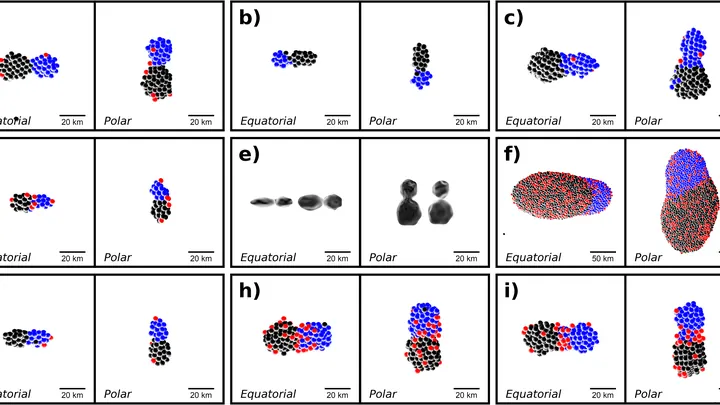
The icy body Arrokoth looks like a snowman: two spheres pressed together. Many such two-headed objects exist beyond Neptune's orbit, in the Kuiper Belt. For a long time, it was thought they formed from the slow collision of two separate bodies.
New simulations show a different path. A cloud of small pebbles around the young Sun collapses under its own gravity.
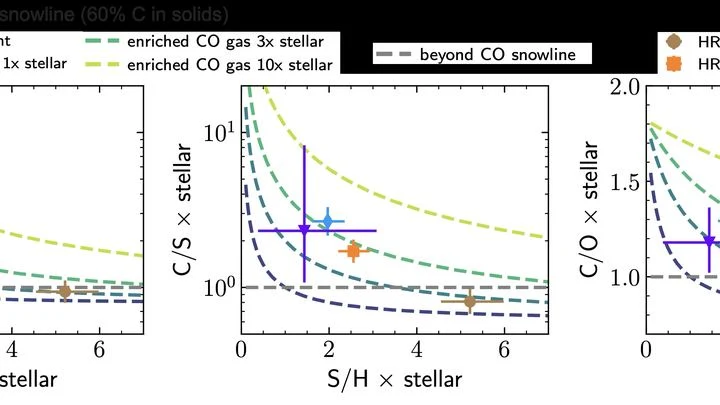
The young star PDS 66 is surrounded by a flat disk of gas and dust — the cradle of future planets. In the cold outer regions of such a disk, silicon and sulfur are usually hidden inside dust grains, but astronomers spotted a bright patch of gas at about 60 astronomical units from the star.
130 light-years away, four giant planets orbit the young star HR 8799—each 5 to 10 times more massive than Jupiter. They lie far from the star, at distances from 15 to 70 astronomical units (one astronomical unit is the distance from Earth to the Sun).
Saturn's system 300 million years ago resembled a crowded dance floor. The most massive moon, Titan, began to migrate, and this movement threw its neighbors off balance. One moon crashed into Titan; the debris swirled into a vortex, gathering into Hyperion.
Earth is like dough mixed to a precise recipe: two parts water to one part land. Too much water, and the planet becomes a vast ocean where intelligence has nothing to grasp onto. Too much land, and water retreats deep, leaving a desert. Scientists put this culinary analogy to the test with statistics.
In the cloud of gas and dust where planets are born, sulfur is like a chef tasting a dish at different stages of cooking. At first, it's almost entirely in gas, like steam rising from a pot. Then, as the temperature drops, sulfur settles onto dust grains and turns into solid particles, just as steam condenses on a lid.
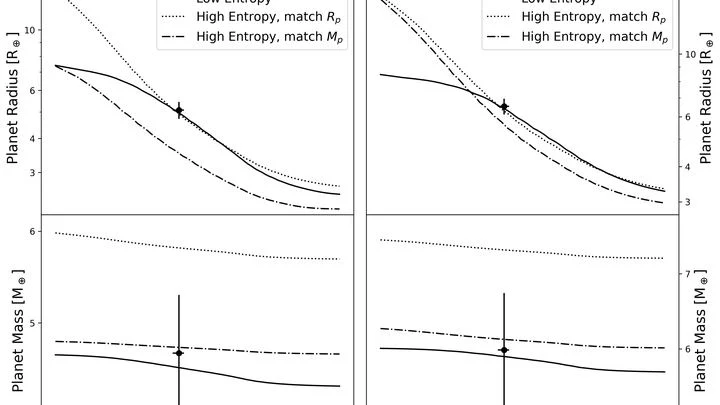
350 light-years away, four planets orbit the star V1298 Tau. They are 5–10 times larger than Earth but lighter than they appear. For nine years, astronomers tracked their motion to understand what they are made of and how they lived in the past.
The planets are lined up in a chain: their orbital periods are nearly in 3:2, 2:1, and 3:1 ratios.
Using the Keck telescope and spectroscopy (light analysis that reveals rotation speed), astronomers measured 32 objects: from giant planets to brown dwarfs — bodies heavier than planets but lighter than stars that never ignited.
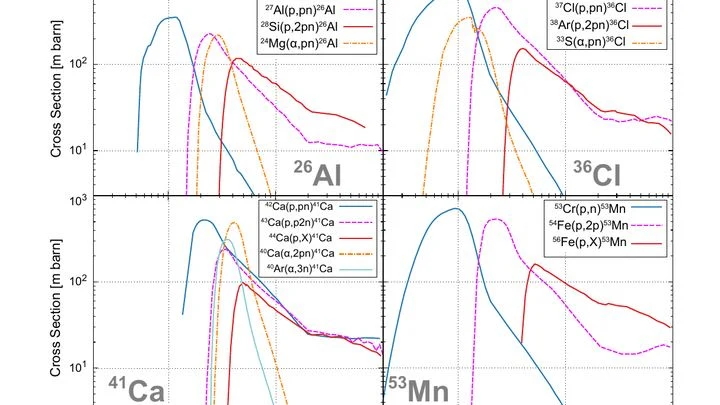
Just as yeast turns flour into fluffy dough, radioactive 'seasoning' from a supernova — the explosion of a massive star at the end of its life helps mold a rocky planet. The key ingredient here is aluminum-26, a radioactive isotope that releases heat as it decays.
The Moon harbors a secret that has puzzled planetary scientists for decades: its isotopic composition is almost indistinguishable from Earth's. According to the canonical giant impact model, the Moon should have inherited most of its material from the impactor Theia, a Mars-sized planet that slammed into the young Earth.
Water is the gold standard for life. We search for its traces on Mars, in icy moons, and in the atmospheres of distant planets. But what if life doesn't need water? On a warm rocky exoplanet with a thin atmosphere, water would evaporate within hours.
A spinning top tilted over a table, with a dusty pancake swirling around it. That is what a young stellar system looks like when the star's spin axis and the plane of its protoplanetary disk do not align. Until recently, astronomers did not know how common such a configuration is in nature.