A Drop on the Doorstep express
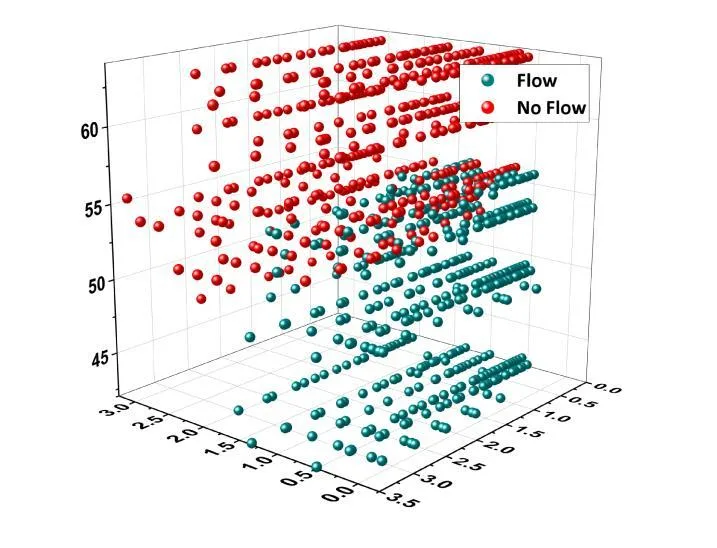
Water in a narrow gap crawls on its own: that's the capillary effect that pulls sap up a stem. But if it hits a step, the liquid can freeze, like a traveler before a high threshold. Scientists built tiny glass channels and watched when a drop steps over the ledge and when it gets stuck.
It turns out that the contact angle and the step dimensions decide everything. If the channel wall is shifted sideways, the flow can be turned on and off just by changing the geometry. It's like turning a faucet handle, but without the faucet — the channel shape itself acts as a switch.
Such channels can be printed on plastic and folded into simple diagnostic chips. A drop of blood can reach its target well on its own, and two drops in neighboring channels will arrive simultaneously if the steps are arranged correctly. This is a step toward a lab-on-a-palm that works without a single pump.
The capillary effect lifts water in a narrow tube by several centimeters — enough to quench a plant, but in microchips such flows are controlled more precisely than in a garden hose.