The Ion That Paused for Half a Minute express
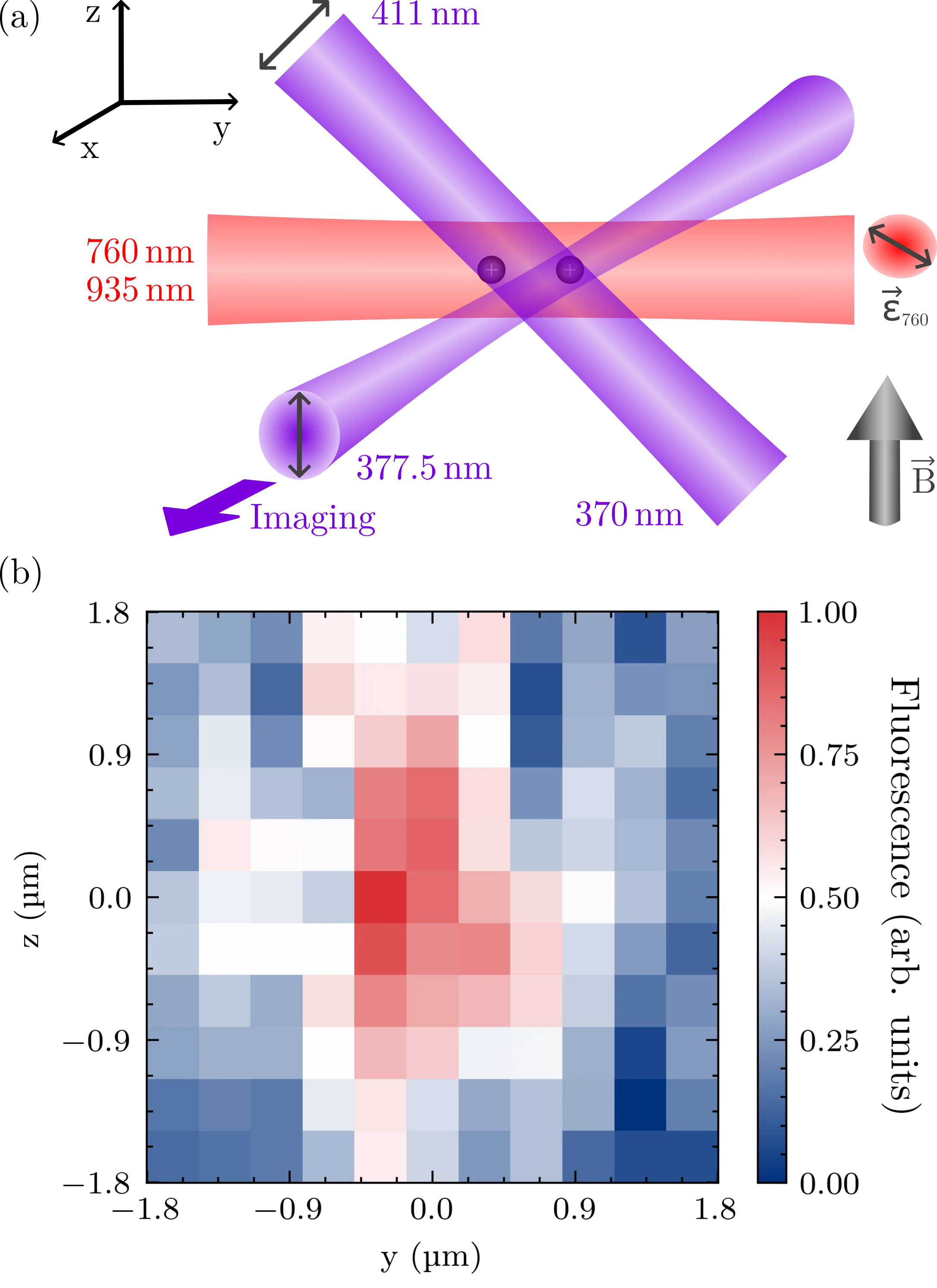
A glowing dot in a vacuum chamber refuses to go out, even though the light source has long been switched off. A single ytterbium ion, held by electric fields, is stuck in an excited state, as if the electron inside it has forgotten how to return to its usual place. Normally, such states last milliseconds, but here we are counting seconds.
Physicists at the U.S. National Institute of Standards and Technology made the ytterbium ion absorb light at a wavelength of 377.5 nanometers, sending it into one of its long-lived states. To pinpoint the moment of decay, they kept a second, cooling ion nearby: it soaked up excess heat and allowed them to observe the first ion without interference. They found that one state lives 0.92 seconds, another nearly 10 seconds, and a third, it seems, more than 30 seconds. For comparison: in 30 seconds, light can circle the Earth eight times.
Such long-lived states are a boon for quantum technologies. They can serve as memory cells: write information into an ion and don't worry about it vanishing in an instant. They are also useful in optical clocks — the most precise instruments that measure time by the oscillations of light. The longer a state lives, the more precisely its energy can be measured. Perhaps these very ions will become the heart of future quantum computers and navigation systems.
A trapped ytterbium ion is visible to the naked eye: it scatters laser light like a tiny star.
In the series 'The Expanse', quantum computers based on trapped ions control ships and stations.