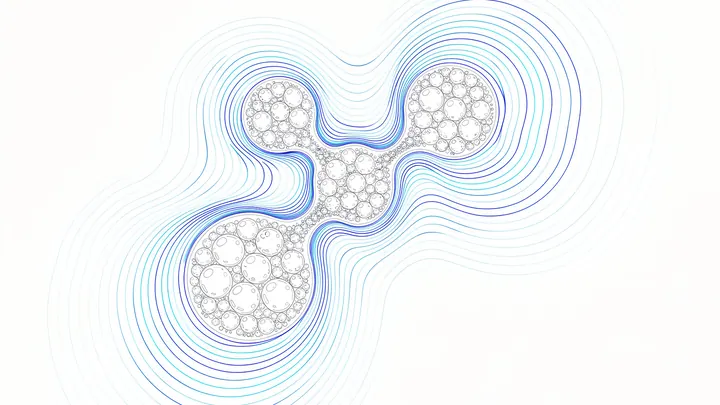
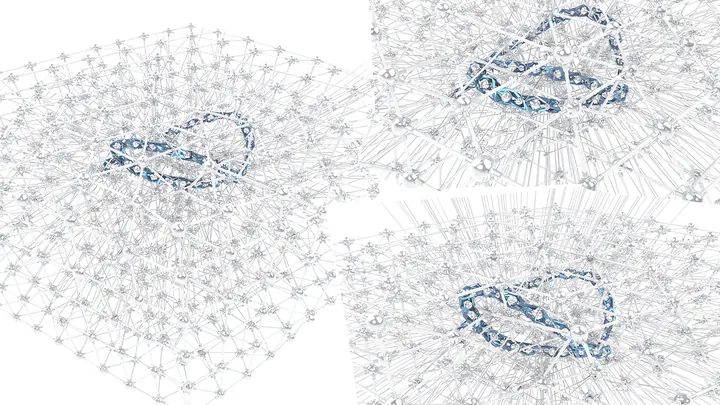
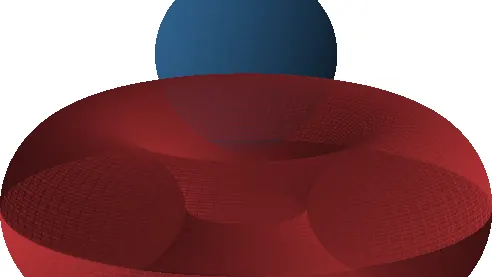
False vacuum decay is a quantum process in which a metastable state of a quantum field—the 'false vacuum'—transitions to a lower-energy 'true vacuum' state. This decay proceeds through the nucleation of bubbles of the true vacuum within the false vacuum, which then expand at speeds approaching the speed of light. In cosmology, this process is invoked to explain the early universe's dynamics, including the possibility of a first-order phase transition that could generate a stochastic background of gravitational waves.
History
The theory of false vacuum decay was developed by Sidney Coleman and Curtis Callan in the late 1970s, building on earlier work on metastable states in quantum field theory.
How it works
Quantum fields can exist in a local minimum of their potential energy that is not the global minimum—this is the false vacuum. Quantum fluctuations allow the field to tunnel through the energy barrier to the true vacuum, a process described by Coleman's theory of bubble nucleation. Once a bubble forms, it expands, converting false vacuum to true vacuum and releasing energy. If many bubbles nucleate and collide, they produce ripples in spacetime—gravitational waves.
In practice
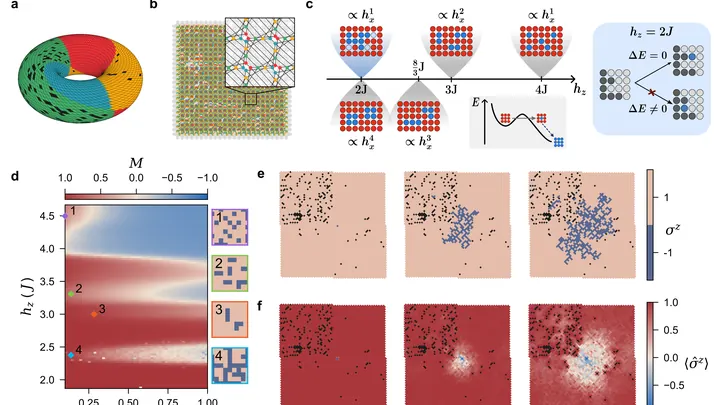
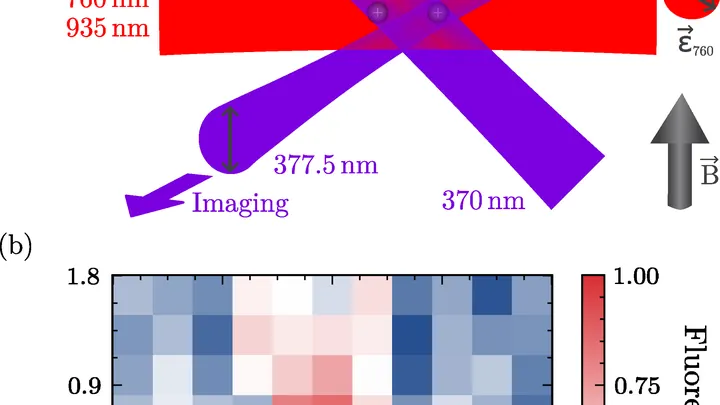
In laboratory settings, false vacuum decay has been simulated using ultracold atomic systems, where quantum tunneling between metastable states can be observed and studied in detail.
Fun fact
The expansion of a true vacuum bubble is so violent that it would destroy everything in its path, making the ultimate fate of our universe potentially dependent on whether our vacuum is truly stable.
In a pot of water carefully heated above its boiling point, the liquid remains calm. But the slightest disturbance, and it violently turns to steam. Physicists call this a metastable state: it seems stable, but in reality it's ready to break apart at the slightest nudge.
The very first moment of the universe's existence is like a taut string suddenly struck. It vibrated, and those oscillations froze into galaxies and voids. But physicists suspect there were other vibrations — fast, local, almost like a drumroll against a slow melody.
A thrown stone sends ripples across water. A gravitational wave is the same kind of ripple, but in spacetime. It is produced, for example, by the merger of two black holes. In classical physics, this ripple is eternal: once created, it travels through the Universe without fading.
Empty space is not as empty as it seems. According to quantum theory, the vacuum is filled with particles that constantly pop in and out of existence. In 1976, physicist Bill Unruh showed that if an observer moves with acceleration, this 'quantum soup' turns into a genuinely warm bath for them — the Unruh effect.
In the first moments after the Big Bang, cosmic symmetry breaking divided the hot plasma into regions with different vacuums — the lowest energy states of a field.
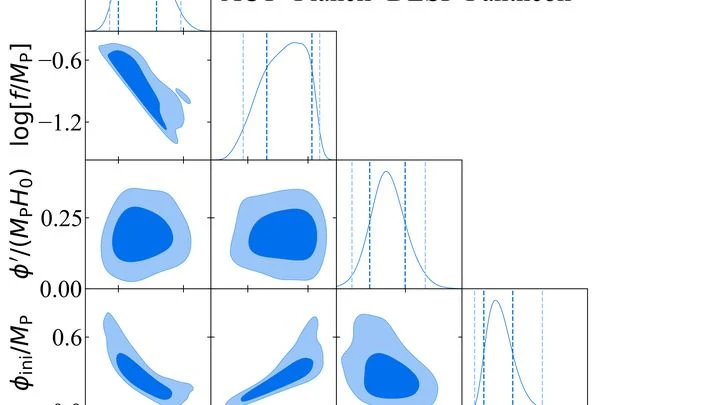
A cold, black mirror — that's what the sea of dark energy, the invisible substance driving the expansion of the universe, looked like for billions of years. But the DESI spectrograph has caught a faint ripple.
In the first moments after the Big Bang, the Universe hummed like a bell. Inflation, the epoch of rapid expansion confirmed by measurements of the cosmic microwave background, ended, and the inflaton field began oscillating around the minimum of its potential.
A honeycomb made not of wax but of atoms is graphene — a flat crystal just one atom thick. Electrons in it are like runners at an intersection: they speed up here, slow down there, but never get stuck at the edge. Physicists call such a sheet "topologically trivial," meaning its edges are perfectly ordinary, with no special properties.
Now, let's knock out a single atom from the honeycomb.
A false vacuum is not just a supercooled liquid, but a quantum hologram, ready to spring to life under the right projection. Its decay is described by the tunneling of a quantum field from a metastable minimum, and the classic calculation via Euclidean instantons is as elegant as a still life under spotlights.
The quantum vacuum is not a dead void but a boiling cauldron of probabilities. In some theories, our Universe is frozen in a metastable state: like superheated water, it's ready to explode into steam at the slightest nudge.
Dark matter remains one of the greatest mysteries of modern physics. Back when Vera Rubin observed galaxy rotation, she proved that visible matter is insufficient to keep stars from flying apart.
In the first moments after the Big Bang, the Universe was not a silent void but a seething cauldron of plasma, threaded with sound waves. As the temperature dropped, the cosmos underwent phase transitions — spontaneous reorganizations that gave birth to bubbles of a new phase.
The early universe resembled an overcrowded hall where heavy particles collided and decayed at a deafening pace. Among them could have been scalar leptoquarks — particles that simultaneously latch onto a quark (a building block of matter) and a lepton (such as an electron).
A ball sits in a pit. It won't roll out on its own: it needs a push. But in the quantum world, a particle can leak through a barrier without extra energy. This trick is called tunneling.
Diamond is a symbol of perfection, but its true magic is revealed through flaws. Perfect lattice purity gives transparency and hardness, while defects, such as color centers, open a portal to the quantum world, becoming the foundation for quantum computers and quantum sensors.
After the Big Bang, the universe may have been stuck in a false vacuum — a temporary state like a soap bubble ready to pop. A rare true vacuum bubble could then erupt, stretching space in the blink of an eye.
The universe is expanding at an accelerating rate, like dough that keeps rising faster even though the yeast ran out long ago. For twenty years, astronomers have been searching for the cause and call it dark energy. But what it is remains a mystery.
New work proposes an unexpected source: the vacuum inside the atomic nucleus.
An empty glass on the table seems reliable. But if there's a microcrack in the bottom, one day it will break — not with a crash, but quietly, spreading in a web of lines. So too with the vacuum: it may not be the true vacuum but a false one — temporarily stable, yet ready to transition to a deeper, real state.
A translator hears not just words, but intonation, pauses, the tremor in a voice. Ordinary entropy analysis of cosmic perturbations is like meeting minutes: it records facts but loses the nuances. Pseudoentropy entropy is a new tool that captures the hidden "music" of the early universe.
The universe is expanding faster and faster thanks to dark energy. But measurements of the rate give contradictory results. A new explanation: in the past, dark energy acted as a brake, slowing the galaxies' recession, and then switched to acceleration. Like a car that first rolls backward and then lunges forward.
The oldest light in the universe has been traveling toward us for nearly 14 billion years. It was born when the cosmos first became transparent, and since then its plane of oscillation has been rotating ever so slightly. The cause is an invisible ocean permeating all of space: the dark energy field that makes the universe expand faster and faster.
The origin of the hot Big Bang is one of the greatest mysteries. The familiar picture: after inflation, the inflaton field transfers energy to ordinary particles, reheating the Universe. Yet dark matter and dark energy hint that nature has hidden sectors.
In the late 1990s, astronomers including Saul Perlmutter discovered that the universe is expanding at an accelerating rate. The cause was dubbed dark energy — an invisible force stretching the cosmos.
Immediately after the Big Bang, in the seething cauldron of the cooling Universe, much like in unevenly hardening glass, stresses appeared — hairline cracks in reality, cosmic strings. Picture a tightrope walker balancing on an invisible cable stretched across the abyss of warped spacetime.
A compressed spring can sit for years without moving. It seems frozen forever, but inside the metal, atoms slowly rearrange, and one day the spring clicks, settling into a new, more relaxed position.
Hot tea in a freezer doesn't freeze all at once. First, tiny ice needles dart around — forming and melting until the temperature drops enough for the ice to set solid. The early universe behaved similarly as it cooled and changed its internal structure.
In an orchestra, one musician plays so quietly that their sound is almost inaudible in the overall chorus. In the quantum world, such 'quiet' states are called dark: their energy barely escapes, like light in a darkened room. But if there are many musicians, their mutual influence can unexpectedly awaken even the most silent one.
A pot of water has just been stirred: the whirlpools and eddies gradually calm down, and the liquid becomes smooth. A similar process, but in the quantum world, occurs in superfluid helium or in a cloud of ultracold atoms.
A boiling cauldron with the occasional bubble of steam popping: that's what the early universe resembled. All of space was filled with a field in a false vacuum state, like water superheated above its boiling point.
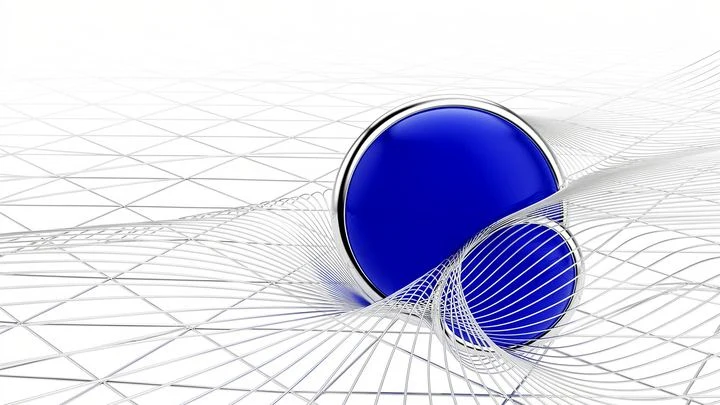
You're inflating a balloon, but with each pump of the bulb, the rubber doesn't just stretch: it subtly changes its elasticity. Gravity works similarly in the new model: not as a rigid stage for the cosmic play, but as a living material that responds to every speck of matter.
The lungs are not two bags but millions of tiny sacs where air enters and blood flows close by. To see how they work, doctors sometimes use MRI without contrast: the scanner picks up weak signals from the tissues themselves. But these signals are like a radio in a thunderstorm — breathing is irregular, pulse jumps, and the image falls apart.
A glowing dot in a vacuum chamber refuses to go out, even though the light source has long been switched off. A single ytterbium ion, held by electric fields, is stuck in an excited state, as if the electron inside it has forgotten how to return to its usual place.
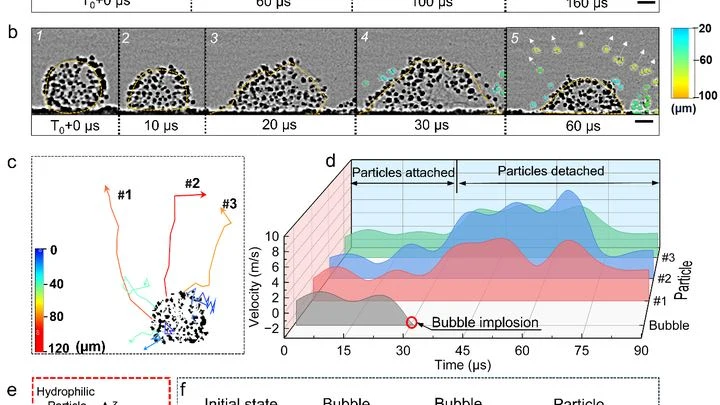
In a glass of water, ultrasound creates tiny bubbles. They grow and shrink, and sometimes they collapse sharply, like a popping soap bubble, but thousands of times faster. Near these bubbles float small particles — for example, nickel spheres the size of dust motes.
The universe is expanding faster and faster, like yeast dough in the kitchen. This expansion is helped by dark energy — the cosmic sugar. Ever since astronomers like Adam Riess noticed the acceleration in the late 1990s, they've been searching for the cause.
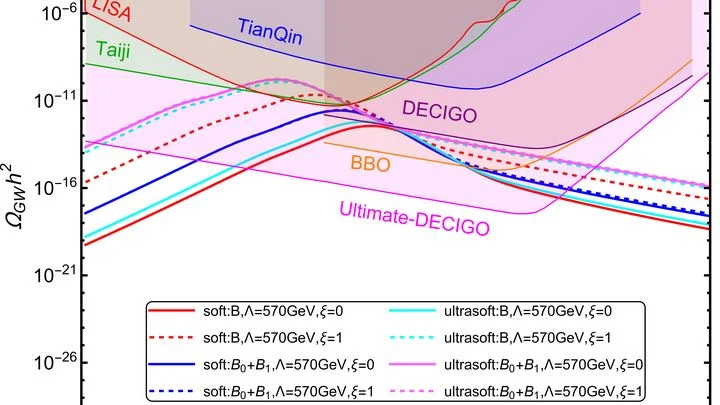
In the infant universe, right after the Big Bang, space was expanding rapidly, and the vacuum resembled a superheated liquid. When 'boiling' began, bubbles of true vacuum emerged. Expanding at the speed of light, they triggered gravitational waves — tremors of space itself that have reached us.
Our Universe may have arisen from a highly unstable state that physicists call the false vacuum. Imagine a glass of water cooled below its freezing point: the liquid remains liquid only until the first jolt, which instantly triggers crystallization into ice.
Hot water sometimes freezes faster than cold — this is the Mpemba effect. In the quantum world, it’s even more astonishing: a system bubbling with disorder (with high entropy) can settle incredibly faster than one that is almost calm.
The solution lies in islands of silence within any system — regions untouched by the destructive noise of the environment.
The early universe was an extremely hot and dense medium. In this medium, like bubbles of steam in boiling water, bubbles of a new state of space spontaneously emerged — regions where physical properties changed abruptly.
Emptiness isn't always empty: it can hide energy, like supercooled water hides ice. Physicists call this false vacuum — a state that only needs a nudge to cascade into the true one.