Single photons from optical fiber express
An ordinary lamp scatters light in all directions, and it is impossible to predict when the next photon will fly out. Quantum technologies, however, need a completely different kind of light — single photons that appear strictly one at a time, like letters slipping through a mail slot. Physicists have learned to make such photons in optical fiber — the very fiber that already weaves through cities for the internet.
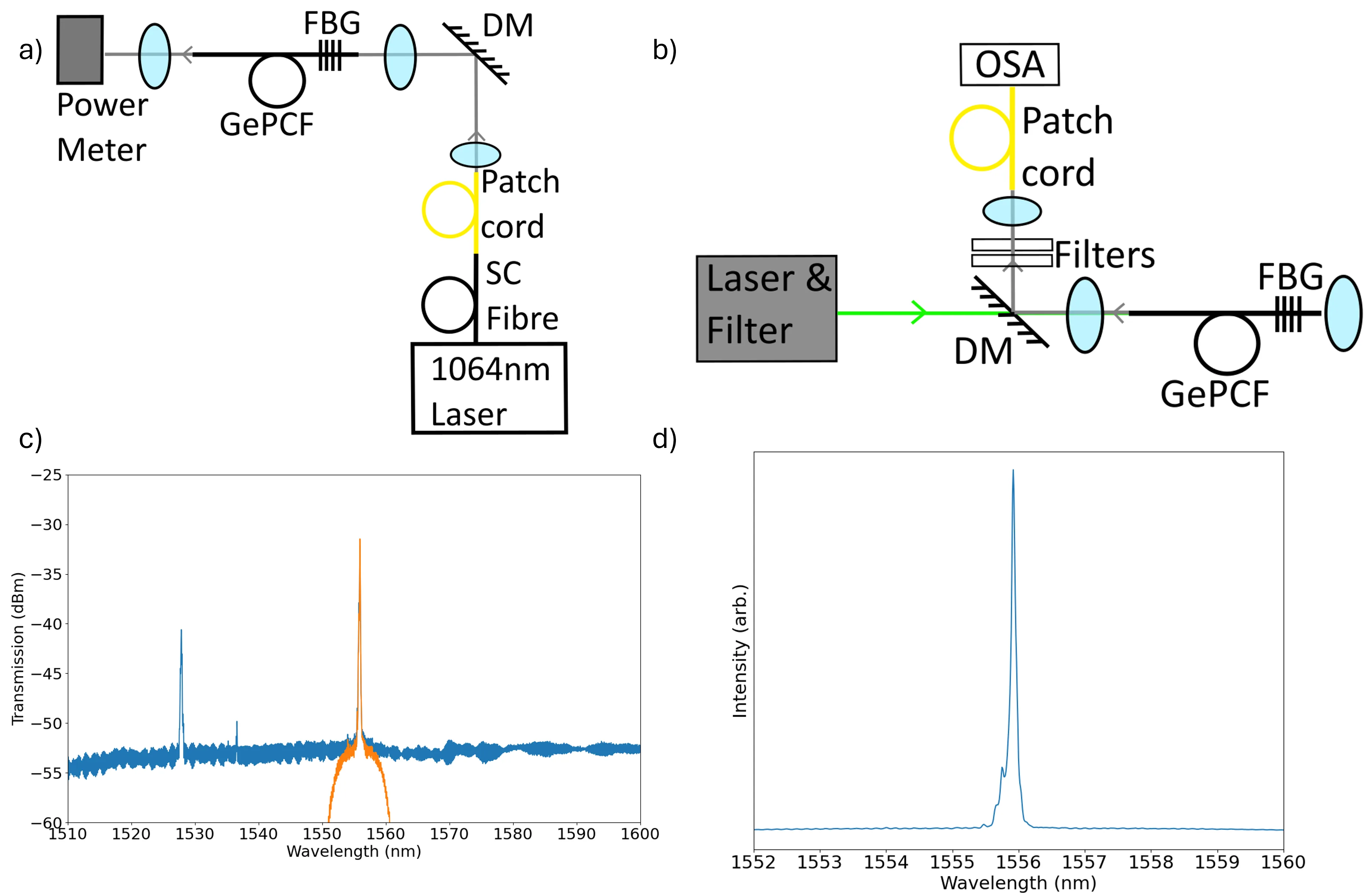
Inside the fiber, a bit of germanium was added to make it sensitive to ultraviolet light. Then, using an ultraviolet laser, a tiny grating of dark and bright stripes was written inside the fiber. This grating acts as a mirror for light, but it does not reflect everything — only a very narrow slice of the spectrum, like a narrow slit in a door that lets only one kind of letter through. When a powerful pump laser is launched into the fiber, sometimes two photons are born at once. One of them reflects off the grating and comes back out, while the other continues forward. By catching the first, we know that the second definitely exists and is already on its way.
In the experiment, such pairs were born frequently enough, and false triggers were rare — for every 70 real pairs, there was one random event. This means the source can be used in quantum networks: send single photons through the fiber and connect them to quantum memory, where light is stopped and stored. Such memory is needed so that different types of quantum devices can communicate with each other.
Original abstract
as written by the authors arXiv:2603.09679
We present a fiber-based source of narrowband heralded single photons in the telecoms C-band. Photon pairs were generated by spontaneous four-wave mixing in photonic crystal fiber (PCF) with a germanium-doped region incorporated into its core for enhanced photosensitivity. A fiber Bragg grating (FBG) with a bandwidth of 0.2 nm and contrast of 17.5 dB was UV-written into the PCF to reflect a sub-nanometre slice of the photon-pair spectrum. This allowed narrowband photons to be heralded at the proximal end of the fiber by detection events after the distal end. We present photon counting data with a coincidence-to-accidental ratio of up to 70. Our source demonstrates a viable route to fiber-integrated narrowband heralded single photon sources suitable for coupling to quantum memories and interfacing heterogeneous qubit types.
A fiber grating that reflects only a narrow slice of the spectrum works like a tiny mirror just fractions of a millimeter thick, yet it can filter out almost all stray light.