Quantum Entanglement Helps Play Pong express
In ping-pong, two paddles connected by an invisible thread feel each other's movements, guessing the ball's trajectory. Researchers gave a computer a similar thread — quantum entanglement. Into an ordinary trial-and-error learning program, they embedded a quantum circuit of eight qubits — particles that can spin like a coin on its edge. When they become entangled (John Stewart Bell showed the weirdness of this effect), they turn into one whole: push one, and all respond. This circuit served as the algorithm's "eyes," turning screen pixels into interpretable signals.
The thread's tension was tweaked on the fly during the game, strengthening the bond. And the entangled player beat regular neural networks, especially when resources were scarce. It discerned hidden patterns in the opponent's moves, imperceptible to simple programs. The thread vibrated, transmitting information faster than any gravitational waves, and its pull gathered qubits together like a miniature black hole. It's astonishing that such a connection required cooling the chip to near absolute zero — a temperature lower than interstellar space.
Original abstract
as written by the authors arXiv:2603.10289
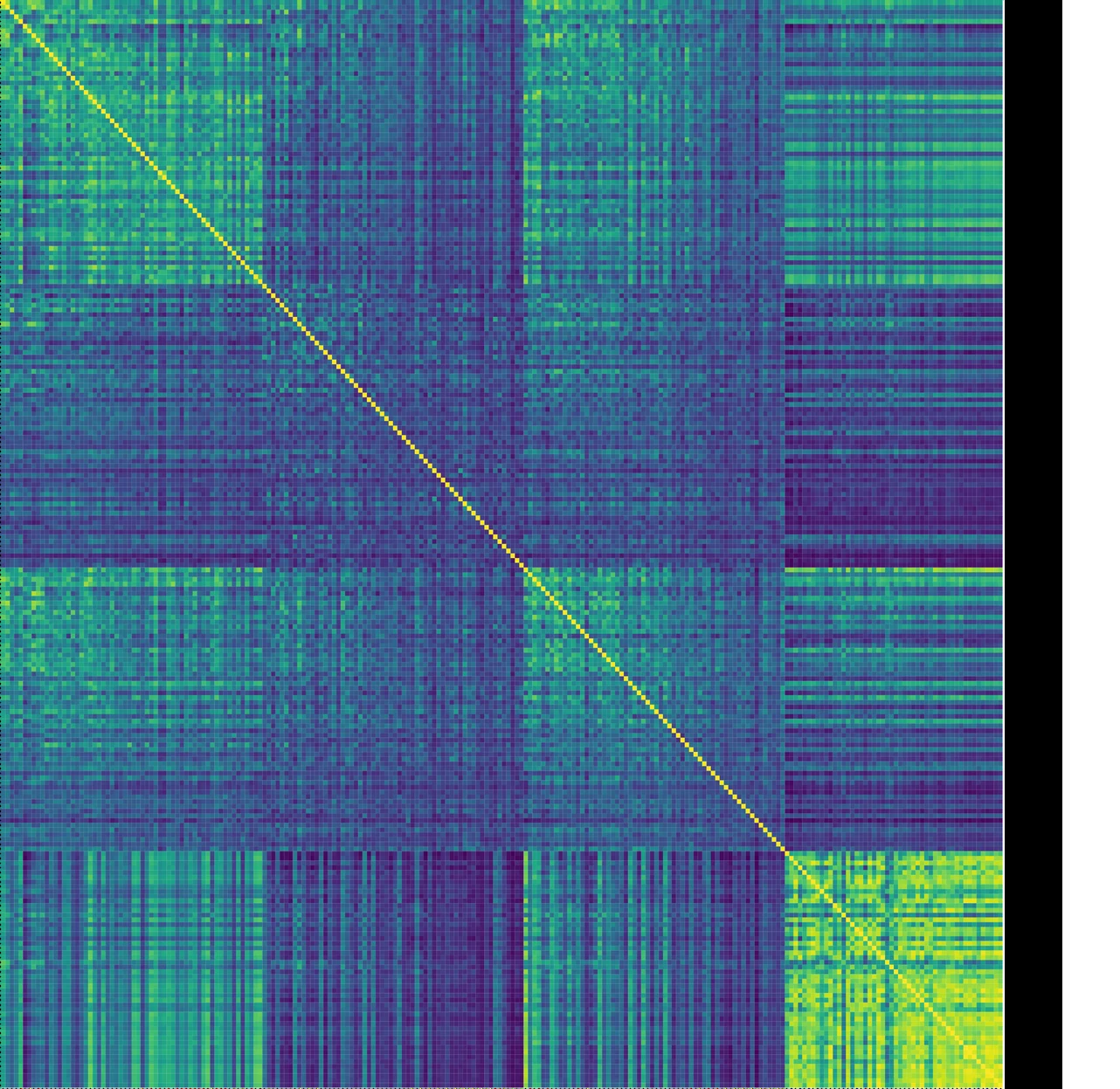
Whether uniquely quantum resources confer advantages in fully classical, competitive environments remains an open question. Competitive zero-sum reinforcement learning is particularly challenging, as success requires modelling dynamic interactions between opposing agents rather than static state-action mappings. Here, we conduct a controlled study isolating the role of quantum entanglement in a quantum-classical hybrid agent trained on Pong, a competitive Markov game. An 8-qubit parameterised quantum circuit serves as a feature extractor within a proximal policy optimisation framework, allowing direct comparison between separable circuits and architectures incorporating fixed (CZ) or trainable (IsingZZ) entangling gates. Entangled circuits consistently outperform separable counterparts with comparable parameter counts and, in low-capacity regimes, match or exceed classical multilayer perceptron baselines. Representation similarity analysis further shows that entangled circuits learn structurally distinct features, consistent with improved modelling of interacting state variables. These findings establish entanglement as a function resource for representation learning in competitive reinforcement learning.
To entangle qubits in the lab, chips are often cooled to near absolute zero — colder than outer space.
This work brings to mind the idea from the novel Ender's Game, where an AI learns by analyzing human behavior in strategy games.