Double Signal: Quantum Noise Retreats express
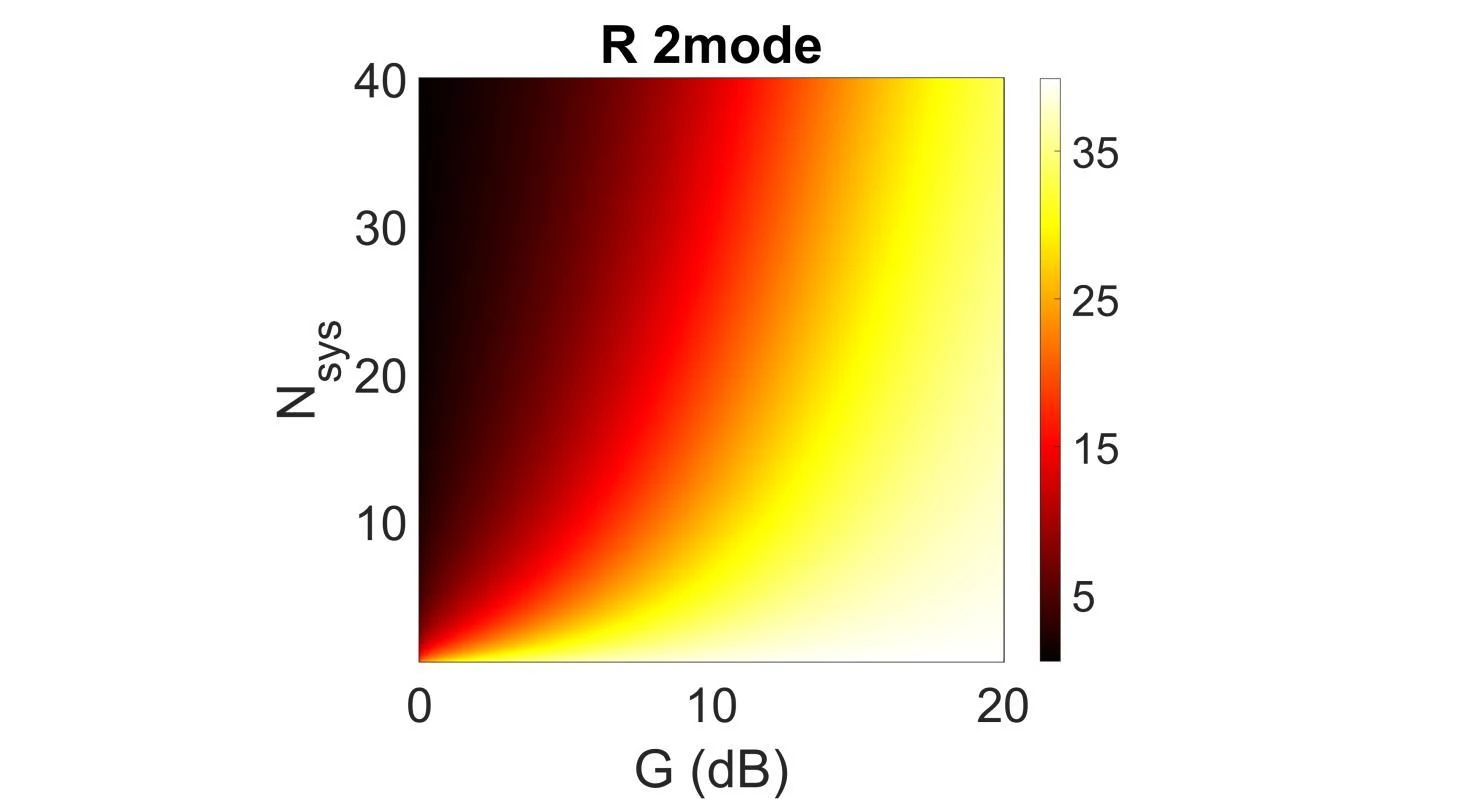
A quantum bit (qubit) is like a barely discernible whisper in a hum of voices. A regular amplifier makes the whisper louder, but along with it, the hum as well, making it harder to hear the essence. Physicists have created a clever device that generates two identical signal-whispers at different frequencies — the original and its echo.
Upon addition, the useful whisper doubles, while the random noise weakens itself. This resembles spectroscopic analysis — decomposing a signal into frequencies, allowing faint messages to be fished out from the mess of interference.
Even the best possible amplifier inevitably adds half a quantum of noise: that's quantum mechanics. The new method circumvents this fundamental limit by exploiting a hidden connection between the signal copies. As a result, qubit readout becomes more precise, like measuring a star's brightness through two telescopes, eliminating errors. Behind these breakthroughs lie decades of work: John Bardeen unraveled superconductivity, and David Wineland learned to measure quantum systems without destroying them.
Original abstract
as written by the authors arXiv:2603.15804
The ability to perform high-fidelity quantum nondemolition qubit readout is pivotal for the realization of large and powerful quantum computers. Such readout of superconducting qubits is generally enabled by amplifying the weak dispersive measurement signals using phase-preserving quantum-limited Josephson amplifiers with sufficient gain to dilute the contribution of the added noise by the output chain. Here, we further enhance the qubit readout fidelity by (1) simultaneously measuring the two-mode squeezed states of the amplified readout signals at the signal and idler frequencies of the nondegenerate amplifier and (2) coherently combining them at the classical processing stage following a relative rotation that maximizes the signal to noise ratio of the qubit-encoded readout quadrature. Such readout scheme exhibits enhancement in the readout fidelity for all practical values of amplifier gain and noise added by the output chain and is fully compatible with frequency multiplexed setups used in large quantum processors.
The quietest amplifier in the world adds only half a quantum of noise: that's the fundamental limit. The new method circumvents it by using hidden correlations between two signals.