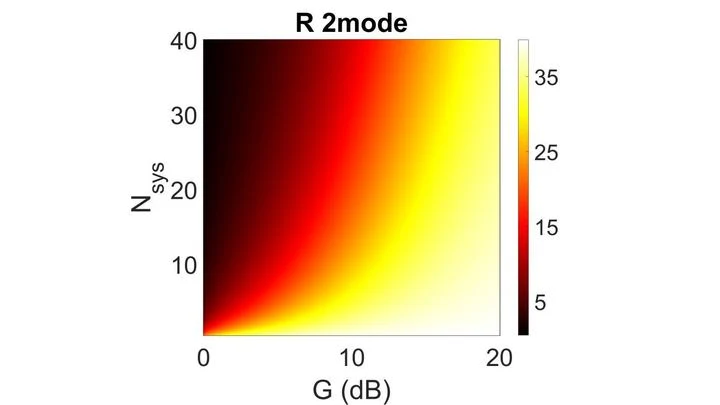
Signal stacking is a technique for combining multiple weak or noisy measurements to extract a common underlying signal. When a signal is too faint to be seen in a single measurement, repeating the experiment many times and adding the results together can make the signal emerge from the noise. The key is that the signal is coherent — it always adds up in the same way — while random noise fluctuates and partially cancels out. This improves the signal-to-noise ratio, often by the square root of the number of measurements.
History
The technique was formalized in the mid-20th century with the advent of electronic averaging in nuclear physics and radio astronomy. The 'boxcar integrator' and later the 'lock-in amplifier' were early instruments that implemented signal stacking to recover weak periodic signals from noise.
How it works
Imagine listening to a whisper in a crowded room. One listen gives you nothing but noise. But if you record the room many times and average the recordings, the whisper — which is the same each time — becomes clearer, while the random chatter averages toward a hum. In physics, this is done by aligning measurements to a trigger or a known phase, then summing them. The signal grows linearly with the number of stacks, while noise grows only as the square root, so the ratio improves as the square root of the number of measurements. This is why experiments like gravitational-wave detectors or quantum sensors often run for long periods and stack thousands of events.
In practice
Signal stacking is used in gravitational-wave astronomy to detect faint ripples from distant mergers, in quantum computing to read out fragile qubit states, and in medical imaging to improve the clarity of ultrasound and MRI scans.
Fun fact
In the search for dark matter with ion crystals, researchers stack thousands of measurements of tiny temperature changes — each one far below the noise floor — to detect the rare heat signature of a passing dark-matter particle.
A pendulum weighing a few grains of sand swings on a hair-thin glass fiber. Its motions are so faint that the thermal jostling of air molecules seems like a hurricane. Yet such a pendulum is the key to witnessing quantum wonders in the world of large objects.
You're listening to the faint whisper of stars, and nearby someone keeps moving a chair. In gravitational wave telescopes, that role is played by scattered light: it reflects off trembling surfaces and creates false signals.
Wireless devices flood the airwaves with signals that blend into chaos — as if everyone in a room started talking at once. Scientists have proposed a solution: smart panels, reminiscent of acoustic tiles. Each cell can either reflect a radio wave on command, like a wall echo, or absorb it, as soundproofing dampens noise.
If you clap your hands in an empty room, the echo will tell you about its size and shape. Every object (a chair, a book, a person) adds its own signature to this echo: sound reflects off it in a particular way. The authors of the paper have figured out how to completely rewrite this acoustic signature. They surrounded a region of space with a closed surface of microphones and loudspeakers.
A flat crystal of charged atoms suspended in an electromagnetic trap behaves like a perfectly calm pond. The slightest breeze, and ripples spread across its surface. This 'pond' catches the splashes from dark matter particles and the ripples of spacetime — high-frequency gravitational waves.
A person hears a ringing that isn't there. The doctor asks them to describe it — loudness, pitch, persistence. But it's subjective: one might say "like a mosquito," another "like steam from a kettle." We need a way to see tinnitus directly, in the brain itself.
A fisherman casts a net into a quiet backwater. The longer the rope, the weaker he feels the faintest nibble — the wave fades along the way. But what if the signal didn't die out but grew stronger? That's roughly the trick described by the authors of a study on an ensemble of particles placed in a field with a special 'stepped' force gradient.
A quantum bit (qubit) is like a barely discernible whisper in a hum of voices. A regular amplifier makes the whisper louder, but along with it, the hum as well, making it harder to hear the essence. Physicists have created a clever device that generates two identical signal-whispers at different frequencies — the original and its echo.
A tiny particle floats in a laser beam like a speck of dust in a flashlight's glow. Water molecules constantly jostle it — randomly, from all sides. Usually these bumps are a nuisance: the particle twitches, and precise measurements turn into a lottery. But physicists have figured out how to turn the interference into an advantage.
A stack of identical pancakes on a plate is just a stack. But if you arrange them with a certain order, something new suddenly appears: for example, a pattern that was not visible in each pancake individually. Physicists have performed a similar trick with thin layers of materials.
Two clocks in different rooms need to tick in unison. Usually, this is done by sending bright pulses or pairs of photons that arrive one right after the other. But the signal can be so weak that photons barely make it through. In this work, clocks were synchronized with light a billion times dimmer than usual.
If light could be bottled, scientists would have the perfect assembly line: one bottle — exactly one photon, no stray drops. Such single particles of light are needed for quantum computers and secure communication: they carry information that cannot be eavesdropped on unnoticed.
Two taut strings plucked at the same time sound different if they are connected by a rubber band. Energy starts to flow from one to the other, and the pitch of the combined sound shifts slightly. Two nanomechanical bridges, microscopic beams etched into a crystal, behave much the same way.
Imagine a border river that separates two countries. On one bank live one group of people, on the other, another. The boundary between them is not always obvious: in some places the river is wide and calm, in others narrow and turbulent. But it is exactly where the current changes abruptly that the border becomes most noticeable.