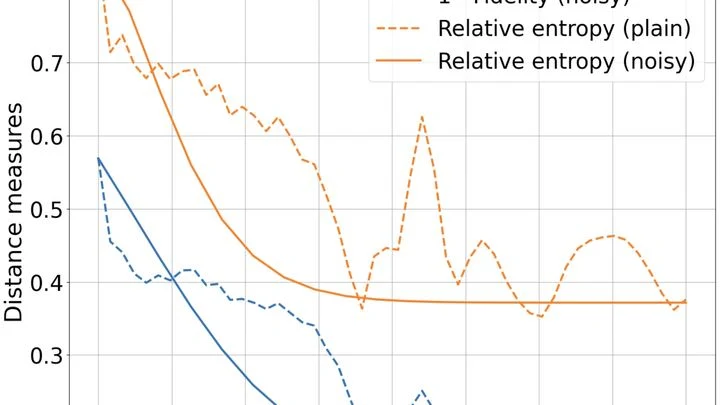
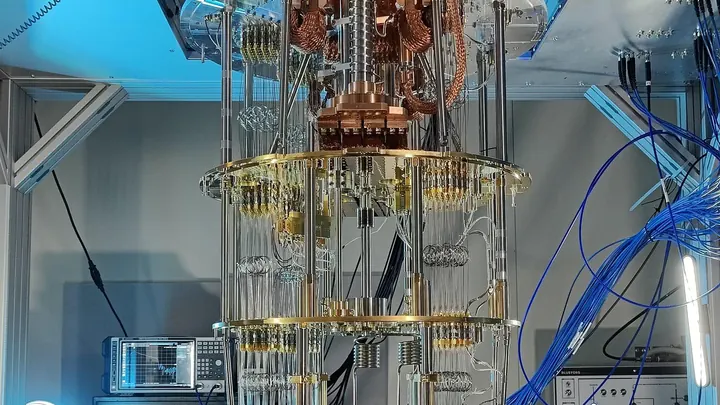
Error suppression refers to a set of strategies used to reduce the impact of errors in quantum computations or simulations. Unlike full error correction, which requires encoding information redundantly across many physical qubits, suppression aims to lower the error rate of individual operations or to prevent errors from spreading. It is a practical first line of defense in noisy intermediate-scale quantum (NISQ) devices, where full correction is often too resource-intensive.
History
The concept grew out of early work on quantum control and decoherence in the 1990s, with dynamical decoupling formalized by Lorenza Viola and Seth Lloyd in 1999. However, the term 'error suppression' as a distinct category gained prominence in the 2010s with the rise of NISQ hardware.
How it works
Common techniques include dynamical decoupling, which applies rapid sequences of pulses to cancel out environmental noise; optimal control, which shapes pulses to make operations less sensitive to imperfections; and error-avoiding encodings that use symmetry or decoherence-free subspaces. These methods do not detect or fix errors after they occur, but they reduce the probability of errors happening in the first place, making quantum algorithms more reliable.
In practice
Used in current quantum computers from IBM, Google, and others to improve the fidelity of gates and measurements, enabling longer and more complex quantum circuits.
Fun fact
Dynamical decoupling works by averaging out noise so effectively that it can turn a noisy quantum memory into a nearly perfect one, even without any error correction codes.
A courtroom interpreter catches every word, every breath, every whisper in the corner. They have no right to miss a detail, because the meaning of the whole conversation depends on it. Quantum state tomography works in much the same way: it reconstructs the full quantum state of a system from a set of measurements, leaving no detail out.
A cup of hot coffee sometimes freezes faster than cold tap water. This paradox, known as the Mpemba effect, has long been considered a curiosity of classical physics. Now its quantum counterpart has helped test and tune quantum processors — devices that may one day power supercomputers.
Neurochips work differently from conventional computers, which are built according to the blueprints of von Neumann with separate memory and processor. At the core of these chips is a network of simple cells, similar to neurons, and, like water that evenly fills containers of any shape, they easily find a solution without unnecessary steps.
The power grid is a huge restaurant where thousands of 'dishes'—potential accidents — threaten to be served every minute. Checking every plate fully would take hours, and a quick glance sometimes misses danger, like invisible mold on cheese.
A quantum computer is like a finicky musical instrument: the slightest change in temperature, humidity, or string tuning, and the melody sounds different.
A network of tiny magnets seeks the state with the lowest total energy: that's roughly what the quantum Max Cut problem looks like, one of the toughest in physics. Scientists have been hunting for its solution since the days of Werner Heisenberg.
Training a large neural network across hundreds of compute nodes is like making soup as a team: each 'chef' tastes the dish and tells the others what to adjust.
A quantum simulator based on ion traps is like an orchestra where each ion is a musician and the phonon bus (the collective vibrations) is the conductor relaying signals. As long as everyone plays the same tune, everything goes smoothly.
The atomic nucleus rarely sits still: it often trembles, rotates, or pulses like a plucked string. Each such motion is an excited state, and describing it usually requires extremely complex calculations. Now neural networks come to the rescue: they shape the nucleus the way a musician identifies a note in a chord by ear.
A quantum computer is like an orchestra: each musician plays their own part, but the slightest noise from the audience can throw off the whole ensemble. The particles that store information easily lose their coherence from thermal jolts or stray magnetic fields.
In the ocean of bank transactions, fraud is rarer than neutron stars in space, just 0.1% of all operations. A conventional detector gets used to the clean flow and loses vigilance.
Enter Q-SYNTH, a hybrid system with a quantum generator. It creates plausible fake transactions itself, drawing on scraps of real data.
A camera takes a snapshot, but the sensor is noisy, the optics blur, and some pixels are overexposed. Reconstructing the original picture is like guessing a melody from a scratched record: there are many possibilities, and which one is true is unclear.
Any light measurement runs into a fundamental limit: photons hit the camera sensor unevenly. This natural ripple (shot noise) blurs fine details, like trying to pick out a quiet instrument in an orchestra through the noise of the hall.
A radio picks up a broadcast through crackle and hiss. That's roughly how modern quantum computers work: the useful signal drowns in noise. The longer the computation runs, the more the interference distorts the result.
Qubits in a superconducting quantum computer are like tightly stretched strings. When a particle from space or from a radioactive decay flies by, it strikes these strings and they start to vibrate. This vibration disrupts the fragile quantum states, and computations go awry.
Quantum annealing works like a smart way to find a path through a maze: instead of checking every dead end, it uses quantum effects to find the exit faster. But this maze has a quirk: the numbers that describe the walls and corridors must be roughly the same size.
A quantum computer is like an orchestra where each musician plays their own part. If the conductor slips up, the music falls apart. In digital quantum simulations, the conductor's role is played by a sequence of simple operations, and errors accumulate like wrong notes.
A quantum computer is a finicky instrument. Each measurement of its state is like photographing a fast-moving object: the shorter the exposure, the higher the chance of getting a blurry shot. But if you skillfully process a series of such snapshots, you can reconstruct a clear picture.
That's exactly what the researchers did.
A quantum bit (qubit) is like a barely discernible whisper in a hum of voices. A regular amplifier makes the whisper louder, but along with it, the hum as well, making it harder to hear the essence. Physicists have created a clever device that generates two identical signal-whispers at different frequencies — the original and its echo.
An ordinary superconducting qubit is like a swing that any gust of wind can set rocking. The slightest change in electric charge nearby, and the quantum state is already spoiled.
Hot tea normally takes longer to cool than warm tea, but water sometimes breaks this rule: back in the 1960s, schoolboy Erasto Mpemba noticed that hot ice cream freezes faster than cold. This paradox has moved into the quantum world: a collection of particles can settle down faster if it was initially more excited.
A quantum processor is like an orchestra where each musician (qubit) must play their part precisely in time. But in reality, the instruments go out of tune: qubits lose energy, and their interactions get distorted. To tune this orchestra, you first need to record how it sounds right now: that is, measure the noise parameters and couplings.
A quantum computer is like a finicky orchestra: each qubit is a musician who hears the slightest noise and loses their place. To play a complex symphony of computations, you need hundreds of instruments tuned in unison.
A bread recipe written in disappearing ink: while you read, the original fades. That's how qubits behave — any measurement changes them irrevocably. Copying them is forbidden by the 1982 theorem (Вуттерс, Зурек): a qubit contains энтропия — unknown information that can't simply be doubled.
Qubits in a quantum computer are like musicians in an orchestra: each must hear the others, or the music falls apart. But if you wire the musicians together permanently, they start getting in each other's way: that's how unwanted interactions arise in superconducting chips, spoiling computations.
Optical fiber transmits light, but along the way it jitters and dims. To ensure that two parties at opposite ends of the line get the same set of random numbers for encryption, the receiver uses a digital corrector, like noise-canceling headphones that subtract the street hum but sometimes also eat the quiet notes of the music.
Quantum sensors are like an orchestra where musicians play in unison: their entangled states let them pick up signals that ordinary instruments can't. But as soon as you start accumulating the signal, the nonlinear interaction, like a conductor who suddenly starts beating time erratically, ruins the music.
Quantum computers promise to describe molecules with perfect accuracy, but their main nemesis is noise. Every extra qubit and every extra operation add errors. Chemists and physicists have now devised a way to compute molecules with half the qubits: the HSQD method.
The number 551 looks harmless, but finding the two primes that multiply to give it is no easy task. A classical computer tries options one by one, like someone searching for a key on a keyring. A quantum processor works differently: it tries all possibilities at once, but you need a way to steer it toward the right answer.
Inside a tokamak, a giant magnetic donut, plasma is heated to hundreds of millions of degrees. It doesn't touch the walls; it floats in a vacuum, held by invisible magnetic fields. But plasma is finicky: a slight change in current or pressure and its shape starts to wobble like jelly on a plate.
A quantum bit, or qubit, is like a coin spinning on a table, able to be both heads and tails at once. For the computer to know what came up, you have to stop the coin and look. Previously, this stopping was done with a delay: data was read out, taken to a regular computer for processing, and only then was the result known.
A quantum computer isn't a monolith: it's more like an orchestra, where each qubit must play its part without drowning out the neighbors. In ion-based machines, two types of qubits are used: some store information, others process it. Previously, each type required its own laser, like separate batons for violins and trumpets.
A quantum computer is like an orchestra, where each qubit is a musician and the control signals are the conductor. If the conductor waves the baton imprecisely, the musicians fall out of sync. In a real device, signals pass through power amplifiers, like loudspeakers that add noise and distortion.
The calm вода of a lake: the slightest ripple blurs the depth. In quantum sensors, noise — random jitters — generates энтропию (disorder) and kills precision. Physicists found a solution: scramble the order of events.
An ordinary neural network for quantum chemistry is like a student who learns from mistakes but keeps tripping over the same spot. It crawls toward the right answer, is sensitive to settings, and often loses stability. For the fluorine molecule, the new method sped up calculations by 17,900 times compared to the popular Adam method.
The void is deceptive. William Unruh showed that an accelerating observer perceives the vacuum as hot. The effect resembles the particle birth near black holes, predicted by Stephen Hawking, but instead of spacetime curvature, acceleration is at work.
To quickly dissolve sugar, you don't need to stir carefully — just shake the glass. A similar principle works in quantum systems: noise, usually considered a disturbance, speeds up the transition to a thermal state.
Building ultrasensitive sensors for light measurements and spectroscopy starts with tiny chambers where light ricochets like an echo in a canyon. Previously, engineers chased the quality factor — the duration of this echo: the longer it rings, the more noticeable the slightest changes.
Quantum computers require magical states — special helper particles for error-free operation. Previously, they were obtained through repeated purification, akin to endless distillation of alcohol: each step added энтропию (disorder), like weeds in a garden, and consumed resources.
A quantum computer is like an exquisite dish. There are recipes for ordinary kitchens, but special quantum states are secret ingredients that turn the dish into a masterpiece. One of them is 'magic'. The term was coined by John Preskill in 2018.