Quantum bit improvement refers to the broad set of techniques aimed at making qubits — the fundamental units of quantum information — more robust, more coherent, and better connected. Real qubits are fragile: they lose their quantum state through decoherence, suffer from noise, and have limited connectivity to other qubits. Improving these properties is the central engineering challenge for building a scalable quantum computer.
History
The field has evolved alongside the development of physical qubit platforms since the late 1990s. Key milestones include the first superconducting qubit (1999), the demonstration of quantum error correction (2001), and the steady improvement of coherence times from nanoseconds to hundreds of microseconds in modern devices.
How it works
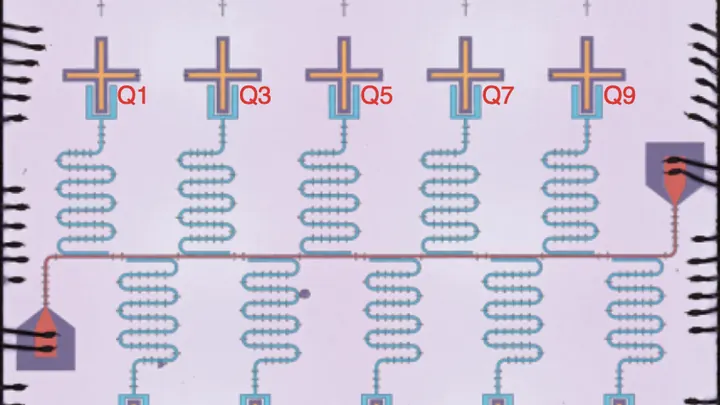
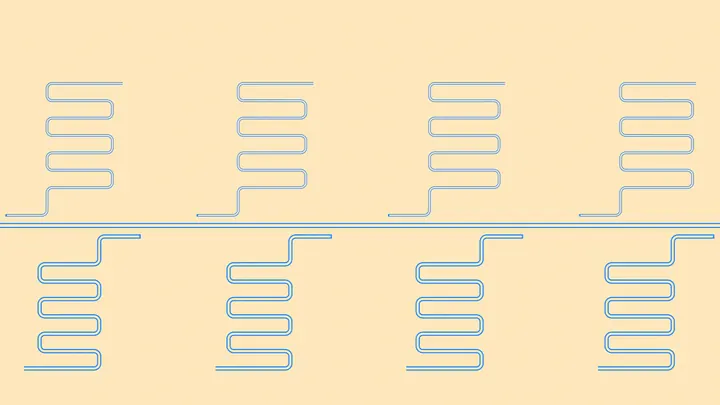
Improvement strategies target different bottlenecks. Coherence can be extended by isolating qubits from environmental noise, using materials with fewer defects (e.g., isotopically purified silicon), or by dynamical decoupling — applying carefully timed pulses to cancel out low-frequency noise. Noise resistance can be improved through error-correcting codes that spread quantum information across many physical qubits. Connectivity is enhanced by designing better qubit coupling architectures, such as the 'bridge' scheme where four qubits share a single coupling element, or by using microwave resonators to mediate long-range interactions. Recent work also explores using nuclear spins as long-lived quantum memories and terahertz resonators to control superconducting states.
In practice
These techniques are directly applied in building quantum processors for research and industry, such as IBM's and Google's superconducting chips, and in developing quantum repeaters for future quantum networks.
Fun fact
A 'mechanical Schrödinger cat' — a macroscopic vibrating object placed in a quantum superposition — can serve as a testbed for understanding how to protect large-scale quantum states from decoherence.
A tiny trap for single charges, a quantum dot, can hold a single hole. But the moment a charge at the material interface twitches, the hole in the trap starts to tremble. Engineers have found a way to calm this jittery charge by replacing a steep staircase with a gentle ramp.
Conventional antennas for precise direction finding must work coherently: they capture not just volume, but also the wave's phase at a given moment. The slightest tuning mismatch, and the direction is lost. The new method relies solely on signal strength. It's like finding your way in fog, seeing only the brightness of lights, not their color.
A well-coordinated orchestra of electrons in a superconductor is easily thrown off rhythm. Thermal jolts destroy the fragile order, and resistance returns. For decades, scientists have sought ways to strengthen this ensemble — mostly by changing the material's composition or compressing it to unimaginable pressures.
Qubits in a superconducting quantum computer are like tightly stretched strings. When a particle from space or from a radioactive decay flies by, it strikes these strings and they start to vibrate. This vibration disrupts the fragile quantum states, and computations go awry.
Quantum computers promise to solve problems that are beyond the reach of ordinary computers. But their components, quantum bits, are very sensitive. One type of quantum bit is an oscillating circuit that can exist in two states, like a pendulum swinging left or right. These states store information.
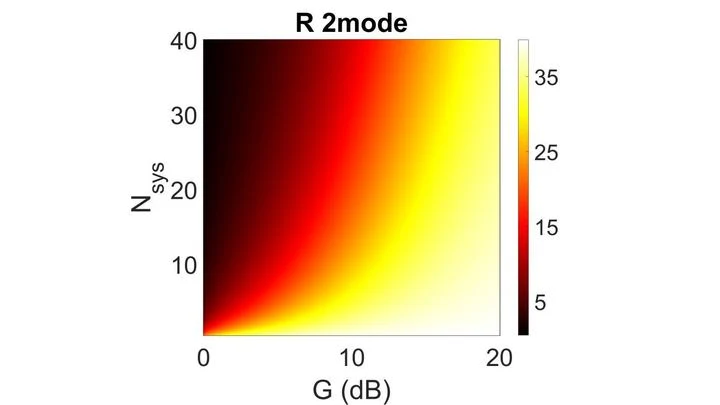
A quantum bit (qubit) is like a barely discernible whisper in a hum of voices. A regular amplifier makes the whisper louder, but along with it, the hum as well, making it harder to hear the essence. Physicists have created a clever device that generates two identical signal-whispers at different frequencies — the original and its echo.
Light enters a tiny cavity with mirrored walls and hits an erbium atom hidden in a crystal. The atom absorbs the light and flips its nucleus into another state, like a toggle switch that clicks when pressed. But this switch is not ordinary: it obeys the laws of the quantum world and can be in two positions at once.
Qubits in a quantum computer are like musicians in an orchestra: each must hear the others, or the music falls apart. But if you wire the musicians together permanently, they start getting in each other's way: that's how unwanted interactions arise in superconducting chips, spoiling computations.
Quantum computers promise to describe molecules with perfect accuracy, but their main nemesis is noise. Every extra qubit and every extra operation add errors. Chemists and physicists have now devised a way to compute molecules with half the qubits: the HSQD method.
A quantum computer is like an orchestra, where each qubit is a musician and the control signals are the conductor. If the conductor waves the baton imprecisely, the musicians fall out of sync. In a real device, signals pass through power amplifiers, like loudspeakers that add noise and distortion.
Modern encryption is unthinkable without truly random numbers. But a standard source can be unreliable or even deliberately corrupted. The solution came from experimenters who built a 98-ion quantum processor: it works like a high-speed filter, turning a 'dirty' signal into one that's crystal-clear and unpredictable.