How Rain Launches Microplastics into the Air express
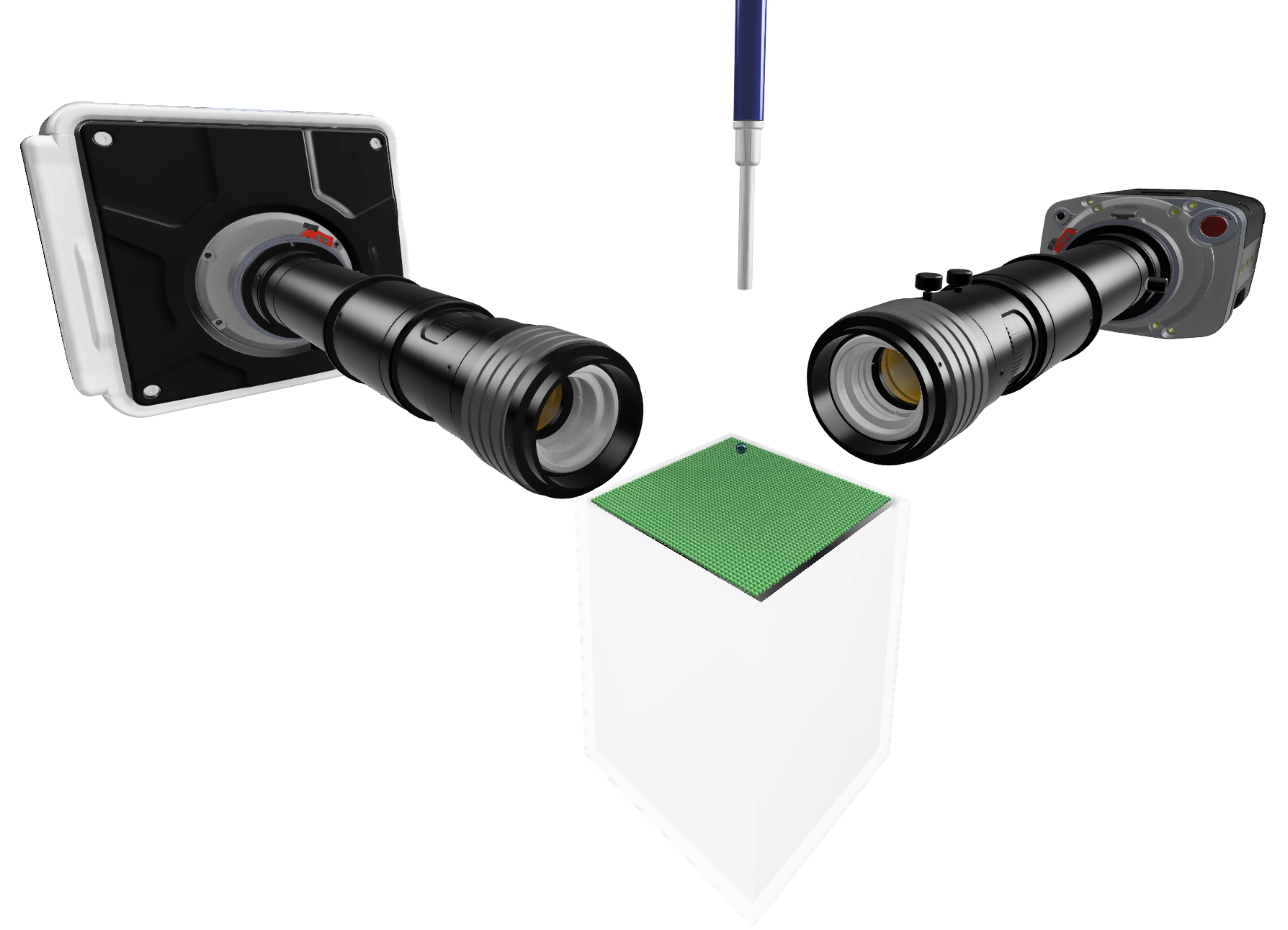
The Sun drives the water cycle, and rain returns it to the ground. But now, every drop is a tiny hammer striking the surface. Floating plastic particles (microplastics, mostly carbon) upon impact jump up like popcorn kernels on a hot skillet. But instead of popping, they get wrapped in a thin water film and turn into weightless beads. Wind catches them and carries them thousands of kilometers — from city puddles to mountain glaciers. The particles that fiercely repel water jump the highest: they bounce up several centimeters and can drift in the air.
Researchers have found a simple rule: how much plastic enters the atmosphere depends on the force of the drop's impact and the 'water-hating' nature of the particles. This helps predict what we breathe after a downpour. The same mechanism works when drops hit sand: this is how rain erodes shores and transports soil.
Original abstract
as written by the authors arXiv:2603.15896
Raindrop impact on the ocean has been proposed as a mechanism for microplastic transfer from seawater to the atmosphere, yet the interfacial dynamics governing particle ejection from floating microplastics remain largely unexplored. We investigate droplet impact onto microparticle monolayers (rafts) spanning a wide range of sizes, contrasting densities, and wettabilities, under raindrop-relevant impact conditions. Particle rafts strongly influence splash dynamics, cavity collapse, and Worthington jet formation. Splash onset is controlled by particle-induced roughness and capillary adhesion: deeply immersed particles stabilise the spreading lamella, producing only microdroplets, whereas weakly immersed particles destabilise the rim, promoting fingering and splashing. Following impact, raft characteristics govern wave-swell dynamics, separating into elastic and rigid regimes. Superhydrophobic rafts enable particle ejection upon impact and form particle-armoured Worthington jets that fragment into liquid marbles, providing an efficient aerosolisation pathway. In contrast, less hydrophobic rafts show limited detachment upon impact but still support Worthington jet-mediated transport. Despite these differences, splash thresholds and Worthington jet heights collapse under a simple geometric-inertial-capillary scaling. These results show how particulate monolayers modify canonical droplet-impact and identify the interfacial conditions under which rainfall transfers microplastics from ocean to atmosphere, and inform related droplet-granular processes such as soil erosion, and impacts on sandy substrates.
Plastic particles that fiercely repel water can jump up several centimeters and float in the air like miniature balloons.