How droplets inside cells shape membranes express
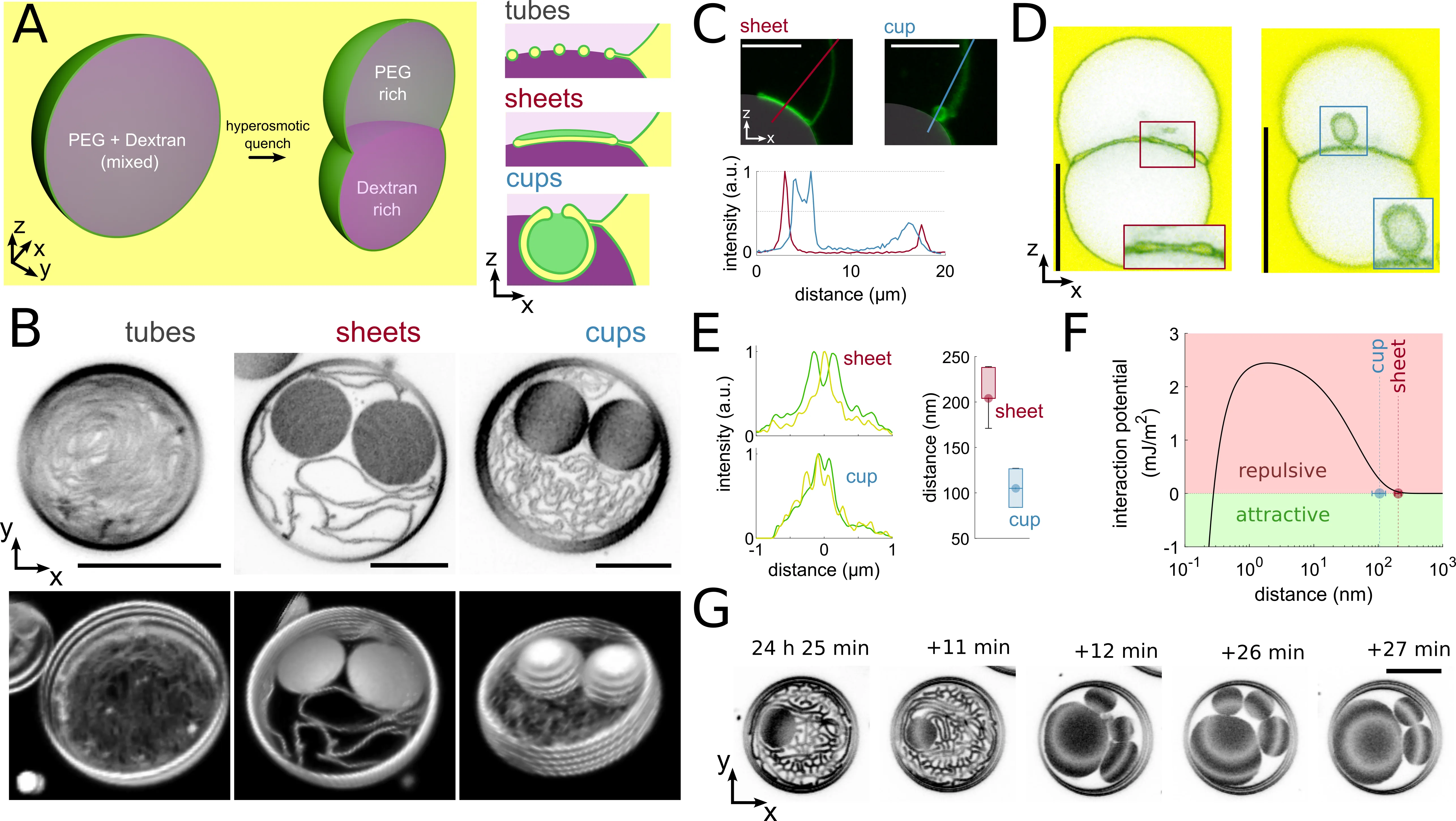
Inside a living cell, droplets float that don't mix with the surrounding fluid, like oil in water. These droplets aren't just passive clumps; they actively press on membranes and make them bend. Scientists observed this process in living plant cells, reproduced it in a test tube, and simulated it on a computer.
It turns out that the membrane's shape depends on the tension at the droplet's surface. If the tension is high, the membrane flattens into a sheet. If the tension is lower, the membrane rolls into a tube or a cup. The transition between these shapes isn't always reversible: to go back from a cup to a tube, you need to overcome an energy barrier, and the membrane 'remembers' its previous shape.
This mechanism explains how 'onions' form inside vacuoles in plant cells — large fluid-filled bubbles. The vacuole membrane invaginates under the influence of droplets and forms cup-shaped structures. By controlling the surface properties of the droplets, the cell can mold membranes into desired shapes at the right time.
In plant cells, vacuoles can occupy up to 90% of the cell's volume, and the droplets inside them help form complex internal structures.