Two Atoms Against Chaos: A Quantum Memory Record express
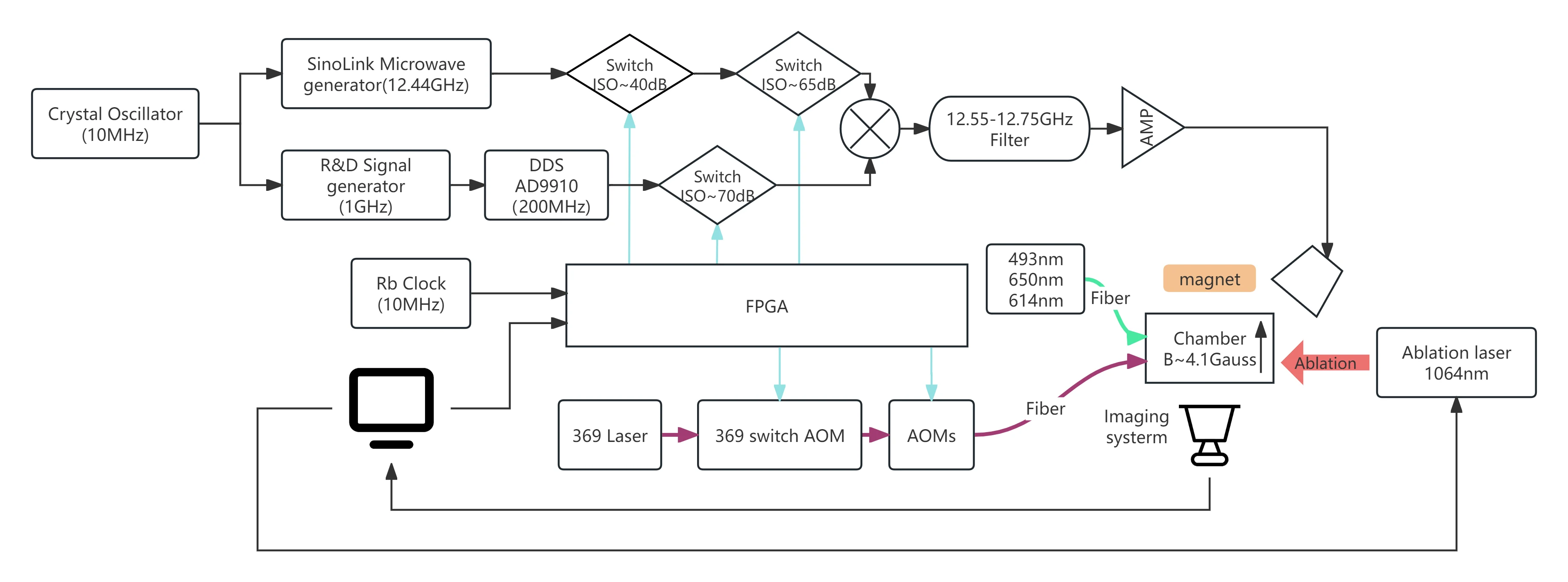
A typical quantum bit is destroyed by the slightest disturbance — heat, magnetic fields. Physicists made a pair of atoms work together so that disorder wouldn't erase the record. Information was encoded not in each atom individually, but in the difference of their states — like the tension of a rope between two buoys. Any noise rocks both buoys equally, so the distance between them stays constant. Using precise laser tracking, the scientists monitored this difference.
The experiment with ytterbium ions showed: a linked pair held quantum information for 10.5 hours — as if the rope between buoys remained taut throughout a stormy day. This stability is comparable to the precision of pulsars. A single qubit previously decayed within an hour. In that time, you could perform 36 billion error-free operations — more than most quantum computers will need. The method builds on the work of David Wineland, a pioneer of ion traps, and opens the path to reliable systems without bulky shielding.
If a quantum operation took one microsecond, 36 billion such operations could be performed in 10 hours without a single error.
Such stable memory is reminiscent of the computational core from the novel "The Quantum Thief," capable of storing a personality forever.