A Magnetic Mosaic: How Atoms Divide Roles express
A woven bamboo basket is not just a household item: it's an exact blueprint for how atoms are arranged in the crystal YMn₆Sn₆. Six manganese atoms form hexagons that assemble into a pattern reminiscent of the Japanese kagome. In such a lattice, electrons usually behave uniformly, like passengers in a crowded subway car. But in this material, they unexpectedly separate into two groups, as if in one car some passengers ride calmly to the end of the line while others jostle by the doors.
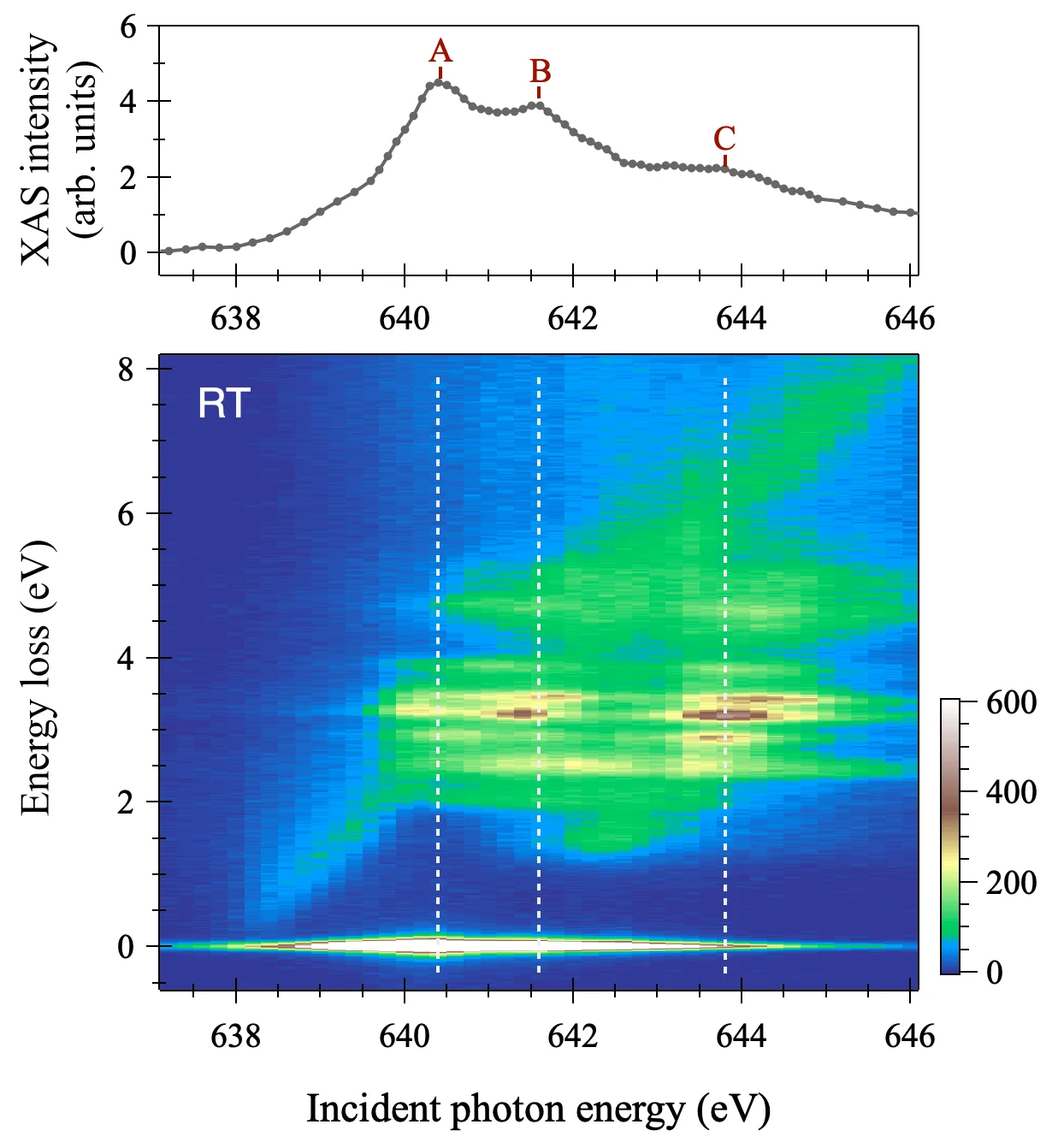
Using X-rays that make electrons jump between energy levels, scientists peered inside the manganese atoms. They found that electrons in orbitals aligned along the bonds between manganese atoms move freely through the crystal, like water through pipes. Meanwhile, electrons in orbitals pointing toward the tin atoms become heavy and sluggish, like thick honey that barely flows. This separation happens spontaneously, without any external push, and is maintained by a special magnetic interaction within the atom that suppresses electrons from switching roles.
This division of roles explains why the manganese layers in this crystal are magnetized in the same direction, even though adjacent layers in similar structures usually oppose each other. The material becomes a natural laboratory for studying how lattice geometry and internal atomic forces jointly create new quantum states — unlike either insulators or ordinary metals.
The kagome pattern was first described by Japanese basket weavers: hexagons with triangular holes. Now this pattern is repeated in crystals, and electrons within it behave like balls in a maze — some roll freely, others get stuck in corners.