Neutron Stars Might Be Heavier Than We Thought express
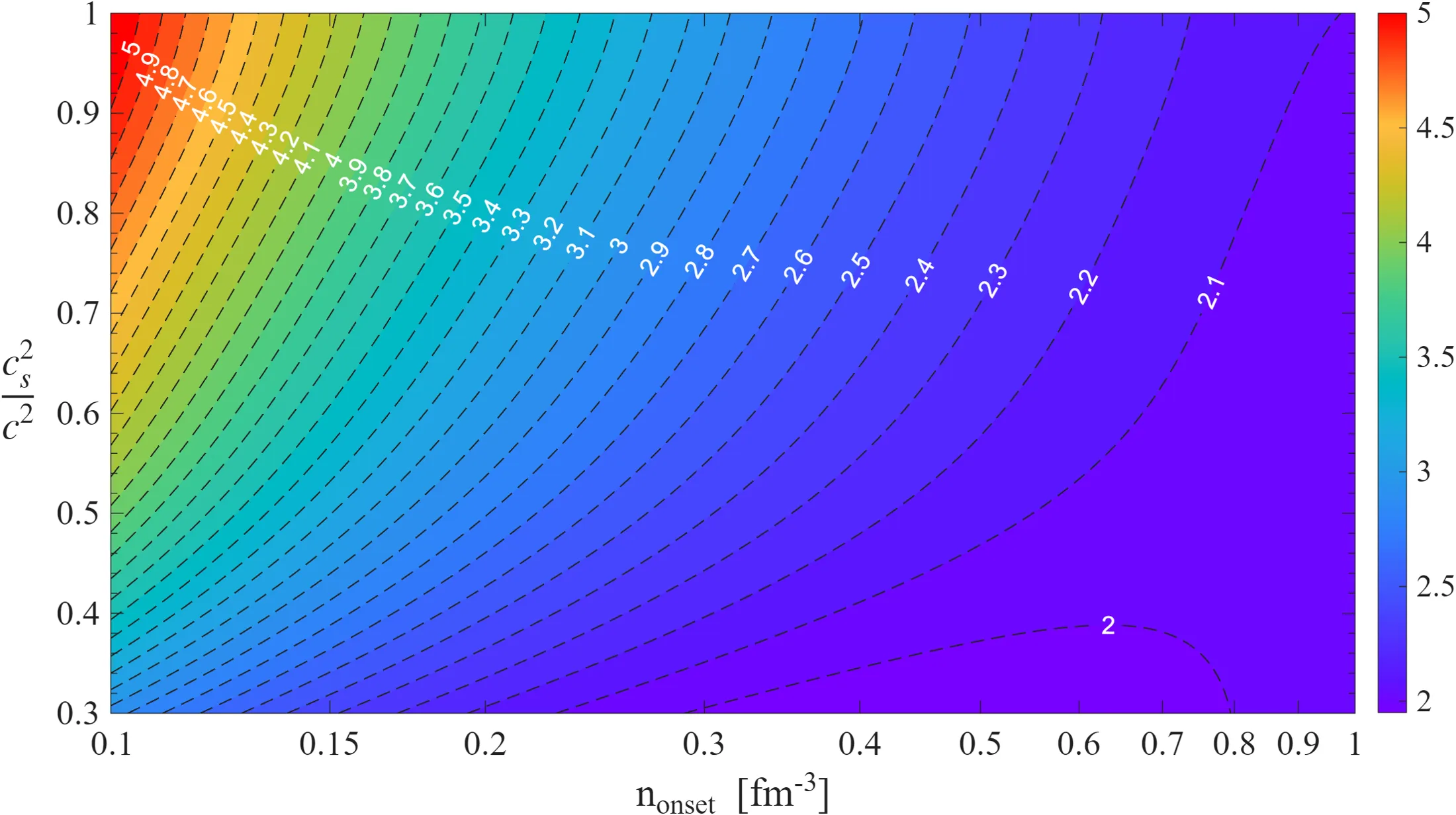
The density at the center of a neutron star is so extreme that a teaspoon of its material would weigh as much as a mountain. Physicists have long tried to figure out how massive such a star can get before it collapses into a black hole. The classic limit, derived in the 1970s, relied on the assumption that matter in the core becomes incompressible (stiff) only at very high densities. The authors of the new study relaxed this condition, allowing the stiff phase to appear earlier — at densities comparable to that of an atomic nucleus.
It turns out that in this scenario, the maximum stellar mass jumps to 4 solar masses and above. This matters because there is a "gap" between the heaviest neutron stars (about 2 solar masses) and the lightest black holes (about 5 solar masses)—almost no known objects exist there. The new result fills this gap: perhaps superheavy neutron stars lurk there, ones we currently cannot distinguish from small black holes. The authors provide a handy formula linking the upper mass limit to the speed of sound and the density at which matter becomes stiff.
The speed of sound in superdense matter can reach a significant fraction of the speed of light — faster than in any ordinary substance.