Are you one of the authors of this paper? Email us from your institutional or work email address mentioning this article's arXiv ID and we'll verify you and give you edit access to this page.
Are you an author who sees something we missed or got wrong? Write to us — the subject line already carries the paper id. We read every note and correct the write-up.
The Super-Kamiokande detector can now point to a future supernova within 90 seconds.
📄 Showing the "Simple" version — "Advanced" is not ready yet. Add it to favorites to help prioritize it.
Deep beneath Japan's Mount Ikeno sits a tank holding 50,000 tons of the purest water. Inside, it catches neutrinos — ghostly particles that zip through Earth as if it weren't there. When a star explodes in our galaxy, neutrinos arrive first, hours before the light.
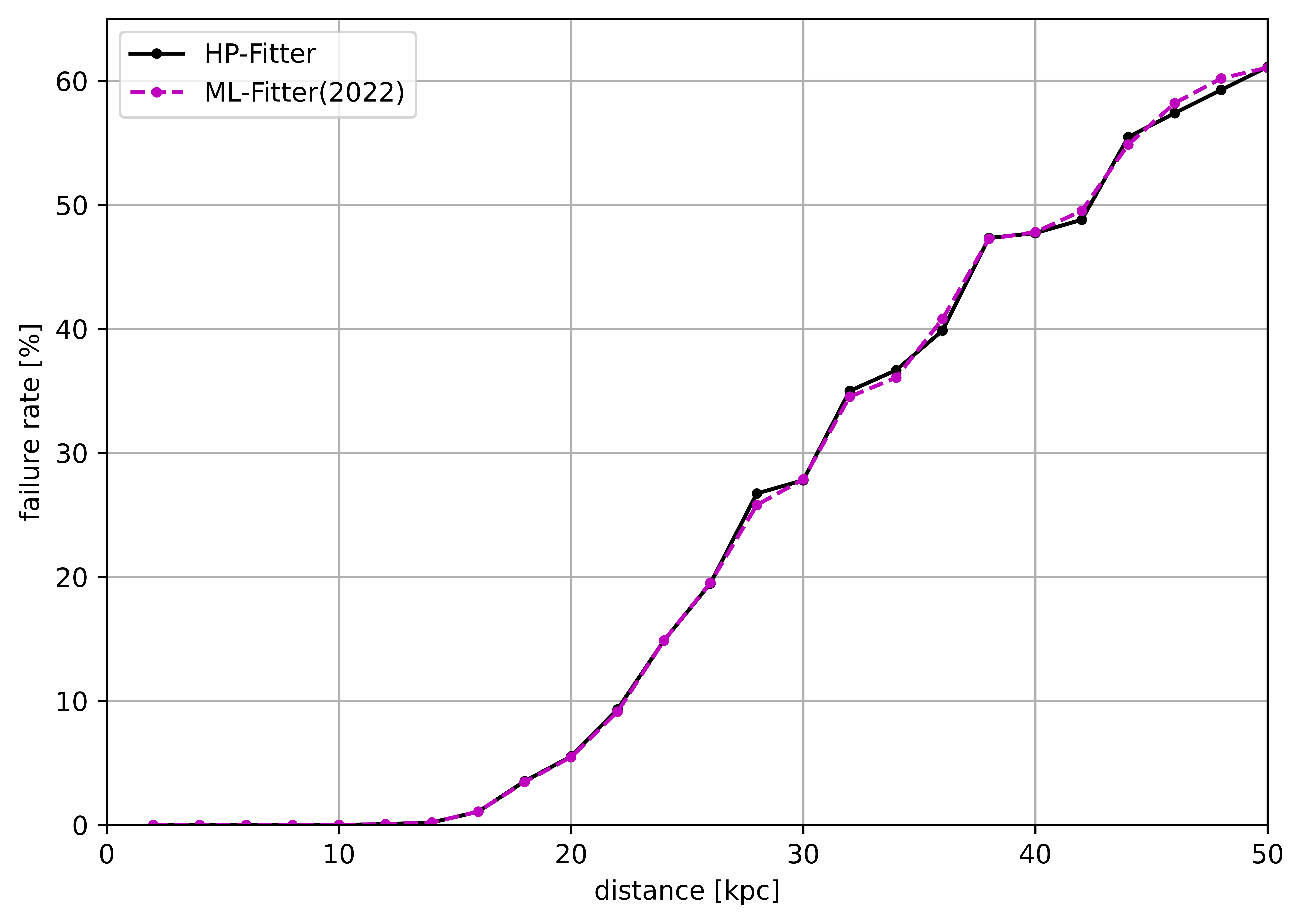
A supernova unleashes a burst of neutrinos, and the Super-Kamiokande detector can now quickly tell which part of the sky they came from. Previously, calculating the direction took several minutes or more. Now, a new method called HP-Fitter does it in less than a second. It breaks the sky into a mosaic of millions of cells, like a puzzle map, and finds the right piece using signals from the captured particles.
Neutrinos from a supernova reach Earth in seconds, while light takes hours. That head start is the astronomers' chance.
Gadolinium, a rare metal that helps spot neutrons born from neutrinos, has been added to the detector's water. This has improved accuracy: now the direction to the explosion is pinpointed within a few degrees. The whole system, including alerting astronomers over the network, works in about 90 seconds after the neutrinos arrive. Telescopes have time to swing around and catch the very first light — the moment the shock wave breaks out of the dying star.
The next nearby core-collapse supernova (SN) promises to yield a treasure of scientific information through multi-messenger astronomy. Early observations of the shock breakout (SBO) emissions are especially critical to understand the SN explosive mechanism as well as the properties of the progenitor star. Neutrino observatories are able to provide an early alert of a SN before the arrival of the SBO radiation. Super-Kamiokande (SK) has the unique capability to independently reconstruct an accurate SN pointing direction as part of its real-time monitoring system, ``SNWATCH.'' Recent upgrades to SK by adding gadolinium (Gd) to the detection volume have been accompanied by efforts to improve the speed and accuracy of SN direction reconstruction. A new, novel HEALPix-based approach (``HP-Fitter'') can calculate the SN direction from the reconstructed burst event directions in less than one second. As well, the previous maximum-likelihood direction fitter (``ML-Fitter'') was upgraded by incorporating event information from Gd neutron-capture as well as using the HP-Fitter for the initial fit parameters and from code refactoring and optimization. The improved ML-Fitter has better angular resolution but direction reconstruction time is $$\mathcal{O}$$(sec). Together with improvements in burst detection and event reconstruction times, SNWATCH is now able to generate an SN alert with pointing information in about 90 seconds. These upgrades have been implemented at SK and integrated into a new automated system to provide GCN notices.
Super-Kamiokande sits 1000 meters underground so that the rock filters out unwanted particles while neutrinos pass through freely.
In Arthur C. Clarke's novel Rendezvous with Rama, neutrino observatories are the first to notice an enigmatic object approaching, just as in reality with a supernova explosion.