Supernova 1987A is a core-collapse supernova that occurred in the Large Magellanic Cloud, a satellite galaxy of the Milky Way, and was observed on Earth in 1987. It is the closest supernova to be studied in detail in modern times, providing a wealth of data on the explosion mechanism, nucleosynthesis, and the behavior of the remnant. Its remnant has been observed across the electromagnetic spectrum, from radio to gamma rays, and its neutrinos were detected hours before the optical flash.
History
Supernova 1987A was discovered on February 23, 1987, by Ian Shelton at the Las Campanas Observatory in Chile. It was the first supernova visible to the naked eye since 1604 and the first to have its neutrinos detected.
How it works
The supernova was triggered by the collapse of the core of a massive star, which then rebounded and produced a shock wave that blew off the outer layers. The explosion synthesized heavy elements and left behind a neutron star, whose cooling and interaction with the surrounding ejecta have been tracked over decades. The detection of neutrinos from the event confirmed the basic picture of core collapse and provided the first direct evidence for neutrino emission from a supernova.
In practice
The observations of Supernova 1987A have been used to calibrate models of stellar evolution, supernova explosions, and nucleosynthesis, and to study the properties of neutrinos, including their mass and mixing.
Fun fact
The neutrinos from Supernova 1987A arrived at Earth about three hours before the light, because they were emitted during the core collapse, while the shock wave took longer to reach the surface and produce the optical flash.
Twenty thousand years ago, the star that would become supernova 1987A put on a ring. Not one — three. The two outer ones, like lampshades, tilted relative to the equatorial ring, and the star's light, struggling through them, barely reached an observer who happened to be in the plane of the equatorial ring.
The night sky is full of rings and bubbles, but in the radio band they look different. In data from the Australian radio telescope ASKAP, a structure has surfaced that resembles two soap bubbles blown from the same straw.
In the dense galaxy cluster Abell 2744, where gravity bends light like a lens, the James Webb Space Telescope spotted a new point of light. It appeared in images from 2023 and then began to change brightness. It was a supernova, the explosion of a dying star, but not just any kind: a Type IIP.
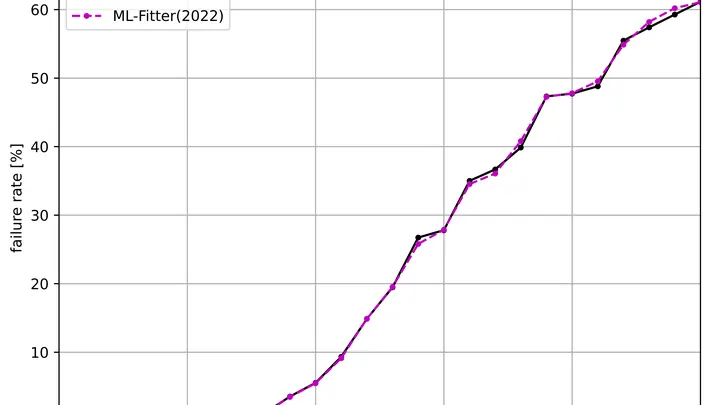
A network of radio telescopes scattered across the planet catches the whisper of a distant black hole. Each antenna records a signal, but how do you combine these recordings if the clocks at the stations tick at different rates and the atmosphere distorts incoming waves?
When a star explodes, its material flies into space. In the supernova remnant SNR 0509-67.5, this material did not spread into a smooth cloud but gathered into separate clumps, like lumps in batter that is quickly stirred. The MUSE telescope in Chile saw these clumps in the faint glow of forbidden iron and calcium lines.
The explosion of a massive star is not just a flash: it's a blow to the surrounding gas. But until now, no one had looked at how the gas itself moves at the sites of such explosions. Now astronomers have gathered data on 33 nearby supernovae and for the first time measured the turbulence of the cold molecular gas around them.
The calm surface of a lake suddenly ripples — somewhere in the depths, an underwater cliff has collapsed. The water trembles almost imperceptibly, and the circles spread wider and wider until they reach a bobber near the shore.
On March 26, 2026, the Chinese-European Einstein Probe observatory caught an X-ray flash that lasted a little over a quarter of an hour. A thousand seconds. The onboard WXT telescope registered a sharp rise in radiation, then a smooth decline, as if someone had screamed into silence, and the echo slowly faded.
Deep underground, in the silence of a cryostat (a cooled container), lie crystals of lead that once belonged to an ancient Roman ship. This material barely emits background radiation — over two thousand years, unstable isotopes have decayed, leaving it perfectly clean for hunting the rarest events.
Massive stars are cosmic titans, living under the sign of indomitable energy. When such a star enters the B[e] supergiant phase, its radiation is so powerful that it would seemingly pulverize any molecule into atoms. The spectral lines, once systematized by Johann Balmer, blaze here with particular fury.
Hundreds of light-years away, there's a planet that looks like a giant mirror. LTT9779b reflects most of the light that hits it — far more than you'd expect from a Neptune-sized body. Astronomers have long debated what makes it so shiny: a thick carbon-rich haze or a layer of clouds.
The James Webb Space Telescope has helped settle the debate.
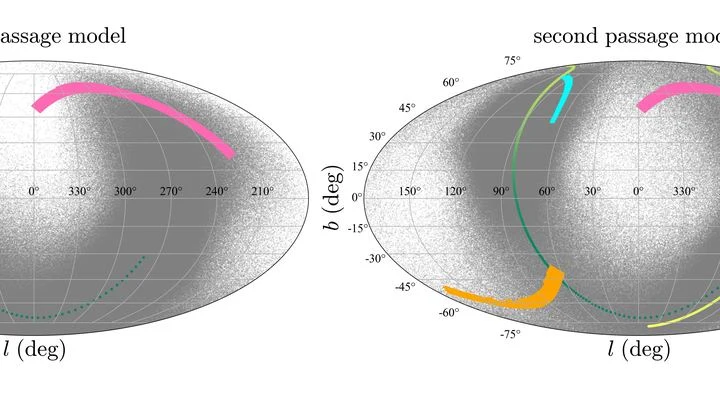
The giant cloud of icy chunks on the outskirts of the Solar System, the Oort cloud, resembles a transparent bubble stretched to a light-year across. Usually, these chunks hang quietly in their distant corners, but sometimes something disturbs them.
Most often, it's the tidal influence of our Galaxy.
A massive star doesn’t simply fade away — it blows up as a supernova, leaving behind an expanding remnant and a wildly spinning neutron star — a pulsar. In this cosmic storm, astonishing patterns emerge, and the 'Nimbus'–'Thunder' system is a dazzling illustration.
Nearly a decade and a half ago, the Fermi gamma-ray telescope spotted mysterious "bubbles" — giant plasma blobs, as if inflated by invisible lungs, towering tens of thousands of light-years from the Galactic center.
When a massive star dies, its core collapses, and a supernova explosion occurs. The cataclysm births streams of particles — like ripples from a thrown stone. The first to arrive are swift neutrinos, which pierce the Earth, hardly interacting. Then, hours later, ghost particles with a tiny charge appear.
In April 2021, in a galaxy 35 megaparsecs away, supernova SN 2021foa erupted. It immediately puzzled astronomers: its spectrum feverishly switched between hydrogen and helium lines — as if the star, in agony, was frantically shedding its outer layers.
Eight hundred million years ago, in the main asteroid belt, a giant inkwell shattered. The parent body, over a hundred kilometers in diameter, made of primitive carbonaceous chondrites, suddenly broke apart near the J3:1 resonance with Jupiter.
The XRISM X-ray telescope spent 170,000 seconds staring at the core of galaxy Cygnus A — one of the most powerful radio sources in the sky. At its center lurks a supermassive black hole that sucks in matter and heats it until it glows in X-rays. The instrument caught light from iron atoms that had lost electrons.
A supernova is the final explosion of a massive star, scattering its material over light-years. Inside the expanding shell, a neutron star remains, and the shell itself continues to plow through interstellar gas for thousands of years.
Deep in the Mediterranean Sea, where water presses down with the force of hundreds of atmospheres, a network of light-sensitive spheres waited for a rare guest. And it came — a neutrino that carried through the bulk of the Earth an energy comparable to the impact of a flying brick.
In 1987, astronomers saw a supernova flare up in a neighboring galaxy — the Large Magellanic Cloud. It was a rare gift: the explosion was close enough to catch not just light but also neutrinos, those nearly undetectable particles that pass straight through Earth.
A supernova explosion is the death of a massive star, leaving behind a gas cloud. If there's plenty of hydrogen around, the shock wave spreads like an echo from a distant gunshot.
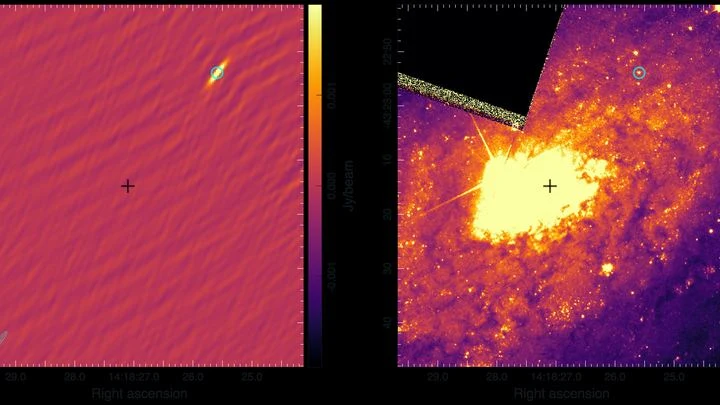
The ASKAP radio telescope in Australia has spotted a very faint glowing ring in the southern sky, like a soap bubble the size of several full moons. Inside the ring, exactly at the center, shines a tiny point. Usually, such a picture means one thing: a star exploded here, leaving behind an expanding shell and a collapsed core at its heart.
But this pair has a quirk.
On the outskirts of our Galaxy, far beyond the familiar stellar disk, the Subaru Telescope has spotted something unexpected: a scattered cloud of stars spanning an area of one hundred square degrees across the sky.
Gamma-ray burst GRB 221009A flared so brightly that it was dubbed the 'brightest of all time.' The LHAASO observatory detected gamma rays from it with energies up to 13 TeV — thousands of times more energetic than particles in an X-ray machine.
Thirty-six years ago, a star exploded in a neighboring galaxy. The flash was named Supernova 1987A, and since then it has been monitored almost every year. Now the James Webb Space Telescope has looked at its remnant in the mid-infrared — the part of the spectrum where dust and heated gas glow.
Deep beneath Japan's Mount Ikeno sits a tank holding 50,000 tons of the purest water. Inside, it catches neutrinos — ghostly particles that zip through Earth as if it weren't there. When a star explodes in our galaxy, neutrinos arrive first, hours before the light.
A massive star's explosion is bright but brief. The flash itself lasts weeks, but the dust it heats around it glows in infrared for years. It's like a camera flash illuminating a room, then hot dust particles lingering in the air — only on a cosmic scale.
The center of our galaxy is a crowded kitchen where several dishes are simmering at once, and their steam blends into a single cloud. X-rays from the exploded star's remnant, from the stellar wind around the supermassive black hole, and from hot gas between stars all overlap.
At the center of the Milky Way, among dense clouds of gas and dust, lies a region called Sagittarius C. It's like a bustling crossroads: stars are born here, streams of matter collide, and the whole scene is illuminated by X-rays. For a long time, this glow remained a mystery.
When a massive star explodes, it hurls giant clouds of gas into space. These clouds, known as supernova remnants, can stretch across hundreds of trillions of kilometers. Two such clouds — G107.7-5.1 and G150.3+4.5—were recently studied by astronomers using a telescope in Turkey.
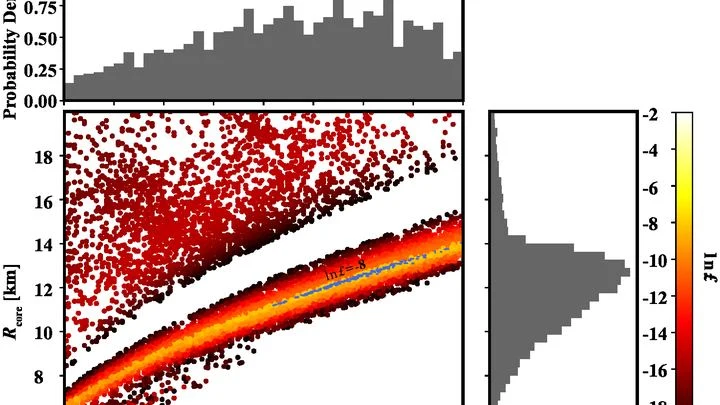
In April 2023, Japanese satellites detected a super-intense X-ray burst on the neutron star MAXI J1752–457. The star cooled down in 4 days — five times faster than usual. Like someone cracked open a cosmic window.
The edge of the supernova remnant RCW 86 is where the shock wave from a star's explosion slams into the surrounding gas. The IXPE telescope looked at the southwestern part of this boundary in X-rays and tried to catch polarization — the way these rays oscillate.
In the Coma galaxy cluster, about 320 million light-years away, an invisible cloud stretches out. It shines in the radio band: this is a radio halo, a giant collection of charged particles accelerated to nearly the speed of light.
In 1994, astronomers watched as the star V4332 in the constellation Sagittarius suddenly flared up, becoming thousands of times brighter. It hasn't settled down since: its brightness has changed several more times. These outbursts sit between ordinary novae and supernova explosions, and their cause has long been a puzzle.
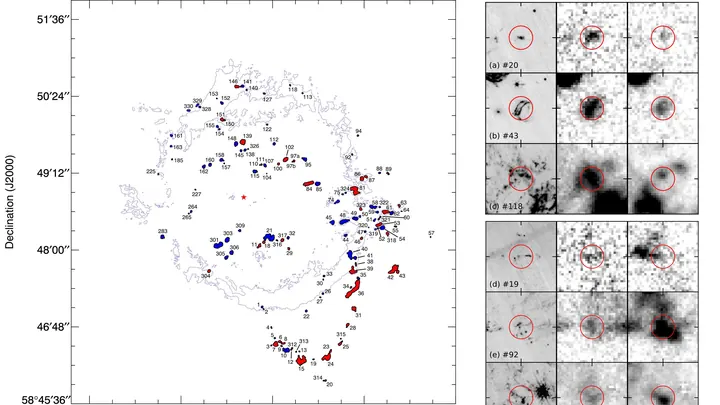
In 1987, astronomers spotted a supernova in a neighboring galaxy, so close that the blast could be studied for decades. Now, the ALMA radio telescope, perched high in the Chilean Andes, has allowed us to look inside the remnant and create a three-dimensional map of its molecules.
Centaurus A and M83, the two largest galaxies in our neighborhood, are locked in a slow waltz. Once thought to be independent, it’s now clear they’re held by gravity and drifting together, destined to merge billions of years from now. It’s the same script that awaits the Milky Way and Andromeda.
A pair of stars circles each other. One is a dense white dwarf the size of Earth but with the mass of the Sun. Its companion is a regular star that transfers material onto the white dwarf. From time to time, the accumulated gas erupts like a giant hydrogen bomb, making the star thousands of times brighter for a while.
In 2013 and 2020, the same telescope in Hawaii looked at the remnant of an exploded star — Cassiopeia A. The images were taken in the light of glowing iron, as if photographing invisible streams of metal flying through space.
Over seven years, astronomers found 263 dense clumps — debris ejected by the explosion.