A Whirlpool Mimics Gravity express
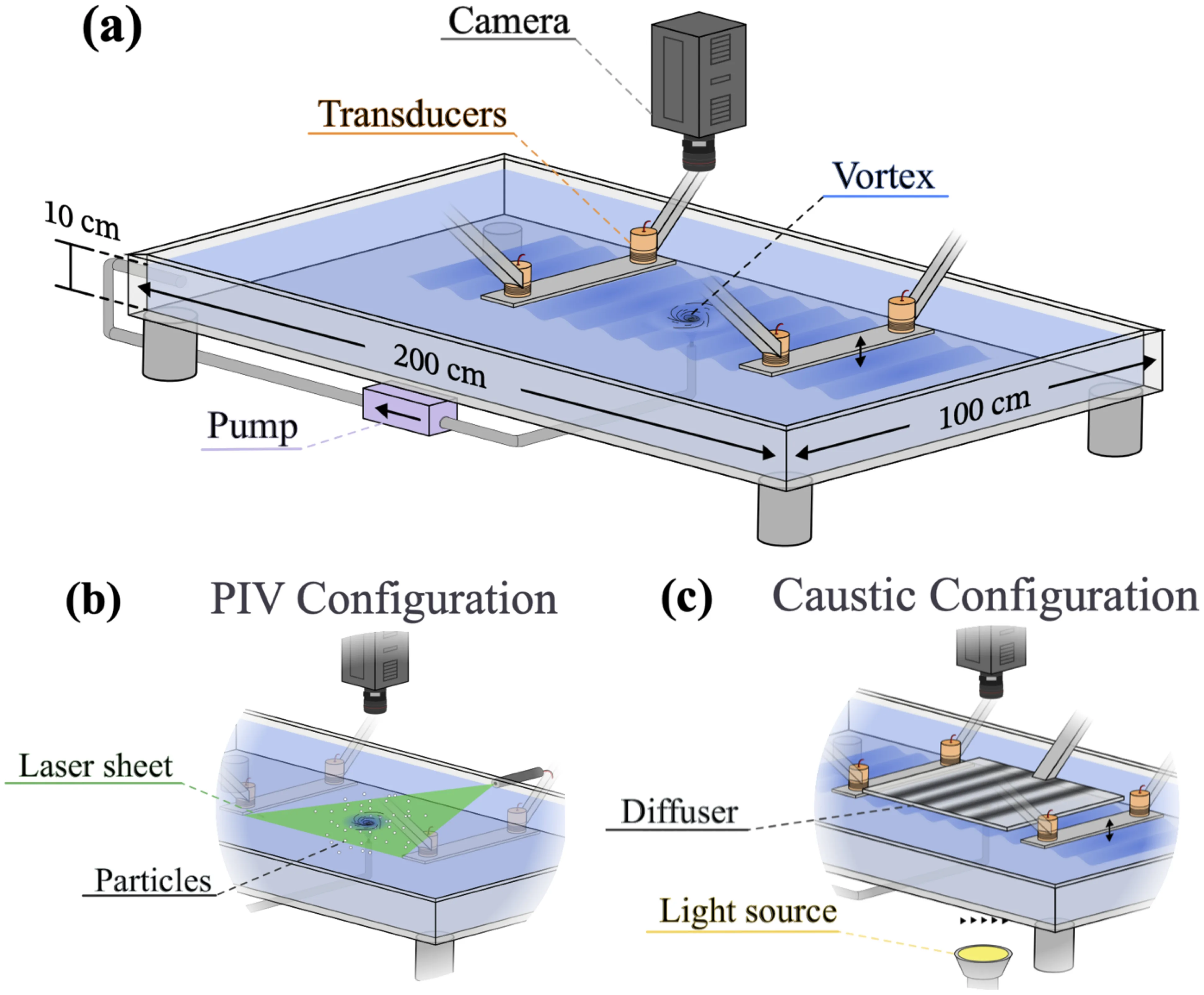
Water going down the drain swirls into a vortex. An everyday sight in the kitchen. But this very vortex turned out to be able to reproduce two effects that physicists usually associate with black holes and the rotation of planets.
The first effect is the shift of a wave as it goes around an obstacle. A person walks around a pole, and their shadow on the wall shifts, even though they return to the starting point. Roughly in the same way, waves going around a vortex acquire a shift that depends on how much water flows through the drain. This shift is named after physicist Yakir Aharonov and his colleague Bohm, who described similar behavior of electrons in a magnetic field.
This coincidence is not accidental. The mathematics describing waves on water turned out to be almost the same as the equations for particles in curved spacetime. The only difference is that the role of gravity is played by the speed of the water flow. So a vortex in a tank is a miniature model of the universe, where you can touch with your hands what usually hides in equations.
The phase shift of a wave in a vortex persists even if the wave goes around it several times, like a clock hand that accumulates lag with each revolution.
In the movie 'Interstellar', the heroes see how the rotation of a black hole drags space — in a water vortex, this effect can be reproduced in a garage.