Electrons at Light Speed Against Brain Tumors express
A garden hose shoots a thin, powerful jet. If you sweep it across the yard, you can water the whole bed without flooding the path. That's roughly how the new approach to treating deep tumors works: instead of a broad radiation field, you take a narrow beam of electrons accelerated to nearly the speed of light and scan it across the tumor like a jet of water.
The electrons leave the accelerator with a wide spread in energy — the jet isn't uniform but rather 'fluffy' at the edges. But this very feature helps. When adjacent thin beams overlap (called mosaic overlapping), their irregularities smooth out. As a result, the entire tumor receives the required dose, while surrounding healthy tissue gets minimal exposure. The authors tested this with computer simulations on a brain tumor model. They also accounted for the so-called FLASH effect — a phenomenon where ultra-fast dose delivery (within fractions of a second) somehow spares healthy cells without reducing the destructive effect on cancer.
So far, the FLASH effect with laser-driven electrons has yet to be achieved in practice, but simulations already show that the path forward lies in increasing the accelerator's average power. If engineers succeed, oncologists will gain a tool that hits the target precisely and barely touches anything else, like a jet that waters only the bed and doesn't turn the paths into a swamp.
Original abstract
as written by the authors arXiv:2604.24417
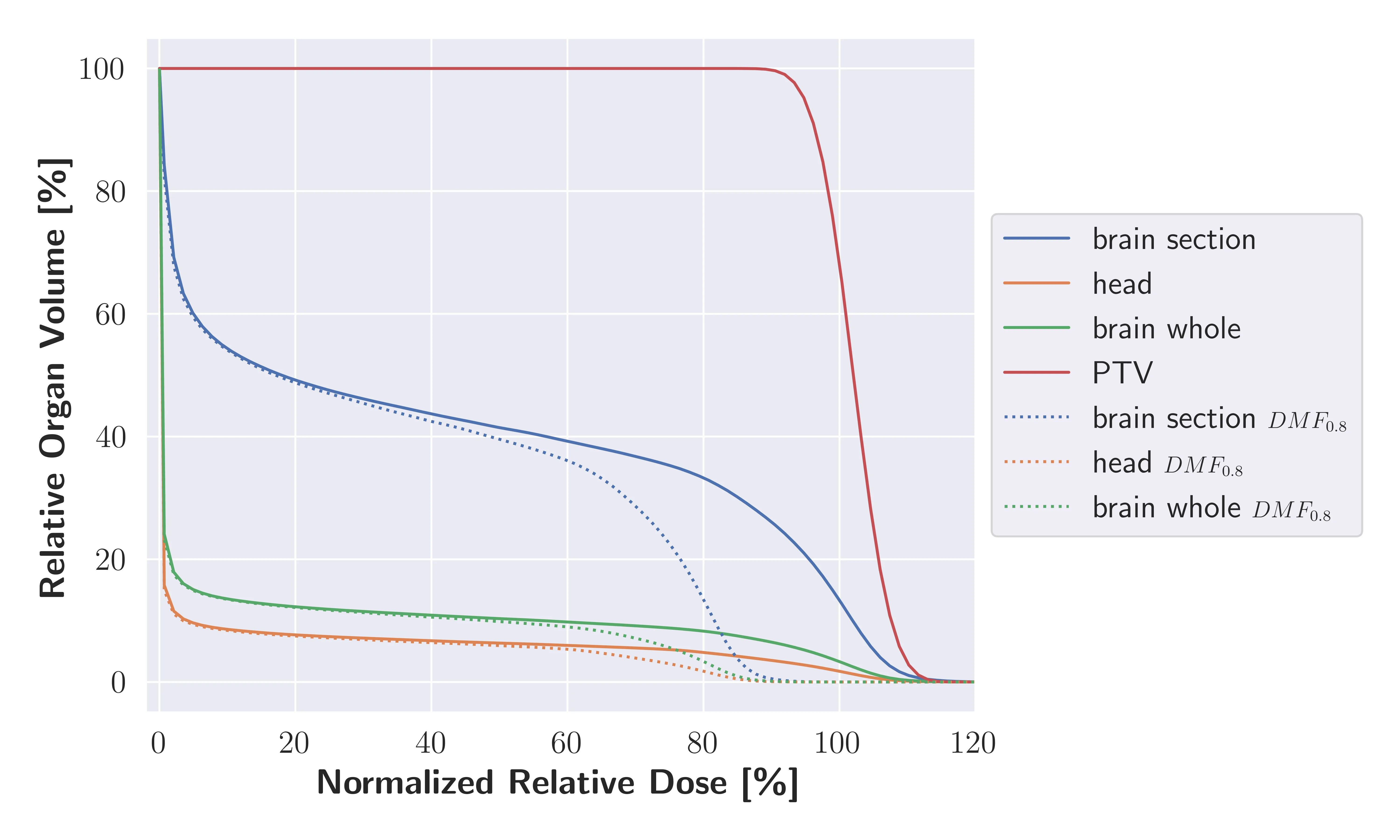
Radiotherapy with Very High Energy Electron (VHEE) beams is being extensively investigated for the treatment of deep-seated tumours, even in view of novel protocols based on the so-called FLASH effect. Laser WakeField Acceleration (LWFA) provides a compact and affordable accelerator technology for VHEE electron beams, featuring ultra-high instantaneous dose rates and holding the promise to provide Ultra-High (average) Dose Rates (UHDRs) needed to activate the FLASH effect, with major efforts ongoing worldwide to fulfill this promise. Therapeutic doses are already at reach, using pencil beams produced via LWFA. These beams typically exhibit significant energy spread, and small transverse size. These features are rather different from those of other beams considered so far in radiotherapy studies. In view of a rapid clinical translation of LWFA-VHEE beams it is therefore of paramount importance to assess the role of these properties in the dose delivery to the patient. Here we present a study carried out via start-to-end (PIC and Monte Carlo) simulations, of the main dosimetric features of a realistic laser-driven VHEE pencil beam targeted on a brain tumor. The entire tumor coverage is achieved by a scanning procedure; the dose pattern resulting from tessellation, i.e. the overlapping of adjacent beamlets, and the role of energy spread are thoroughly discussed. Dose Volume Histograms are presented, and their quality is discussed. The impact of the FLASH effect is also considered, introducing a degree of healthy tissue sparing in the modelling. Finally, the foreseen technological path toward the achievement of FLASH dose rates with LWFA-VHEE beams is briefly outlined.
A standard radiation therapy session lasts minutes, but here the entire dose could be delivered in one millionth of a second — faster than the blink of an eye.
The technology resembles the medical rays from science fiction films that instantly heal or destroy, except here the beam is invisible and consists of charged particles.